
Table of Contents
iPhone 16 vs Samsung Galaxy S25 Ultra
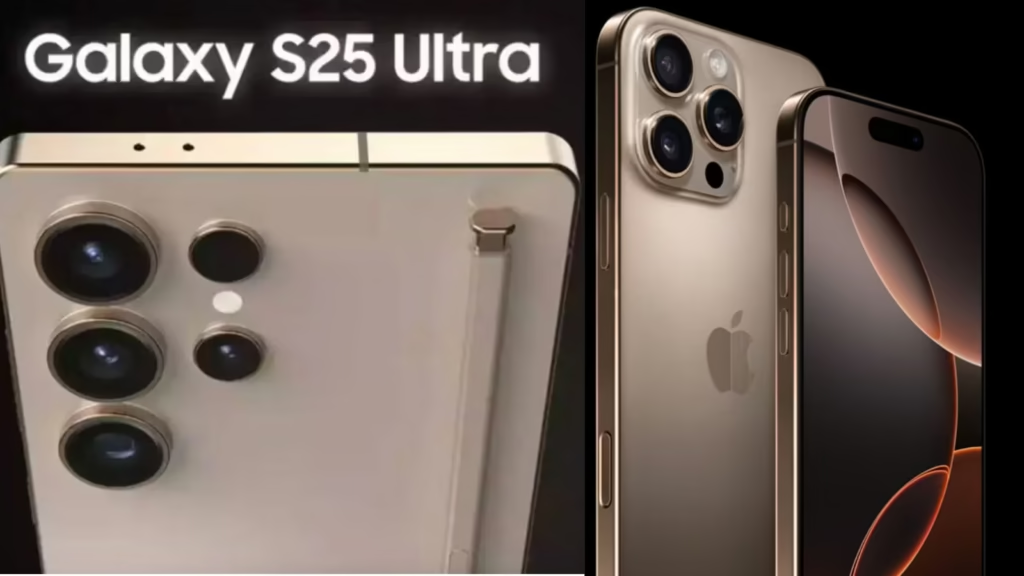
The flagship smartphone battle in India just got more interesting. iPhone 16 prices are rumored to drop below ₹70,000, while Samsung’s Galaxy S25 Ultra commands a premium at around ₹1,34,990. But here’s the real question: which one actually deserves your money? And more importantly — should you wait for a price drop, or buy now?
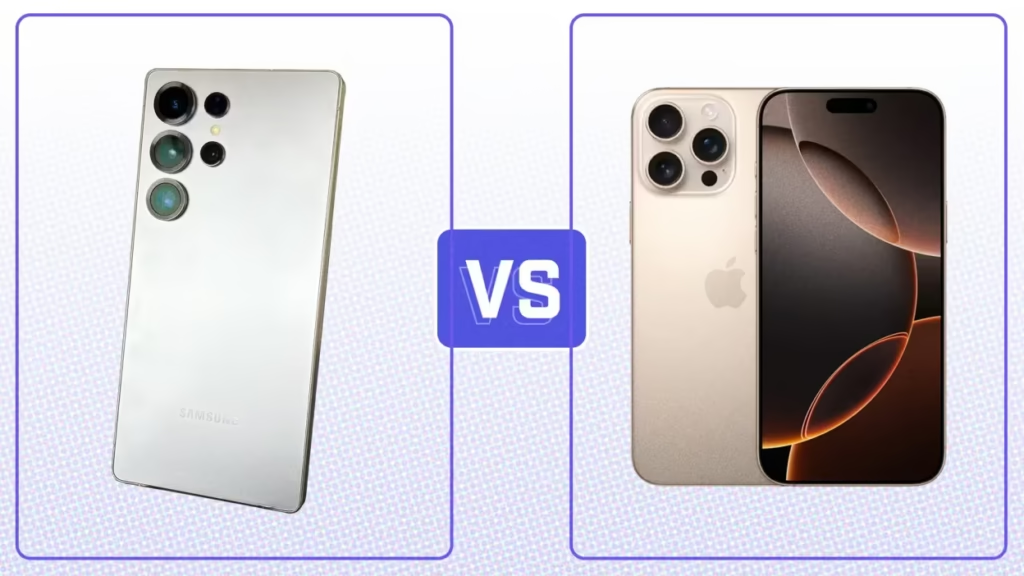
Let’s break down this head-to-head comparison for Indian buyers who are genuinely confused about which flagship to choose.
Price Comparison: The First Big Difference
This is where the decision often starts for Indian consumers, and it’s where the gap between these two phones becomes most obvious.
iPhone 16 is expected to launch at ₹79,990, but here’s the kicker — within 2-3 months, prices typically drop to ₹69,999 or even lower during festive sales like Diwali or New Year, or during Amazon and Flipkart mega sales. By January 2027, you might find it for ₹59,999-₹65,999 with exchange offers and bank discounts. Some users have reported getting iPhone 15 at nearly ₹40,000 after the iPhone 16 launch, so the pattern is clear: Apple’s pricing strategy in India favors patience.
Samsung Galaxy S25 Ultra starts at ₹1,34,990 and doesn’t see aggressive price drops as quickly as iPhones. By festive season, you might get it for ₹1,19,999-₹1,24,999 with offers, but it rarely goes below ₹1,10,000 in its first year. Samsung maintains price discipline to protect its premium positioning, which means your resale value also stays stronger longer.
The verdict for budget-conscious buyers is straightforward: if you can wait 2-3 months, the iPhone 16 becomes significantly cheaper. But if you need a phone now, the Galaxy S25 Ultra holds its value better long-term because it doesn’t experience the same sharp price corrections.
Camera System: Where They Take Different Approaches
This is arguably the most important difference between these two devices, especially for Indian users who love photography.
iPhone 16 Camera Setup
Apple keeps it relatively simple but effective. The rear dual camera includes a 48MP main sensor and a 12MP ultra-wide, while the front has a 12MP selfie camera. No periscope zoom, no macro lens — just the essentials done really well.
What matters more than megapixels is the computational photography and color science. iPhones are known for natural, pleasing colors that don’t look over-processed. In low light, the Night Mode is exceptional — your Diwali party photos, dimly lit restaurant meals, and late-night walks all look crisp and detailed without excessive noise reduction that makes images look artificial.
The video recording is also exceptional — 4K at up to 120fps with excellent stabilization, which is huge for content creators and people who love recording family moments, wedding videos, or creating Instagram reels. The stabilization is so good that even handheld videos look professional without a gimbal or stabilizer.
However, there’s no optical zoom beyond the ultra-wide. If you want to capture something far away, you’re relying on digital zoom, which means quality loss. This is a real limitation for Indian users who love wildlife photography during nature trips or want to capture subjects from a distance at events.
Samsung Galaxy S25 Ultra Camera Setup
Samsung goes all-in with a 200MP main sensor, 50MP ultra-wide, 10MP 3x periscope, and 50MP 10x periscope zoom camera. That’s versatility on steroids.
The 200MP resolution means you can crop heavily in post-production without losing detail. The dual periscope zoom (3x and 10x) is genuinely useful for Indian users who want to shoot subjects from a distance — whether it’s wildlife during a nature trip, a performer on stage at a concert, a street scene from across the road, or a distant monument like the Taj Mahal.
Low-light performance has also improved significantly in the S25 Ultra — it’s now competitive with iPhone, especially in high-contrast situations where there’s bright areas and dark shadows. Samsung’s Night Eraser feature can also remove unwanted people or objects from your photos, which is fun and surprisingly useful.
The selfie camera is 40MP, delivering sharper video calls and selfies. For people who do frequent video calls for work or spend time creating TikTok videos and Instagram content, this higher resolution is noticeable.
The real difference is this: iPhone excels at natural color science and consistency across all lighting conditions. Samsung excels at versatility and zoom capability. If you’re comparing photos side by side, iPhone 16 will look more natural and pleasing to most people’s eyes, while Galaxy S25 Ultra will give you more options and flexibility.
For Indian users who love travel photography, events, wedding season coverage, and capturing distant subjects, Galaxy S25 Ultra wins by a significant margin. For users who prefer natural colors, everyday photography, and don’t need optical zoom, iPhone 16 is more satisfying and requires less post-processing.
Performance: Both Are Overkill, But in Different Ways
iPhone 16 runs on Apple’s A18 chip, a custom-designed processor that’s incredibly efficient. It handles everything — gaming, video editing, multitasking — without breaking a sweat. The real advantage is longevity. iPhones typically perform well for 5-6 years because iOS optimization is tight and there’s minimal bloatware slowing things down over time.
Samsung Galaxy S25 Ultra uses the Snapdragon 8 Elite Leading Version (in India), which is technically faster in raw benchmarks and processing speeds. It comes with up to 16GB RAM and 512GB storage, offering more configuration options than iPhone, which maxes out at 512GB but only with 8GB RAM.
The practical difference for everyday users is marginal. Both will handle everything you throw at them without any noticeable lag. Gamers might see slightly smoother frame rates on the Galaxy, but the difference is not dramatic. Someone playing Call of Duty Mobile or Genshin Impact won’t suddenly feel like one phone is dramatically faster than the other.
Where the difference becomes apparent is in the long term. After three years of use, the Galaxy S25 Ultra might start showing signs of slowdown if you’re a heavy user with lots of apps installed. iPhone 16 will likely feel just as responsive as the day you bought it, assuming you haven’t filled it completely with storage.
The winner for longevity is iPhone 16 — it’ll feel fast even in 5 years. Galaxy S25 Ultra might slow down after 3-4 years, though Samsung is improving here with better optimization.
Battery and Charging: India-Specific Considerations
This is where real-world usage patterns matter most for Indian users.
iPhone 16 Battery
Apple claims up to 27 hours of video playback on a single charge, which translates to solid all-day battery. The phone won’t die on you during a normal workday, even with heavy use including video streaming, gaming, and constant social media browsing.
Charging is where it falls short for Indian users. It supports 25W wired fast charging and 15W MagSafe wireless charging. That means a full charge from 0 to 100 percent takes about 1.5 to 2 hours, which is slow compared to competitors in the market. If you’re someone who charges your phone overnight, this doesn’t matter. But if you’re rushing out and need a quick top-up, iPhone 16 will test your patience.
Samsung Galaxy S25 Ultra Battery
It packs a larger battery with up to 35 hours of typical use, which is noticeably better than iPhone. This means you can use it heavily for a full day and still have battery left over for the evening without anxiety.
Plus, it supports 65W wired fast charging — a full charge in under 30 minutes. You can also get to 80 percent in roughly 15 minutes, which is incredibly practical for busy people who need their phone charged quickly before heading out.
For Indian users with chaotic schedules, long commutes on public transport, or jobs that keep them away from charging outlets for extended periods, the Galaxy’s faster charging is a genuine advantage. If you’re always on the move and need your phone charged quickly between meetings or during a quick lunch break, the S25 Ultra’s 65W charging is transformative.
The winner for fast charging and battery capacity is Galaxy S25 Ultra by a huge margin. If battery life and charging speed are your primary concerns, this alone might determine your choice.
Display Quality: Both Excellent, Minor Differences
iPhone 16 features a 6.1-inch Super Retina XDR display with 120Hz refresh rate and 2,000 nits peak brightness. The screen is excellent for outdoor use, scrolling is smooth, and colors look great with accurate color reproduction.
Samsung Galaxy S25 Ultra features a 6.9-inch Dynamic AMOLED 2X display with 120Hz refresh rate and 3,000 nits peak brightness. It’s brighter, larger, and has more screen real estate for watching videos or reading content.
The practical difference is noticeable but not dramatic. If you’re outdoors in bright sunlight frequently — sitting in an open park, at the beach, or watching videos outside during sunny afternoons — the Galaxy’s extra brightness helps significantly. If you watch movies or play games regularly, the larger screen is more immersive and enjoyable.
iPhone’s display is still fantastic — just smaller and slightly less bright. For everyday indoor use, you won’t notice much difference. But for content consumption and outdoor visibility, the Galaxy wins.
Software and Ecosystem: Where Values Differ
iPhone 16 runs iOS 18, which is locked down, consistent, and secure. Updates are guaranteed for 5 or more years. The ecosystem including Mac, iPad, Apple Watch, and AirPods works seamlessly if you’re already in the Apple world. This integration means your files sync automatically, your messages appear on all devices, and switching between devices feels natural.
However, iOS is restrictive for power users. You can’t sideload apps, customize the home screen heavily beyond icon positioning, or have true file management like Android. Everything goes through Apple’s curated App Store, which means fewer options but also arguably more security.
Samsung Galaxy S25 Ultra runs One UI based on Android, which offers more customization, file management, and flexibility. You can sideload apps from sources beyond the Play Store, change default browsers and email apps, customize the home screen with widgets and different layouts, and really make the phone yours.
Android also works with any wearable, wireless earbuds, or accessory from any manufacturer — not locked into Samsung’s ecosystem. This openness is valuable if you have mixed-brand accessories or prefer flexibility.
For Indian users who value customization and openness, Galaxy S25 Ultra is the clear winner. For those who want security, simplicity, and don’t want to fiddle with settings, iPhone 16 is better.
Durability and Support: The Hidden Factor
iPhone 16 has an IP69 rating for water and dust resistance, meaning it can survive submersion and harsh sprays. The Ceramic Shield is harder than previous generations. Apple’s service centers are well-established across major Indian cities like Delhi, Mumbai, Bangalore, and Hyderabad.
But repairs are expensive — a screen replacement can cost ₹35,000 or more. Even out-of-warranty repairs are pricey, which means a single accident could cost you thousands.
Samsung Galaxy S25 Ultra has an IP68 rating, which is slightly lower than iPhone but still excellent for everyday water and dust resistance. The Gorilla Glass Armor is very durable. Samsung service centers are equally widespread across India.
Repair costs are comparatively lower — screen replacement costs around ₹25,000-₹30,000, which is still expensive but less painful than iPhone repairs. Samsung also offers more straightforward warranty terms in India.
For Indian buyers, both phones are durable, but Samsung repairs are gentler on the wallet. This matters because screen damage is the most common accident, and knowing that repairs won’t cost half the phone’s price is reassuring.
Real-World Usage Scenarios for Indian Users
To help you decide, let’s look at how these phones perform in actual Indian user scenarios.
Daily Commute
If you’re traveling on Delhi Metro, Mumbai local trains, or Bangalore buses, the Galaxy S25 Ultra’s faster charging is valuable. During a 30-minute lunch break, you can fully charge it. iPhone 16 would still be charging during your afternoon meetings.
Photography at Weddings
Wedding season in India means capturing moments across different venues. The Galaxy S25 Ultra’s zoom capabilities let you capture the bride entering from far away, then switch to wide-angle for the hall scene, then use 10x zoom for close-up expressions. iPhone 16 forces you to move around more to get the same shots, which is impractical at crowded events.
Social Media Content Creation
If you’re creating Instagram reels or YouTube Shorts, the 120fps video capability on both phones is excellent. But Galaxy’s larger screen and more megapixels make editing easier. iPhone 16’s natural colors mean you need less post-processing, saving time.
Traveling and Exploring
During trips to Jaipur, Goa, Kerala, or Northeast India, the Galaxy’s zoom lets you capture distant mountains, wildlife, and architecture without moving closer. iPhone 16 gives you beautiful natural colors for landscape shots, but you might miss distant details.
Video Calls for Work
Both phones have excellent front cameras, but Galaxy’s 40MP gives slightly sharper video feeds during Zoom meetings. For professionals doing client calls, this tiny edge matters.
Frequently Asked Questions
Q: Will iPhone 16 price definitely drop to ₹65,000?
Based on historical patterns, yes. Every flagship iPhone sees significant price drops within 2-3 months in India. However, the exact price depends on market conditions, inventory levels, and competition. In worst case, you might get it to ₹70,000 with offers. In best case, you might see ₹59,999. Waiting is almost always profitable for iPhone buyers.
Q: Is the Galaxy S25 Ultra worth the extra ₹55,000 compared to iPhone 16?
It depends on your priorities. If you’re a photography enthusiast, content creator, or heavy user who values zoom capability and fast charging, then yes. If you’re an everyday user who just needs a reliable phone, iPhone 16 after price drop offers better value.
Q: Will Samsung Galaxy S25 Ultra price drop significantly?
Not like iPhone. Samsung typically drops prices by ₹10,000-₹20,000 over several months, not the ₹15,000-₹20,000 that iPhone sees. If you want Galaxy S25 Ultra, buying during Diwali or New Year sales with cashback offers is smarter than waiting for direct price cuts.
Q: Which phone is better for gaming?
Galaxy S25 Ultra has a slight edge in performance benchmarks and frame rates. But both phones handle all mobile games smoothly. Unless you’re comparing frame rates in high-end games, you won’t notice the difference practically.
Q: Can I get both phones repaired easily in India?
Yes. Both have widespread service center networks. However, finding authorized service centers outside major cities is easier for Samsung because of wider distributor network. iPhone repairs require Apple service centers or authorized partners, which are fewer.
Q: Which phone will last longer?
iPhone 16 will feel faster and more responsive even after 5 years. Galaxy S25 Ultra might slow down after 3-4 years but won’t stop working. Both phones will receive security updates for several years, so neither becomes unsafe. It’s about performance degradation, not functionality loss.
Q: Is the Galaxy S25 Ultra camera really better than iPhone 16?
Not objectively. They’re different. Galaxy is more versatile with zoom and high resolution. iPhone is more consistent and natural-looking. For travel photography, Galaxy wins. For everyday photos that look great without editing, iPhone wins.
Q: Can I use both phones on Indian carriers like Jio, Airtel, and VI?
Yes, both are fully compatible with all Indian carriers. 5G support is available on both phones in areas where carriers have deployed 5G infrastructure.
Q: Which phone should I buy if I can only afford one?
If you can wait: iPhone 16 after price drop offers incredible value. If you need it now: Galaxy S25 Ultra if you value features and zoom, iPhone 16 if you want simplicity and reliability.
Q: Do these phones come with chargers in the box?
Neither phone includes a charger in the box. You need to buy separately. This is standard now across all flagships. Fast chargers for iPhone are more expensive (₹3,000+), while Galaxy chargers are cheaper (₹1,500-₹2,000).
Q: Which phone has better customer service in India?
Both have good networks, but Samsung typically has more service centers in tier-2 and tier-3 cities. iPhone requires visiting Apple stores or authorized service centers, which are concentrated in major metros.
Q: Can I trade in my old phone while buying these?
Yes. Both Apple and Samsung offer trade-in programs in India through their official channels and retail partners. You might get ₹20,000-₹40,000 depending on your old phone’s condition and model. Flipkart and Amazon also offer exchange programs during sales.
The Final Verdict
The iPhone 16 is the phone for users who want simplicity, long-term software support, and are price-conscious enough to wait for drops. It’s excellent for everyday photography, seamless integration into an Apple ecosystem, and maintaining value through reliability.
The Galaxy S25 Ultra is for users who want everything — better camera zoom, faster charging, larger screen, more customization — and are willing to pay extra for it. It’s ideal for photographers, content creators, and power users.
In India’s market specifically, many buyers choose based on what their friends have or ecosystem lock-in. But if you’re genuinely undecided, ask yourself: Do you value simplicity and longevity (iPhone) or versatility and features (Galaxy)? Your answer determines everything.
Neither is objectively better. They’re different tools for different kinds of users. Choose based on your actual usage patterns, not based on brand loyalty or what social media tells you to buy.