
On this page
- Table of Contents
- What Is the $10 Billion Cricket Plan?
- Why Does Cricket Need a New Economic Strategy?
- The Broadcasting Problem Is Bigger Than Television
- India Remains the Financial Engine
- The United States Could Become One of Cricket’s Biggest Opportunities
- China, Indonesia and Brazil Are Part of the Bigger Picture
- Women’s Cricket Is Not a Side Project
- The Ambition Goes Beyond Making Women’s Cricket Bigger
- Data Could Become Cricket’s Next Major Revenue Stream
- Mobile Gaming Could Open Another Revenue Channel
- Sponsorship Must Become More Global
- The Fixture Calendar Could Also Change
- The Biggest Question: Can Cricket Grow Without Destroying Its Traditional Formats?
- The IPL Is Both an Asset and a Complication
- The $10 Billion Target Is Mathematically Huge
- The Olympics Could Be a Major Growth Catalyst
- Africa Could Become Another Major Growth Story
- Digital Engagement May Be the Most Important Long-Term Metric
- What Could Go Wrong?
- What Does Jay Shah’s Role Actually Mean?
- Why the Bali Meeting Matters
- Is This Really a Rescue Plan?
- The Real $10 Billion Challenge
- What the $10 Billion Future Could Look Like
- The Bigger Picture
- Conclusion: Cricket Is Trying to Build Its Next Economic Era
In this story
- Table of Contents
- What Is the $10 Billion Cricket Plan?
- Why Does Cricket Need a New Economic Strategy?
- The Broadcasting Problem Is Bigger Than Television
- India Remains the Financial Engine
Table of Contents
$10 Billion Rescue Plan by Jay Shah-Led ICC
Cricket is entering a new financial phase, and the International Cricket Council (ICC) is preparing a strategy that could reshape how the sport makes money around the world.
At the centre of the discussion is an ambitious target: taking cricket’s estimated annual global economy from roughly $3.5–3.8 billion to $10 billion within the next decade.
The initiative is being developed under the leadership of ICC Chair Jay Shah, with a strategic review commissioned from McKinsey & Company. The report is expected to be discussed at the ICC’s quarterly meeting in Bali from November 13 to 15, 2026. However, it is important to understand that the recommendations have not yet been formally adopted in full.
That distinction matters because the phrase “$10 billion rescue plan” can make the initiative sound like cricket is facing an immediate financial collapse. The available evidence suggests something more complicated.
Cricket is already a highly valuable global sport. The problem is that its economic power is concentrated heavily in a small number of markets, particularly India, while the sport remains commercially underdeveloped across large parts of the world.
At the same time, the traditional business model depends heavily on broadcasting rights. That model has produced enormous revenues, but changing media economics, consolidation among broadcasters and increasing pressure on streaming businesses are forcing cricket administrators to rethink where future growth will come from.
The proposed $10 billion ambition is therefore less about rescuing a bankrupt sport and more about building a larger, more diversified and genuinely global cricket economy.
What Is the $10 Billion Cricket Plan?
The central idea is relatively straightforward.
The global cricket economy is currently estimated at approximately $3.5–3.8 billion annually, according to reporting on the McKinsey strategy review. The ICC reportedly wants to increase that figure to around $10 billion per year within the next decade.
That would mean adding more than $6 billion in annual economic value.
This is not necessarily the same thing as saying that the ICC itself will generate $10 billion.
The global cricket economy includes money generated across the wider ecosystem, including broadcasting, sponsorship, tournaments, leagues, ticketing, digital products, commercial partnerships, participation, merchandise and other cricket-related activities.
That distinction is important.
The ICC is the global governing body, but national boards, domestic leagues, franchise competitions, broadcasters, sponsors, venues, players and digital companies all participate in the cricket economy.
Therefore, reaching $10 billion would require growth across the entire ecosystem rather than simply increasing the ICC’s own income.
The McKinsey review reportedly focuses particularly on reducing the ICC’s dependence on broadcasting revenues and developing new commercial opportunities through corporate sponsorship, data monetisation and mobile gaming.
In other words, the strategy is built around a simple business principle:
Cricket needs more customers, more markets and more ways to monetise its existing fans.
Why Does Cricket Need a New Economic Strategy?
Cricket’s commercial success has historically been closely connected to television.
International tournaments attract broadcasters because cricket can generate enormous audiences, particularly in South Asia. The Indian market has become especially important because of its massive fan base and the commercial value attached to cricket.
But the broadcasting market is changing.
Television audiences are increasingly fragmented between traditional television, connected television, mobile devices and streaming platforms. At the same time, broadcasters are becoming more cautious about paying enormous rights fees when advertising revenues and streaming economics do not always justify those costs.
A major example is the changing competitive landscape in Indian sports broadcasting.
The merger of Star India and Viacom18 created JioStar, consolidating a large amount of cricket content under one corporate structure. Industry reporting has suggested that this consolidation could reduce the bidding intensity that previously drove sports-rights valuations higher.
This creates an important problem for cricket.
If fewer broadcasters compete aggressively for rights, rights prices can come under pressure.
And because broadcasting revenue is one of the most important financial engines in international cricket, any significant reduction could affect the wider distribution of money to cricket boards.
The traditional model was relatively simple:
More viewers → more competition for rights → higher rights fees → more money for cricket.
The future may not work that way.
The ICC therefore appears to be looking for a more diversified model:
More fans → more engagement → more products → more commercial relationships → more revenue streams.
The Broadcasting Problem Is Bigger Than Television
Broadcasting will remain enormously important to cricket.
There is no realistic scenario in which the sport suddenly stops depending on media rights.
However, the concern is concentration.
If a limited number of major companies control the rights to the most valuable cricket properties, cricket administrators may have less negotiating leverage during future rights cycles.
The Economic Times reported that the global cricket economy could face a major correction around 2027 as several important media-rights agreements approach renewal. The report also highlighted weaker television profitability, streaming losses and consolidation in the Indian market.
This does not mean cricket has suddenly become commercially unattractive.
Cricket still provides something advertisers desperately want: large, engaged audiences.
The challenge is that audience size alone does not determine rights value.
Broadcasters must recover their investment through advertising, subscriptions, sponsorships and other commercial mechanisms.
That means cricket needs to demonstrate not just that millions of people watch matches, but that those audiences can be converted into sustainable commercial value.
This is where digital strategy becomes important.
India Remains the Financial Engine
Any serious discussion about cricket’s global economy must address India.
India is not simply another cricket market.
It is the sport’s largest commercial centre and an enormous source of audiences, sponsorship, broadcasting value and player-market attention.
The ICC itself describes India as an anchor market for global cricket because of its huge fan base, financial strength and deep cultural connection with the sport.
The challenge for global cricket is therefore not to reduce India’s importance.
It is to use India’s strength as a foundation while developing other markets.
That is a much harder task.
India has a unique combination of population, cricket culture, media consumption, corporate sponsorship, domestic competition and player popularity.
Simply copying India’s cricket business model in another country will not automatically work.
Instead, cricket needs to create locally relevant versions of the sport.
A fan in the United States may interact with cricket differently from a fan in India.
A potential audience in Brazil may need completely different entry points.
Indonesia may respond differently to digital cricket content.
China presents an enormous potential market but also a completely different sporting and media environment.
Therefore, the $10 billion strategy is ultimately a globalisation challenge, not merely a revenue challenge.
The United States Could Become One of Cricket’s Biggest Opportunities
The United States is particularly important.
Cricket has traditionally been concentrated in countries where the sport has historical roots. However, the ICC has increasingly identified the United States as a strategic growth market.
The ICC’s existing global-growth strategy already identifies the USA as an important new market and connects cricket’s global expansion with digital transformation and Olympic inclusion.
The 2026 Men’s T20 World Cup also provided evidence that cricket can attract audiences outside its traditional strongholds. ICC reported substantial growth in digital engagement, including a 69% increase in users from non-traditional markets during the tournament. Germany, Italy, Japan and South Korea were among markets recording particularly strong growth.
That is strategically significant.
The United States does not need to become India overnight.
Instead, cricket needs to establish a sustainable ecosystem:
grassroots participation, schools, clubs, youth competitions, local leagues, professional teams, international events, media distribution and commercial partnerships.
If even a fraction of the American sports market can be captured by cricket, the economic consequences could be substantial.
China, Indonesia and Brazil Are Part of the Bigger Picture
The reported McKinsey recommendations go beyond the United States.
China, Indonesia, Brazil and other populous countries are reportedly being considered as potential growth markets.
This reflects a major strategic reality.
Cricket does not necessarily need another India.
It needs several large markets where the sport can establish meaningful participation and commercial demand.
Indonesia, for example, has a population exceeding 280 million and a rapidly developing digital economy.
Brazil has enormous sporting culture and one of the world’s largest populations.
China represents an even larger potential consumer market.
But entering these markets will require patience.
Cricket cannot simply organise one international tournament and expect millions of permanent fans to appear.
The sport must build infrastructure, coaching networks, school participation, local competitions and accessible digital content.
That makes global expansion expensive in the short term.
But it could create significant long-term economic value.
Women’s Cricket Is Not a Side Project
One of the most important parts of the growth strategy is women’s cricket.
The ICC has increasingly positioned women’s cricket as one of the central pillars of its global development plans.
In 2025, the Women’s Cricket World Cup in India attracted nearly 300,000 spectators in stadiums and approximately 500 million viewers in India, according to the ICC. The governing body subsequently approved an expansion of the next edition to 10 teams.
Those numbers demonstrate why women’s cricket is commercially important.
Women’s cricket creates an additional audience rather than simply competing for the existing men’s audience.
It creates new tournaments.
It creates new sponsorship opportunities.
It creates new broadcast inventory.
It creates new heroes and stories.
And it increases participation among girls.
The ICC has also introduced practical measures intended to support women’s careers. In June 2026, it launched Return to Play Post-Pregnancy Guidelines for female cricketers, describing women’s cricket as one of its six strategic priorities.
This matters economically as well as socially.
A professional sporting ecosystem becomes stronger when talented athletes can see a realistic long-term career path.
The Ambition Goes Beyond Making Women’s Cricket Bigger
The reported strategy goes even further.
The ICC wants women’s cricket to become the world’s most popular women’s sport.
That is an extremely ambitious objective, but it fits the economics of global sports.
Women’s football, basketball, tennis and other sports have demonstrated that women’s competitions can develop their own commercial identities.
Cricket has an opportunity to do the same.
The ICC Women’s T20 World Cup 2026 was designed with broader international accessibility in mind, including distribution through YouTube and audience-development initiatives in countries such as Malaysia, France, Italy, Hong Kong, South Korea, Indonesia and Thailand.
The tournament also introduced extensive multilingual coverage and digital-first production.
That strategy addresses one of cricket’s biggest weaknesses.
A sport cannot become global if its content is difficult for new audiences to discover.
Data Could Become Cricket’s Next Major Revenue Stream
One of the more interesting elements of the reported McKinsey recommendations is data monetisation.
This needs to be understood correctly.
It does not simply mean selling cricket statistics.
The opportunity is much broader.
Cricket organisations generate enormous amounts of information through fans, viewing habits, ticket purchases, digital interactions, registrations, merchandise, content consumption and engagement.
If responsibly managed, this data can help organisations understand audiences more accurately.
For example, a cricket organisation could potentially determine:
Which fans watch particular teams?
Which countries have rapidly growing audiences?
Which players drive digital engagement?
Which matches generate the highest commercial interest?
Which content formats keep viewers watching?
Which markets respond to women’s cricket?
Which sponsorship categories generate the strongest engagement?
That information can improve advertising, sponsorship and content decisions.
Other major sports organisations have already demonstrated the value of turning fan data into commercial intelligence.
The reported McKinsey strategy sees this as a potential long-term revenue opportunity for cricket.
But there is an important condition.
Data monetisation must operate within applicable privacy, consent and data-protection requirements.
The commercial opportunity is significant, but mishandling personal data could create reputational and regulatory problems.
Mobile Gaming Could Open Another Revenue Channel
Mobile gaming is another reported component of the strategy.
This is not surprising.
Cricket has several characteristics that make it naturally compatible with gaming.
The sport has recognisable players, teams, statistics, tournaments and short-form T20 matches.
A cricket game can potentially connect fans to the sport even when there is no live match taking place.
A well-designed gaming ecosystem could generate revenue through licensing, advertising, subscriptions and other legitimate digital models.
It could also create a younger audience.
That matters because long-term sports growth depends on constantly replacing older fans with new generations.
The ICC’s earlier global-growth strategy had already identified the development of a mobile game as part of its digital transformation plans.
The new strategy appears to place even greater emphasis on digital commercialisation.
Sponsorship Must Become More Global
Another major opportunity is corporate sponsorship.
Cricket’s commercial partnerships have historically been concentrated around major tournaments and established cricket markets.
The $10 billion objective requires a much larger sponsorship ecosystem.
Instead of only selling tournament sponsorship, cricket could increasingly package:
global digital audiences,
women’s cricket,
youth development,
grassroots participation,
regional competitions,
technology,
fan engagement,
sustainability,
sports science,
health and wellbeing,
and emerging-market development.
This gives companies more reasons to invest.
For example, a technology company may be interested in cricket’s digital transformation.
A financial company may want access to emerging middle-class consumers.
A consumer brand may want association with young fans.
A global company entering a new market may use cricket as a cultural bridge.
The more cricket can package these opportunities professionally, the less dependent it becomes on broadcasting alone.
The Fixture Calendar Could Also Change
Money is not the only issue.
The amount and type of cricket being played affects the economics of the sport.
International cricket currently operates alongside domestic leagues, franchise tournaments, bilateral series and ICC events.
Players increasingly have more opportunities than ever before.
That creates both opportunity and conflict.
The reported strategic direction includes encouraging more multilateral cricket and potentially more T20 internationals, while there could be fewer bilateral ODIs.
However, the ICC does not control every fixture.
Bilateral cricket largely belongs to individual national boards.
That creates a governance challenge.
The ICC can encourage change, but it cannot simply redesign the entire international calendar by itself.
A successful $10 billion strategy therefore requires cooperation among national boards, leagues, players and broadcasters.
The Biggest Question: Can Cricket Grow Without Destroying Its Traditional Formats?
This may become one of the most difficult questions.
T20 cricket is highly attractive to broadcasters and casual viewers because matches are shorter and easier to package.
But Test cricket remains an important part of cricket’s identity and sporting heritage.
One-day cricket occupies a middle position.
The danger is that commercial optimisation could push cricket toward the shortest and most immediately profitable formats.
If that happens too aggressively, cricket could become economically larger but culturally narrower.
The challenge for the ICC is therefore to create a business model where different formats serve different purposes.
T20 can drive accessibility and commercial growth.
ODIs can provide major-event storytelling.
Tests can preserve the sport’s highest traditional form and create a distinct premium product.
The objective should not necessarily be to make every format identical.
It should be to understand what each format contributes to the overall cricket ecosystem.
The IPL Is Both an Asset and a Complication
No discussion of cricket economics can ignore the Indian Premier League.
The IPL has transformed cricket’s commercial structure.
Its media-rights value, franchise valuations, sponsorship market and global player ecosystem have demonstrated how a cricket competition can operate as a major entertainment business.
The ICC Chair’s official biography highlights the record IPL media-rights deal among Jay Shah’s major cricket-administration milestones.
But the IPL also creates a strategic challenge for international cricket.
Players have limited time.
Broadcasters have finite budgets.
Sponsors have choices.
Fans have limited attention.
If franchise cricket becomes too dominant, international cricket could struggle for space.
At the same time, the IPL’s enormous popularity creates an opportunity.
The ICC can use the popularity of franchise cricket to introduce audiences to international cricket and emerging players.
The two ecosystems do not necessarily have to compete.
They can potentially strengthen each other if their calendars, commercial structures and player pathways are managed carefully.
The $10 Billion Target Is Mathematically Huge
The scale of the target deserves attention.
If cricket’s annual global economy is approximately $3.5–3.8 billion today, reaching $10 billion means roughly tripling the economic size of the sport.
That cannot realistically happen through a single new sponsorship agreement.
It would require multiple growth engines operating simultaneously.
For example:
Broadcasting: preserve premium rights values while expanding distribution.
Sponsorship: attract new international and regional brands.
Digital: build direct relationships with fans.
Gaming: create new digital products.
Data: convert audience intelligence into commercial value.
Women’s cricket: develop new audiences and commercial inventory.
Emerging markets: build entirely new fan bases.
Grassroots participation: create long-term demand.
Olympic exposure: use international multi-sport competition to introduce cricket to new audiences.
Merchandising and licensing: increase the commercial value of players, teams and tournaments.
No single category needs to provide the entire increase.
The strategy works only if several categories grow together.
The Olympics Could Be a Major Growth Catalyst
Cricket’s inclusion in the Los Angeles 2028 Olympic programme provides another potential global platform.
The ICC’s long-term growth strategy has already identified Olympic inclusion as an important route for expanding cricket’s global reach.
The Olympics can introduce cricket to people who may never watch a bilateral series or an ICC tournament.
That is particularly important in countries where cricket has limited historical presence.
A successful Olympic cricket competition could create new television audiences, new participants, new sponsors and new government interest in cricket infrastructure.
But the Olympics alone cannot create a $10 billion cricket economy.
It can provide an introduction.
The cricket industry then has to convert that introduction into long-term participation and consumption.
Africa Could Become Another Major Growth Story
Africa is another area where cricket’s future could expand.
The continent has existing cricket traditions in countries such as South Africa and Zimbabwe, while other nations have growing cricket communities.
In January 2026, Jay Shah met African cricket leaders and discussed pathways for Associate nations to achieve Full Member status, along with stronger links between African players and major cricket leagues.
This type of development could become strategically important.
More competitive nations mean more matches.
More matches mean more players.
More players create more local audiences.
More audiences create more commercial opportunities.
But development must happen sustainably.
Infrastructure, coaching, women’s participation, youth cricket and administrative capacity all matter.
Simply increasing the number of teams without developing competitive foundations would not create a strong cricket economy.
Digital Engagement May Be the Most Important Long-Term Metric
One of the strongest arguments behind the global-growth strategy is that cricket’s digital audience is already expanding.
During the 2026 Men’s T20 World Cup, the ICC reported more than 10 billion video views across its social-media platforms and said the tournament was on track to exceed the 16 billion views recorded during the 2024 event. Unique users had increased by 28%, while total playtime had risen by 56% at the comparable stage.
The significance of these numbers goes beyond social-media publicity.
Digital engagement creates measurable relationships between fans and the sport.
A television viewer may watch a match and disappear.
A digital fan can:
follow a player,
watch highlights,
share clips,
play games,
buy merchandise,
enter competitions,
subscribe,
purchase tickets,
follow statistics,
and interact with sponsors.
That makes digital platforms potentially much more valuable than simple distribution channels.
They can become the infrastructure of a direct-to-consumer cricket economy.
What Could Go Wrong?
The $10 billion strategy is ambitious, but there are several major risks.
1. Overdependence on India
India is cricket’s biggest commercial engine.
But if global growth remains heavily dependent on Indian audiences, the sport will not truly diversify.
The objective must be to grow new markets rather than simply extract more money from the existing Indian market.
2. Media Rights Correction
If broadcasters become more conservative, ICC and other cricket-rights holders could face lower valuations during future rights cycles.
The solution is not simply demanding higher prices.
The sport must demonstrate stronger commercial value.
3. Calendar Congestion
More tournaments can generate more money, but excessive cricket can reduce player availability and fan attention.
More does not automatically mean more valuable.
4. Format Conflicts
If T20 becomes overwhelmingly dominant, Test and ODI cricket could face greater financial pressure.
A sustainable ecosystem needs multiple formats.
5. Unequal Distribution
If the global cricket economy grows but the majority of the money remains concentrated among a small group of boards and leagues, emerging nations may struggle to develop.
That would undermine the long-term globalisation strategy.
6. Data Privacy
Data monetisation could become valuable, but privacy, consent and cybersecurity must remain fundamental.
7. Weak New Markets
Not every large country will become a major cricket market.
Population alone does not guarantee sporting adoption.
8. Commercialisation Versus Tradition
Cricket has a strong cultural identity.
If every decision becomes purely commercial, administrators risk damaging some of the qualities that make the sport valuable in the first place.
What Does Jay Shah’s Role Actually Mean?
Jay Shah became ICC Chair effective December 1, 2024, after being unanimously elected. The ICC’s current governance information lists him as Chair of the ICC Board.
His role in the $10 billion strategy therefore matters because the ICC is attempting to move beyond the traditional model of administering international tournaments toward a more aggressive global-growth agenda.
However, it would be inaccurate to describe the entire strategy as Jay Shah’s personal project.
The ICC is an international governing organisation involving multiple member boards and committees.
The current ICC structure includes representatives from major Full Members as well as Associate Members, and Jay Shah is also an ex-officio member across several strategic committees.
The success or failure of the strategy will therefore depend on collective governance.
It will require cooperation from India, Australia, England, Pakistan, South Africa, New Zealand, West Indies, Sri Lanka, Bangladesh, Afghanistan, Zimbabwe and Associate Members.
It will also require cooperation from leagues, players, broadcasters and commercial partners.
Why the Bali Meeting Matters
The next important milestone is the ICC’s quarterly meeting in Bali from November 13 to 15, 2026.
The McKinsey strategic review is expected to be presented there.
The recommendations reportedly cover the future economic structure of the sport, including new revenue streams and global growth.
But the key word is expected.
Until the ICC formally approves specific recommendations, individual proposals should be treated as reported strategic recommendations rather than confirmed policy.
That distinction is especially important for anyone discussing the $10 billion target publicly.
Is This Really a Rescue Plan?
The answer depends on what the word “rescue” means.
If rescue means saving cricket from immediate financial collapse, the evidence does not support that description.
The ICC continues to operate a large international tournament business, and the organisation publishes annual financial reports and accounts.
The more accurate interpretation is that cricket is attempting to rescue its growth model from overdependence on a limited number of revenue sources and markets.
That is a much more interesting story.
The sport already generates billions.
The question is whether it can turn its enormous global fan base into a more diversified and sustainable economic ecosystem.
The Real $10 Billion Challenge
The hardest part will not be announcing the target.
It will be achieving the conditions necessary to reach it.
Cricket needs more countries playing seriously.
It needs more women participating professionally.
It needs more children entering the sport.
It needs stronger digital relationships.
It needs more commercial partners.
It needs sustainable broadcasting economics.
It needs new media markets.
It needs better use of data.
It needs gaming and digital entertainment products.
It needs Olympic visibility.
And it needs emerging nations to become meaningful participants rather than simply recipients of development funding.
Most importantly, cricket needs to convert attention into economic activity.
A billion fans are valuable.
But the business challenge is understanding how those fans interact with the sport and how that engagement can be converted into sustainable revenue without damaging the sport’s credibility or accessibility.
What the $10 Billion Future Could Look Like
If the strategy works, cricket in the 2030s could look significantly different from cricket today.
India would probably remain the largest commercial market.
The IPL would remain a major economic engine.
But cricket could have much deeper roots in the United States, Europe, Africa and Asia.
Women’s cricket could have a much larger independent commercial identity.
Digital platforms could become central to how fans consume international cricket.
Data could become an important commercial asset.
Gaming could bring younger audiences into the sport.
Olympic participation could introduce cricket to millions of people who currently know little about it.
And a larger group of Associate nations could become competitive international teams.
The result would not simply be a richer ICC.
It would be a larger cricket ecosystem.
The Bigger Picture
The most important part of the reported $10 billion strategy is not the number itself.
The number is a destination.
The real strategy is about changing the structure of cricket’s economy.
For decades, cricket’s biggest financial opportunities have been concentrated in a relatively small number of countries and competitions.
Now the ICC is looking at a different question:
What happens if cricket becomes genuinely global rather than simply globally broadcast?
That is the central challenge.
The United States, China, Indonesia, Brazil, Europe and Africa offer enormous potential audiences, but potential does not automatically become revenue.
The sport must build local participation, local heroes, local competitions and local stories.
At the same time, cricket cannot abandon the markets that built its economic strength.
India, Australia, England, South Africa and other established markets remain fundamental to the game’s commercial foundation.
Therefore, the real task is to balance depth and expansion.
Protect the strongest markets while creating new ones.
Protect the traditions of cricket while developing new formats.
Protect Test cricket while expanding T20.
Protect competitive integrity while commercialising the sport.
And increase revenue without allowing money to become the only measure of success.
Conclusion: Cricket Is Trying to Build Its Next Economic Era
The reported $10 billion plan is better understood as a global cricket growth blueprint than a conventional rescue package.
Under ICC Chair Jay Shah, the governing body is preparing to consider a McKinsey strategic review that reportedly seeks to reduce dependence on broadcasting and develop new revenue opportunities through sponsorship, data, gaming and global market expansion.
The timing is important.
Cricket has enormous audiences, but its commercial strength is unevenly distributed.
The sport has billions in economic value, yet much of that value depends on a limited number of markets, broadcasters and competitions.
The next phase therefore requires diversification.
Women’s cricket can create new audiences.
The United States can provide a major new market.
The Olympics can introduce cricket to new sports audiences.
Digital platforms can build direct relationships with fans.
Data can create new commercial intelligence.
Gaming can connect younger consumers.
And emerging nations can expand the geographical footprint of the sport.
But the $10 billion target will not be achieved simply by increasing the number of matches or demanding higher broadcasting fees.
It will require cricket to become better at creating, measuring and monetising fan engagement across the entire world.
The November 2026 Bali meeting should provide a clearer indication of which recommendations the ICC intends to pursue. Until then, the $10 billion figure should be viewed as an ambitious strategic objective rather than a guaranteed financial outcome.
Ultimately, the most important question is not whether cricket can announce a $10 billion ambition.
It is whether cricket can build the infrastructure, audience and commercial ecosystem capable of making that ambition sustainable.
If it can, the next decade could become one of the most consequential periods in the economics of world cricket.
In frames · the Sports desk
 $10 Billion Rescue Plan by Jay Shah-Led ICC: How Cricket Plans to Build a $10 Billion Global Economy
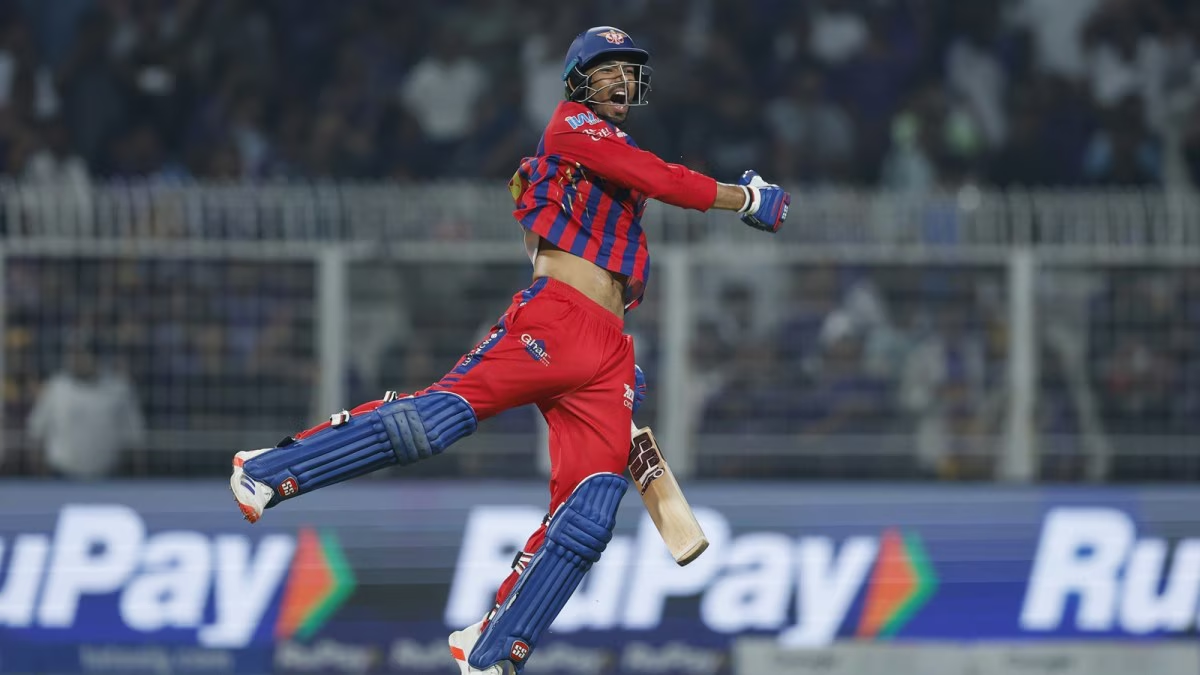 Mukul Choudhary — IPL Stats, Biography, Records | मुकुल चौधरी — झुंझुनू का वो Finisher जिसने IPL 2026 में दुनिया को चौंकाया
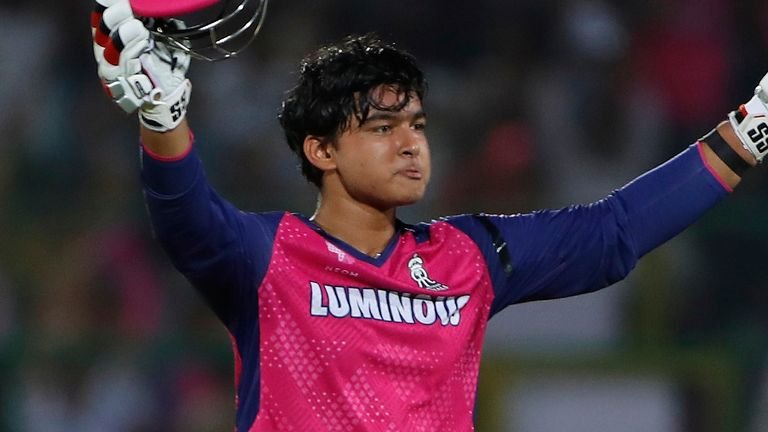 Vaibhav Suryavanshi — IPL Records, Stats & Biography | वैभव सूर्यवंशी — Bihar का वो 15 साल का तूफान जिसने Cricket इतिहास बदल दिया
 Cristiano Ronaldo — क्रिस्टियानो रोनाल्डो: The Man Who Refused to Stop Being the Greatest
Hover to fan the frames
Your take
Was this worth your time?
0 reactions