

On this page
- Table of Contents
- Early Life and Roots: The Crucible of Hardship
- The Theatrical Beginnings: Forging the Method
- Entering Cinema: From Quiet Breakthroughs to Explosive Stardom
- Defining Decades: A Chronological Journey Through His Major Works
- Unrivaled Versatility: The Uniquely Rare Triple Crown
- Comedy and Late-Career Resurgence
- The Crown Jewel: Natsamrat (2016)
- Off-Screen Heroism: The NAAM Foundation & Philanthropy
- The Enduring Legacy of an Unapologetic Master
In this story
- Table of Contents
- Early Life and Roots: The Crucible of Hardship
- The Theatrical Beginnings: Forging the Method
- Entering Cinema: From Quiet Breakthroughs to Explosive Stardom
- Defining Decades: A Chronological Journey Through His Major Works
Table of Contents
Legendary Actor Nana Patekar Passes Away
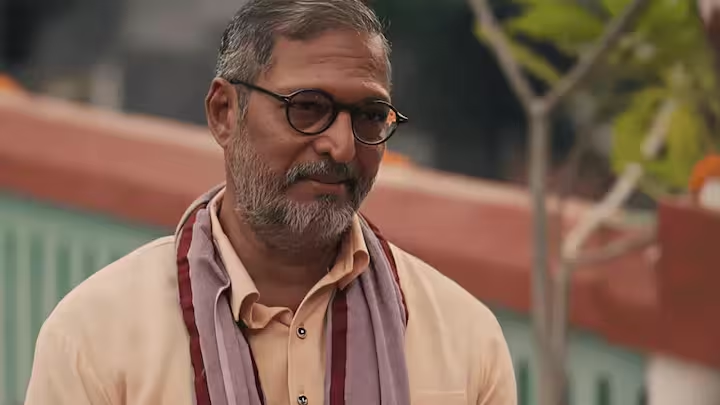
The curtain has fallen on one of the most ferocious, original, and uncompromising talents in the history of Indian arts. On October 8, 2026, veteran actor Nana Patekar passed away at the age of 75 following a severe cardiac arrest in Goa.
To call Nana Patekar an actor is an understatement. He was an institution—a force of nature who dismantled traditional cinematic norms, redefined screen intensity, and bridged the gap between parallel artistic cinema, mainstream Bollywood, and Marathi theatre. Over a career spanning nearly five decades, he brought a hyper-realistic, explosive energy to his characters that captured the angst, moral fury, and vulnerability of the common man. Off-screen, he remained an unpretentious, straightforward humanitarian whose work transformed thousands of lives in rural India.
Here is an exhaustive, retrospective deep dive into the life, filmography, craftsmanship, and enduring legacy of Vishwanath “Nana” Patekar.
Early Life and Roots: The Crucible of Hardship
Born Vishwanath Patekar on January 1, 1951, in Murud-Janjira, Maharashtra, Nana’s early life was far from glamourous. Raised in a lower-middle-class family, he experienced financial instability early on. When he was a teenager, his father’s textile business suffered major losses, thrusting young Nana into the harsh reality of earning a living.
To support his family, Nana painted commercial signboards and film posters along the streets of Mumbai, earning a pittance of a few rupees a day. He enrolled in the Sir J.J. Institute of Applied Art, where he honed a keen visual eye and an acute sense of human psychology. These lean, difficult years molded his world view: they taught him resilience, stripped away any fascination with pretension, and infused his later performances with an undeniable, authentic street-level grit.
The Theatrical Beginnings: Forging the Method
Long before he stood in front of a movie camera, Nana Patekar belonged to the stage. Marathi theatre was his true acting laboratory. In the 1970s and 1980s, the Marathi stage was experiencing a golden age of sharp social realism and intense drama.
Nana threw himself into complex theatrical productions, earning respect for his vocal modulation, body language, and ability to hold an audience spellbound with long, fiery monologues. Theater taught him discipline and timing. Unlike film stars cultivated in front of studio cameras, Nana was tempered on stage—where there are no retakes, no filters, and no place to hide.
Entering Cinema: From Quiet Breakthroughs to Explosive Stardom
Nana made his Hindi cinema debut in Muzaffar Ali’s critically acclaimed Gaman (1978). Throughout the late 70s and early 80s, he built a solid foundation with character roles in Marathi films like Maficha Sakshidar (1986) and Hindi social dramas like Ankush (1986), Pratighaat (1987), and Andha Yudh (1987).
However, it was the late 1980s that transformed him from a reliable character actor into a national sensation.
                     NANA PATEKAR'S CAREER TRAJECTORY

  [1970s–1980s]         [1989–1999]           [2000s–2010s]         [2015–2026]
Theatre & Early Roles ➔ Breakout Stardom   ➔ Mainstream Versatility ➔ Regal Masterpieces &
(Gaman, Ankush)       (Parinda, Krantiveer) (Apaharan, Welcome)     Social Impact (Natsamrat)
Defining Decades: A Chronological Journey Through His Major Works
1. The Gangster Who Shook Cinema: Parinda (1989)
Vidhu Vinod Chopra’s crime masterpiece Parinda marked the definitive turning point in Nana Patekar’s career. Playing Anna Seth, a psychotic, fire-phobic underworld don, Nana delivered a performance that fundamentally altered how villains were portrayed in Hindi cinema. His unpredictable shifts between explosive rage and erratic calm earned him his first National Film Award for Best Supporting Actor and the Filmfare Award.
2. The Director-Actor Debut: Prahaar: The Final Attack (1991)
Demonstrating his artistic ambition, Nana stepped behind the camera to write and direct Prahaar. Playing Major Pratap Chauhan, an unyielding Army officer who clashes with civilian apathy and corruption, Nana famously underwent rigorous training with the Indian Army’s Maratha Light Infantry to prepare for the role. The film remains a cult classic, praised for its realism and technical discipline.
3. Unforgettable Patriotic Fury: Tirangaa (1993) & Krantiveer (1994)
- Tirangaa (1993): Paired alongside veteran Raaj Kumar, Nana played Inspector Shivajirao Wagle. The contrast between Raaj Kumar’s regal style and Nana’s rapid-fire, explosive delivery generated electric box-office magic.
- Krantiveer (1994): As Pratap Narayan Tilak, a cynical slacker transformed into a revolutionary against communal violence and political corruption, Nana gave the performance of a lifetime. His iconic climax monologue—where he mixes blood from different religions to prove humanity is identical—remains one of the most famous scenes in Indian cinematic history. The film swept major honors, winning Nana the National Film Award for Best Actor, Filmfare Best Actor Award, and Star Screen Award.
4. Emotional Nuance & Villainy: Khamoshi, Agni Sakshi, & Apaharan
Nana was never content being typecast as an angry hero. He constantly pivoted into drastically different emotional territories:
- Khamoshi: The Musical (1996): Directed by Sanjay Leela Bhansali, Nana played Joseph, a deaf and mute father struggling to connect with his musically gifted daughter. Without speaking a single word of dialogue, he delivered a masterclass in silent expressive acting.
- Agni Sakshi (1996): Playing an obsessively abusive husband, his terrifying portrayal won him his second National Film Award for Best Supporting Actor.
- Apaharan (2005): Under Prakash Jha’s direction, Nana played Tabrez Alam, an unscrupulous politician-cum-underworld figure. His understated, cunning performance earned him another Filmfare Award for Best Villain.
| Year | Title | Language | Role / Character | Key Awards & Achievements |
|---|---|---|---|---|
| 1978 | Gaman | Hindi | Vasu | Film Acting Debut |
| 1989 | Parinda | Hindi | Anna Seth |
National Film Award (Best Supporting Actor) Filmfare Award (Best Supporting Actor) |
| 1991 | Prahaar: The Final Attack | Hindi | Major Pratap Chauhan | Directorial Debut; Nominated for Filmfare Best Story |
| 1992 | Angaar | Hindi | Majid Khan | Filmfare Award (Best Villain) |
| 1994 | Krantiveer | Hindi | Pratap Narayan Tilak |
National Film Award (Best Actor) Filmfare Award (Best Actor) Star Screen Award (Best Actor) |
| 1996 | Agni Sakshi | Hindi | Vishwanath | National Film Award (Best Supporting Actor) |
| 1996 | Khamoshi: The Musical | Hindi | Joseph Braganza | Critical acclaim for non-verbal performance |
| 2004 | Ab Tak Chhappan | Hindi | Inspector Sadhu Agashe | BFJA Award for Best Actor |
| 2005 | Apaharan | Hindi | Tabrez Alam | Filmfare Award (Best Villain) |
| 2007 | Welcome | Hindi | Uday Shetty | Iconic Comic Role; massive commercial blockbuster |
| 2010 | Raajneeti | Hindi | Brij Gopal | Critical acclaim; Mahabharata-inspired political drama |
| 2014 | Dr. Prakash Baba Amte | Marathi | Dr. Prakash Amte | Filmfare Marathi Award (Best Actor) |
| 2016 | Natsamrat | Marathi | Appasaheb Belwalkar | Filmfare Marathi Award & Zee Cine Award (Best Actor) |
| 2018 | Kaala | Tamil | Haridev Abhayankar | Ananda Vikatan Award (Best Villain) |
Unrivaled Versatility: The Uniquely Rare Triple Crown
Nana Patekar holds a record in Indian cinema history that stands as a testament to his sheer range: he is the only actor to win Filmfare Awards across all three primary acting categories—Best Actor, Best Supporting Actor, and Best Villain.
                NANA PATEKAR'S TRIPLE CROWN RECORD
  ┌─────────────────────────────────────────────────────────────┐
  │                                                             │
  │   BEST ACTOR           BEST SUPPORTING ACTOR   BEST VILLAIN │
  │   • Krantiveer (1994)  • Parinda (1989)        • Angaar     │
  │                        • Natsamrat (Marathi)   • Apaharan   │
  │                                                             │
  └─────────────────────────────────────────────────────────────┘
Comedy and Late-Career Resurgence
While famous for his intense dramatic roles, Nana Patekar proved his comic genius in the 2000s.
In Anees Bazmee’s smash hit comedy Welcome (2007), Nana played Uday Shetty, an underworld don desperate to become a respectable actor. Paired with Paresh Rawal and Anil Kapoor, Nana’s deadpan comedic delivery, sharp timing, and iconic expressions turned Welcome into an enduring pop-culture staple that generated memes for generations. He reprised the role in Welcome Back (2015).
He continued to push boundaries across regional industries, taking on political thrillers like Raajneeti (2010), biopics like Dr. Prakash Baba Amte (2014), and playing the antagonist opposite Rajinikanth in the Tamil blockbuster Kaala (2018).
The Crown Jewel: Natsamrat (2016)
If Krantiveer was his mid-career peak, Mahesh Manjrekar’s Natsamrat (2016) was his magnum opus.
Based on the legendary play by V.V. Shirwadkar, Nana played Ganpatrao “Appasaheb” Belwalkar, a retired Shakespearean theatre actor experiencing heartbreak, aging, and neglect from his adult children.
Nana drew upon his lifetime of stage experience, personal heartbreak, and emotional depth to deliver a performance that left audiences in tears. Critics called it one of the greatest acting performances ever captured on Indian celluloid. It earned him widespread national acclaim, including the Filmfare Marathi Award for Best Actor.
Off-Screen Heroism: The NAAM Foundation & Philanthropy
Unlike many silver-screen icons who lived behind high walls of luxury, Nana Patekar’s heart remained anchored to the soil of Maharashtra.
In 2015, deeply moved by the tragic news of widespread farmer suicides in drought-affected Marathwada and Vidarbha, Nana cancelled his plans to buy a luxury car, pooled his personal savings, and partnered with fellow actor Makarand Anaspure. Together, they established the NAAM Foundation.
                      NAAM FOUNDATION INITIATIVES

  ┌─────────────────────────────────────────────────────────────┐
  │ • Direct Financial Aid to Bereaved Farmer Families           │
  │ • Water Conservation, River Rejuvenation, & Desilting      │
  │ • Village Adoption & Sustainable Infrastructure Building     │
  │ • Women Empowerment through Employment & Sewing Clusters    │
  │ • Mass Tree Plantation & Watershed Development Projects     │
  └─────────────────────────────────────────────────────────────┘
Through NAAM, Nana helped construct hundreds of homes, provided financial assistance to thousands of widows, desilted hundreds of kilometers of dried rivers, and adopted whole villages to make them drought-resilient. In 2013, he was honored with the Padma Shri, India’s fourth-highest civilian award, recognizing his contributions to arts and society.
The Enduring Legacy of an Unapologetic Master
Nana Patekar leaves behind a void that no actor can fill. He belonged to an era where art was earned through sweat, theatrical discipline, and lived human experience. He didn’t rely on stardom, glamour, or PR campaigns; he relied on sheer talent, unforgettable dialogue delivery, and an absolute lack of fear.
As cinema lovers remember his body of work—from the dark streets of Parinda to the passionate speeches of Krantiveer, the hilarious antics of Welcome, and the heartbreaking tragedy of Natsamrat—Nana Patekar’s voice will continue to echo across Indian culture for generations to come.
Here is a compiled list of Nana Patekar’s top 10 most iconic film dialogues, complete with their film context and English translations.
1. Krantiveer (1994) — The Climax Monologue on Religion
Dialogue: “Yeh Hindu ka khoon hai, yeh Musalman ka khoon hai… bata isme Hindu ka kaunsa hai, Musalman ka kaunsa, bata!”
Context: In the film’s climax, Pratap Narayan Tilak slashes his own hand and that of a communal instigator, mixing their blood to expose the absurdity of religious hatred and violence.
English Translation: “This is Hindu blood, this is Muslim blood… tell me, which one is Hindu and which one is Muslim, tell me!”
2. Tirangaa (1993) — The Threat to Criminals
Dialogue: “Aa gaye meri maut ka tamasha dekhne… Ek machhar, saala ek machhar aadmi ko hijda bana deta hai!”
Context: Inspector Shivajirao Wagle addresses a crowd while standing on a gallows-like platform, reflecting cynically on how small, corrupt forces strip ordinary citizens of their dignity.
English Translation: “So you’ve all come to watch the spectacle of my death… A single mosquito—just one damn mosquito—can emasculate a man!”
3. Parinda (1989) — Anna’s Fire Phobia
Dialogue: “Aag lagne ke baad paani nahi milta, aur paani mile toh aag nahi bujhti… Darr lagta hai re!”
Context: The ruthless underworld don Anna Seth breaks down in paranoid panic, revealing his psychological trauma and crippling phobia of fire.
English Translation: “When a fire starts, there’s no water around—and if you find water, it can’t put out the fire… I’m scared, man!”
4. Prahaar: The Final Attack (1991) — On Civilian Apathy
Dialogue: “Maut se kya darna? Maut toh ek din aani hai… Darr toh iss baat ka hai ki hum jeete ji marr na jayein.”
Context: Major Pratap Chauhan addresses his squad and civilians, challenging the moral spinelessness and passive acceptance of corruption in daily society.
English Translation: “Why fear death? Death is bound to come one day… What we should fear is dying while we are still alive.”
5. Welcome (2007) — Uday Shetty’s Control Lever
Dialogue: “Aalu le lo, kanda le lo… Bhagwan ka diya hua sab kuch hai—daulat hai, shauhrat hai, izzat hai…”
Context: Underworld boss Uday Shetty tries to practice acting to leave crime behind, hilariously reciting dramatic soliloquies while trying to blend into ordinary life.
English Translation: “Buy potatoes, buy onions… God has blessed me with everything—wealth, fame, respect…”
6. Welcome (2007) — Controlling His Temper
Dialogue: “Control Uday, Control!”
Context: Uday Shetty mutters this catchphrase to himself every time he is pushed to the brink of explosive violence by circumstances, trying desperately to stay calm.
English Translation: “Control yourself Uday, control!”
7. Ab Tak Chhappan (2004) — The Encounter Specialist’s Philosophy
Dialogue: “Kanoon ki kitaab mein sab likha hai, bas yeh nahi likha ki jab kanoon toot-te dekhe toh kya karein.”
Context: Encounter specialist Sadhu Agashe justifies his swift, extrajudicial methods to maintain order when formal legal channels fail to stop hardened criminals.
English Translation: “Everything is written in the book of law, except what one should do when they watch the law being broken right in front of them.”
8. Agni Sakshi (1996) — The Possessive Husband
Dialogue: “Tum meri ho, sirf meri… Agar tum kisi aur ki hui, toh main tumhe jaan se maar dunga.”
Context: Vishwanath, an obsessively jealous husband, delivers a chill-inducing threat to his wife, demonstrating the terrifying grip of his control.
English Translation: “You are mine, only mine… If you ever belong to anyone else, I will kill you.”
9. Yashwant (1997) — On the Power of the Common Man
Dialogue: “Ek machhar aadmi ko hijda bana deta hai… Ek din main iss shehar ko saaf kar dunga.”
Context: Inspector Yashwant Lohar delivers a furious monologue against political corruption and police subordination, vowing to cleanse the system single-handedly.
English Translation: “A single mosquito can paralyze a man… One day, I will sweep this entire city clean.”
10. Natsamrat (2016) — The Heartbreak of Old Age
Dialogue: “To be or not to be, that is the question… Koni ghar deta ka ghar?”
Context: Disowned by his children, the aging Shakespearean stage actor Appasaheb Belwalkar wanders the streets in rain, delivering a heartbreaking plea for shelter and love.
English Translation: “To be or not to be, that is the question… Will anyone give me a home? Anyone?”
In frames · the Celebrity desk
 Legendary Actor Nana Patekar Passes Away at 75
 Jim Carrey Marries for the Third Time at 64! Hollywood Superstar Ties the Knot With 32-Year-Old Girlfriend Min Ah
 Who Is Sharad Kapoor? Shah Rukh Khan and Salman Khan’s Former Co-Star Seeks Work After Serious Leg Injury
 Shruti Haasan Breaks Her Silence on Cosmetic Enhancements: “It’s Silly to Lie About It” – Here’s What the Actress Really Thinks
Hover to fan the frames
Your take
Was this worth your time?
0 reactions