On this page
- Table of Contents
- MS in Space Systems Engineering
- What Is Space Systems Engineering?
- The Main Subsystems of a Spacecraft
- What an MS in Space Systems Engineering Teaches
- Is the Degree Suitable for Mechanical Graduates?
- Is the Degree Suitable for Electrical Graduates?
- Is the Degree Suitable for Aerospace Graduates?
- How the Three Backgrounds Compare
- Students From Other Backgrounds
- Skills You Will Build
- Top National Colleges for Space Systems Engineering in India
- Top International Colleges for Space Systems Engineering
- Cost and Duration Comparison Table
- Career Opportunities After the Degree
- Practical Issues Students Should Know
- How to Choose the Right Program
- Admission Requirements and Scholarships
- Common Mistakes to Avoid
- Trends Shaping the Future of Space Engineering
- Frequently Asked Questions
In this story
- Table of Contents
- MS in Space Systems Engineering
- What Is Space Systems Engineering?
- The Main Subsystems of a Spacecraft
- What an MS in Space Systems Engineering Teaches
Table of Contents
MS in Space Systems Engineering
A satellite is a strange kind of machine. It must survive a violent launch, run for years without repair, and work in a place with no air, extreme heat and fierce radiation. No single engineer can design all of it. Structures, power, radios, computers, thermal control and software must fit together like parts of a puzzle. Someone has to hold that puzzle together, and that person is a space systems engineer.
If you hold a bachelor’s degree in mechanical, electrical or aerospace engineering, you may wonder whether an MS in Space Systems Engineering fits your background. The short answer is yes, with a few smart preparations. This guide explains what the degree covers, how each background fits, and which colleges in India and abroad offer strong routes. You will also find a cost and duration comparison table and a detailed FAQ.
What Is Space Systems Engineering?
Space systems engineering is the discipline of designing, building, testing and operating complete space missions. It treats a spacecraft, its launch vehicle, its ground station and its operators as one connected system. Engineers in this field focus on how all the parts work together, not only on how each part works alone.
The work begins with a mission goal. A team might want to photograph crops, relay internet signals or study a distant planet. Engineers then turn that goal into clear requirements, such as orbit, lifetime, data rate and cost. Next, they divide the design among subsystems and make sure each one meets its share of the requirements.
Because space hardware cannot be fixed after launch, the discipline stresses reliability, testing and risk management. Engineers ask hard questions early. What happens if a sensor fails? What if the battery runs hot? What if the launch shakes harder than planned? These habits make space engineers careful, curious and well organised.
The Main Subsystems of a Spacecraft
Every spacecraft shares a common set of subsystems. An MS program teaches you how each one works and how they depend on one another.
The structure and mechanisms subsystem holds the spacecraft together and deploys antennas and solar panels. The thermal control subsystem keeps electronics within safe temperatures, even when one side faces the sun and the other faces deep space. The power subsystem uses solar panels, batteries and power electronics to feed every unit.
The attitude determination and control subsystem points the spacecraft in the right direction using sensors and reaction wheels. The propulsion subsystem changes orbit and keeps the spacecraft in position. The communications subsystem links the satellite to Earth through radios and antennas. The onboard computer and software manage data and commands.
Finally, the payload does the mission’s real work, such as a camera, a sensor or a communication relay. A systems engineer must balance mass, power, cost and risk across all of these parts. Because any change in one subsystem affects the others, this balancing act forms the heart of the job.
What an MS in Space Systems Engineering Teaches
Program names vary, and some universities use titles such as MS in Astronautical Engineering, MSc in Space Engineering or MS in Aerospace Engineering with a space systems track. Even so, most programs share a similar structure.
Core courses usually cover orbital mechanics, spacecraft dynamics and control, space propulsion, spacecraft structures, thermal design and space communications. Systems engineering courses teach requirements, architecture, trade studies, verification and risk analysis. Many programs also include mission design, space environment and reliability.
Most programs end with a design project or thesis. Students might design a small satellite, plan a lunar mission or analyse a launch trajectory. Some universities let teams build real CubeSats, which gives you hands-on experience that employers love. Because the project often becomes the centrepiece of your portfolio, choose a program with strong project opportunities.
Is the Degree Suitable for Mechanical Graduates?
Mechanical graduates fit very well. Space hardware depends heavily on structures, thermal management, mechanisms and propulsion, and these topics sit at the core of mechanical engineering. You already understand stress, vibration, heat transfer and materials. Those skills transfer directly.
Specific roles suit you naturally. Structural engineers design frames and panels that survive launch loads. Thermal engineers keep hardware at safe temperatures. Mechanism engineers design hinges, latches and deployable booms. Propulsion engineers work on thrusters and tanks.
However, mechanical graduates often lack knowledge of orbital mechanics, spacecraft electronics and control. Therefore, you should refresh linear algebra and basic control theory before you apply. You should also learn some programming, because mission analysis uses code heavily. A short online course in Python and MATLAB can close much of this gap.
Is the Degree Suitable for Electrical Graduates?
Electrical graduates also fit very well. Every spacecraft needs power systems, radio links, onboard computers and sensors, and these areas belong to electrical and electronics engineering. Your knowledge of circuits, signals and embedded systems gives you an immediate edge.
Typical roles include power systems engineer, communications engineer, avionics engineer, RF engineer and embedded software engineer. You might design solar array regulators, choose antennas or write flight software. Satellite makers and ground station operators hire electrical engineers in large numbers.
The main gaps involve mechanics and thermal topics. Electrical graduates may find structures and orbital dynamics unfamiliar. You can prepare by studying basic mechanics, vibration and heat transfer. Good programs also offer bridging courses, and many students find that their electrical background makes the systems view easier to grasp.
Is the Degree Suitable for Aerospace Graduates?
Aerospace graduates have the most direct path. Your bachelor’s degree already covered flight mechanics, propulsion, structures and control. Many of those ideas extend naturally into space. You can focus your master’s on topics that go beyond aircraft, such as orbital mechanics, space environment and mission design.
However, an aerospace bachelor’s degree often leans toward aircraft. You may need to learn spacecraft electronics, power systems and communications in more depth. A space systems program helps by giving you the full spacecraft view. It turns an aircraft-focused graduate into a mission-focused engineer.
Competition can feel stronger for aerospace graduates because many applicants share your background. Therefore, stand out through projects. A rocketry club, a CubeSat team or a research internship will strengthen your profile. Also consider adding electrical or software skills, because they widen your options.
How the Three Backgrounds Compare
The table below summarises how each background fits the degree. Real students often blend skills, so treat the lines as general patterns.
| Aspect | Mechanical Graduates | Electrical Graduates | Aerospace Graduates |
|---|---|---|---|
| Natural strengths | Structures, thermal, mechanisms, propulsion | Power, communications, avionics, software | Flight dynamics, propulsion, control |
| Common gaps | Orbital mechanics, electronics, control | Structures, thermal, orbital dynamics | Electronics, power, communications |
| Typical roles | Structural, thermal or mechanism engineer | Power, RF or avionics engineer | Mission analyst, GNC or systems engineer |
| Suggested preparation | Control basics and Python | Mechanics and heat transfer | Electronics and embedded basics |
| Overall fit | Very strong | Very strong | Most direct |
Students From Other Backgrounds
Space programs also welcome graduates from computer science, physics and related fields. Software engineers can work on flight software and ground systems. Physicists can contribute to payload design and mission analysis. These students usually need extra preparation in engineering fundamentals. Still, many succeed through bridging courses and strong motivation.
Skills You Will Build
Graduates leave with a rare mix of abilities. Technical skills include mission analysis, trade studies, subsystem design and verification planning. You will use tools such as MATLAB, Python, STK, GMAT, CAD packages and finite element software. Some programs also teach systems modelling with SysML.
Systems thinking forms the central skill. You learn to see the whole mission and balance competing needs. You also learn to write clear requirements and track them through design, testing and launch.
Soft skills carry equal weight. Space projects involve large teams, tight schedules and strict reviews. You must communicate clearly, document carefully and handle disagreements calmly. Because mistakes can cost millions, honest risk reporting earns respect quickly.
Top National Colleges for Space Systems Engineering in India
India has a proud space heritage, and several institutions offer strong programs.
The Indian Institute of Space Science and Technology in Thiruvananthapuram is the country’s dedicated space university. It runs programs in aerospace, avionics, propulsion and related areas, and it works closely with the national space agency. Its focus makes it a natural first choice.
IIT Bombay offers respected aerospace programs with strong research in dynamics, control and propulsion. Its alumni work in space agencies and companies around the world.
IIT Kanpur has a long tradition in aerospace engineering. Its laboratories support work in flight mechanics, structures and aerodynamics, and its graduates hold leading roles in industry.
IIT Madras combines strong aerospace, mechanical and electrical departments. Students there can join research on propulsion, satellite systems and space applications.
The Indian Institute of Science in Bangalore offers research-driven aerospace programs. It suits students who want depth and a clear route to a PhD.
Because competition is intense, plan early. Prepare for GATE, which opens the door to MTech programs at top institutes. Meanwhile, join a satellite or rocketry club and finish a small project to strengthen your profile.
Top International Colleges for Space Systems Engineering
Abroad, several universities run dedicated space programs with excellent facilities.
TU Delft in the Netherlands offers a respected master’s in aerospace engineering with a strong space track. Its research covers satellites, launchers and space systems, and Dutch industry offers many internships.
Politecnico di Milano in Italy runs a well-known master’s in space engineering. Italy’s aerospace industry and its links to European space projects give students strong opportunities.
Luleå University of Technology in Sweden offers a master’s in space engineering at its Kiruna campus, close to a major space research centre. The small-class setting suits students who enjoy hands-on learning.
Cranfield University in the United Kingdom provides a one-year master’s in astronautics and space engineering. Its industry-linked projects help students build practical experience quickly.
The University of Colorado Boulder in the United States has a famous aerospace department with deep ties to the space industry. Its location near many space companies supports internships and research.
Georgia Institute of Technology in the United States offers strong aerospace programs with a space systems design focus. Its research strength attracts students from around the world.
The University of Toronto in Canada hosts the Institute for Aerospace Studies. Canada’s growing space sector and favourable post-study work rules make it attractive to international students.
Cost and Duration Comparison Table
The table below gives approximate figures to help your planning. Fees change every year, and exchange rates move often. Therefore, treat these values as estimates and confirm the latest details on each official website before you apply.
| Institution | Country | Typical Program | Duration | Approximate Annual Tuition | Key Strength |
|---|---|---|---|---|---|
| IIST Thiruvananthapuram | India | MTech in Aerospace, Avionics or related areas | 2 years | Roughly INR 30,000 to 1,50,000 | Space agency links |
| IIT Bombay | India | MTech, PhD in Aerospace Engineering | 2 to 5 years | Roughly INR 50,000 to 2,50,000 | Dynamics and propulsion |
| IIT Kanpur | India | MTech, PhD in Aerospace Engineering | 2 to 5 years | Roughly INR 50,000 to 2,50,000 | Aerospace heritage |
| IIT Madras | India | MTech, PhD in Aerospace Engineering | 2 to 5 years | Roughly INR 50,000 to 2,50,000 | Satellite and propulsion research |
| IISc Bangalore | India | ME, MTech, PhD in Aerospace Engineering | 2 to 5 years | Roughly INR 40,000 to 1,00,000 | Research depth |
| TU Delft | Netherlands | MSc in Aerospace Engineering, space track | 2 years | Roughly EUR 20,000 to 22,000 | Satellites and launchers |
| Politecnico di Milano | Italy | MSc in Space Engineering | 2 years | Roughly EUR 4,000 to 8,000, varies by income band | European space links |
| Luleå University of Technology | Sweden | MSc in Space Engineering | 2 years | Roughly EUR 11,000 to 14,000 | Kiruna space research |
| Cranfield University | United Kingdom | MSc in Astronautics and Space Engineering | 1 year | Roughly GBP 25,000 to 30,000 | Industry-linked projects |
| University of Colorado Boulder | United States | MS in Aerospace Engineering Sciences | 1.5 to 2 years | Roughly USD 35,000 to 45,000 | Space industry cluster |
| Georgia Institute of Technology | United States | MS in Aerospace Engineering | 1.5 to 2 years | Roughly USD 30,000 to 45,000 | Space systems design |
| University of Toronto | Canada | MEng, MASc in Aerospace Science and Engineering | 1 to 2 years | Roughly CAD 40,000 to 65,000 | Aerospace institute |
Tuition is only part of the budget. Living costs in cities such as Boulder, Milan or Toronto can match or exceed tuition at some universities. Scholarships, research assistantships and teaching roles can reduce the burden. Meanwhile, Indian institutions charge far lower fees, although seats at top colleges remain highly competitive.
Duration also affects your plan. A one-year program saves money and gets you into the job market sooner, but it moves fast. A two-year program leaves room for internships and a thesis. Choose the format that suits your goals and your finances.
Career Opportunities After the Degree
Graduates find work across the growing space industry. National space agencies hire engineers for missions, launch vehicles and ground systems. Large aerospace firms need specialists in satellites, structures, propulsion and avionics. New space companies build small satellites, launch vehicles and space services, and they often give graduates broad responsibility.
India’s space sector has expanded fast. Private firms now build rockets, Earth observation satellites and ground systems, and a national agency supports the private sector. As a result, more roles appear at home than ever before. Global opportunities also remain strong, especially in Europe, North America and the Middle East.
Common job titles include systems engineer, mission analyst, GNC engineer, structural engineer, thermal engineer, power engineer, avionics engineer and propulsion engineer. Over time, many engineers grow into chief engineer, program manager or technical director roles. Salaries vary by country, employer and experience. Entry-level pay often starts moderately, but specialists can earn very well as their responsibility grows. Because the industry keeps expanding, demand for trained engineers looks healthy.
Practical Issues Students Should Know
Some space careers carry nationality rules. Certain United States programs and employers follow export control laws, and these laws can limit what international students may work on. Some European agency roles also prefer citizens of member states. Therefore, research these rules before you choose a country and a program.
Funding and visas deserve early attention too. Check post-study work options in each country, because they differ widely. Also keep in mind that space jobs sometimes require security clearance, which limits roles for non-citizens. None of this should stop you, but planning helps you avoid surprises.
How to Choose the Right Program
Start by reading the curriculum. Look for programs that cover orbital mechanics, spacecraft subsystems and systems engineering together. Ask how much time students spend on design projects, because real projects build the strongest skills.
Next, examine the facilities and faculty. Good programs offer cleanrooms, test equipment, ground stations or satellite labs. Active researchers bring current knowledge and industry contacts. Also check whether students can build real hardware, such as a CubeSat.
Industry ties deserve close attention. Programs that partner with space agencies and companies often offer internships and thesis projects. Finally, compare total cost, visa rules, nationality restrictions and post-study work options. A costlier program may repay itself through better job outcomes.
Admission Requirements and Scholarships
Most international master’s programs ask for a relevant bachelor’s degree, strong grades in mathematics and physics, a statement of purpose and references. English proof through IELTS or TOEFL is common. Some programs request GRE scores, although many have dropped the rule. Projects, internships and club activities strengthen your application.
Indian programs mainly use GATE scores, and strong results can bring a monthly stipend. Some specialised institutes run their own selection processes, so read each notice carefully. European universities may check subject content closely, and Germany often asks Indian applicants for an academic evaluation certificate.
Funding can transform your plan. Several European countries offer scholarships, and the UK offers awards such as Chevening and university grants. Research assistantships and teaching roles help at the graduate level, especially in North America. Start your search at least a year before enrolment, because deadlines come early.
Common Mistakes to Avoid
Many applicants choose a program because of a famous name. That approach can backfire if the curriculum does not match your goals. Read the course list carefully and speak with current students.
Another mistake is ignoring weak areas. If you come from a mechanical background, do not skip electronics and control. If you come from an electrical background, do not skip mechanics and thermal basics. Finally, avoid waiting until the last minute to apply. Documents, tests and scholarships take time, and early action gives you more choices.
Trends Shaping the Future of Space Engineering
Several trends will define the next decade. Small satellites and large constellations will keep growing, and they will need low-cost, mass-produced designs. Reusable launch vehicles will reduce the cost of reaching orbit and increase launch rates.
Lunar and deep-space missions will also expand, and they will need advanced power, communications and autonomy. In-orbit servicing and debris removal will become important as space grows crowded. Meanwhile, artificial intelligence will help satellites process data on board and plan their own tasks. Engineers who combine systems thinking with software skills will stay in high demand.
Frequently Asked Questions
What is an MS in Space Systems Engineering?
It is a postgraduate degree that teaches how to design and manage complete space missions. Courses cover orbital mechanics, spacecraft subsystems, systems engineering and mission design. Many programs end with a design project or thesis.
Can a mechanical engineer do this degree?
Yes, mechanical graduates fit very well. Structures, thermal control, mechanisms and propulsion all rely on mechanical skills. You should refresh control basics and programming before you apply.
Can an electrical engineer do this degree?
Yes, electrical graduates fit very well too. Power, communications, avionics and software form major parts of every spacecraft. You should refresh mechanics and heat transfer to fill small gaps.
Is an aerospace degree required?
No, it is not required. Many successful space engineers come from mechanical, electrical, physics and computer science backgrounds. Strong fundamentals and good projects matter more than the degree title.
Do I need programming skills?
Yes, programming helps a great deal. Mission analysis and simulation rely on MATLAB and Python. You can start with simple scripts and build your skills over time.
How long does the degree take?
Most programs last one to two years. A one-year program moves quickly and suits focused students. A two-year program allows more research, internships and a thesis.
Are there good space jobs in India?
Yes, the outlook is growing. The national space agency, public sector units and many private start-ups hire engineers. Global companies also recruit Indian graduates for roles abroad.
Is this degree worth the cost?
It can be, if you choose carefully. Look for programs with strong industry links, funding options and good post-study work rules. Compare your expected income with the total cost before you decide.
An MS in Space Systems Engineering welcomes mechanical, electrical and aerospace graduates alike. Each background brings valuable strengths, and each has small gaps that you can close with early preparation. The degree rewards curiosity, discipline and a love of building things that must work the first time.
Take one practical step this week. Shortlist three programs and compare their curricula, fees and industry links. Then build a small project, such as a simulated orbit in Python or a basic satellite power budget. That project will sharpen your skills and strengthen your application. The next generation of satellites and rockets needs engineers who can see the whole mission, and you could be one of them.
In frames · the Education & Careers desk
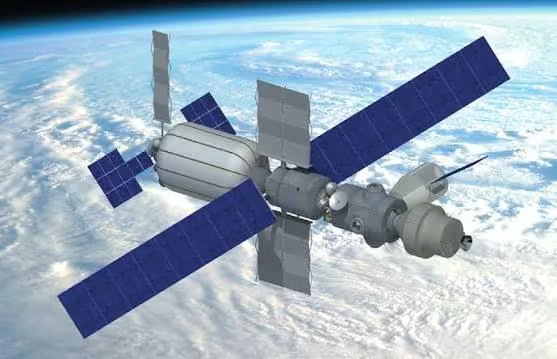 MS in Space Systems Engineering: Is It Suitable for Mechanical, Electrical and Aerospace Graduates?
 After BSc Physics, What Master’s Degree Can Lead to Careers in Quantum Technology and Semiconductor Research?
 Why Are Mechanical Engineers Choosing Master’s Degrees in Computational Engineering and Simulation?
 MS in AI for Healthcare vs MS in Computer Science: Which Is Better for Engineering Graduates?
Hover to fan the frames
Your take
Was this worth your time?
0 reactions