
On this page
- Early life and family
- Education and classical dance training
- Early career
- Entry into Hindi cinema
- Rockstar and growing recognition
- Transition to leading roles
- Wazir and mainstream Hindi cinema
- Collaboration with Mani Ratnam and Kaatru Veliyidai
- Padmaavat
- Expansion into Telugu cinema
- Chekka Chivantha Vaanam
- Psycho, Sufiyum Sujatayum and later South Indian work
- Anthology and streaming projects
- Heeramandi: The Diamond Bazaar
- Working relationship with Sanjay Leela Bhansali
- Acting style
- Multilingual career
- Awards and recognition
- Personal life
- Public image and fashion
- Career significance
- Selected filmography
- Legacy
In this story
- Early life and family
- Education and classical dance training
- Early career
- Entry into Hindi cinema
- Rockstar and growing recognition
Aditi Rao Hydari (born 28 October 1986) is an Indian actress who works primarily in Hindi, Tamil, Telugu and Malayalam cinema. She is known for her performances in films and streaming productions that have included Delhi-6 (2009), Yeh Saali Zindagi (2011), Rockstar (2011), Murder 3 (2013), Wazir (2016), Kaatru Veliyidai (2017), Padmaavat (2018), Sammohanam (2018), Chekka Chivantha Vaanam (2018), Psycho (2020), Sufiyum Sujatayum (2020), Maha Samudram (2021), Ajeeb Daastaans (2021), Jubilee (2023) and the Netflix series Heeramandi: The Diamond Bazaar (2024).
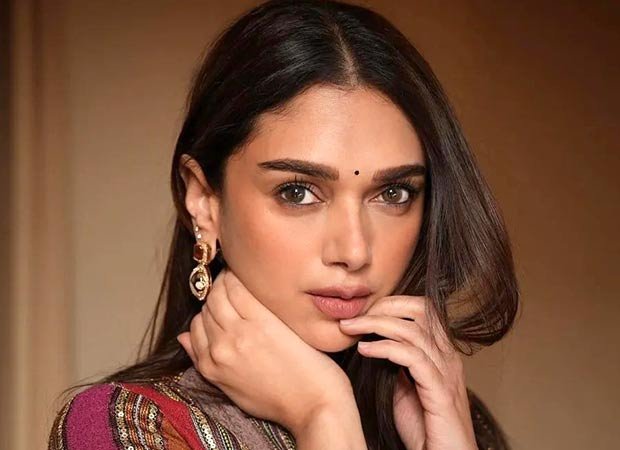
Hydari made her screen debut with the Malayalam film Prajapathi in 2006 and subsequently worked across several Indian film industries. Her performance in Yeh Saali Zindagi brought her early critical recognition and a Screen Award for Best Supporting Actress. Her later work in Tamil cinema, particularly Mani Ratnam’s Kaatru Veliyidai, marked an important stage in her career and was followed by leading roles in Telugu films. Her supporting performance as Mehrunisa in Sanjay Leela Bhansali’s Padmaavat earned her an IIFA Award for Best Actress in a Supporting Role.
In 2024, Hydari gained a wider international streaming audience through Heeramandi: The Diamond Bazaar, in which she portrayed Bibbojaan, a courtesan involved in the Indian independence movement. The series marked her second major collaboration with Bhansali after Padmaavat. Her performance, particularly her dance sequences, became one of the most discussed aspects of the series.
Early life and family
Aditi Rao Hydari was born in Hyderabad in the former state of Andhra Pradesh, now Telangana. She comes from two prominent families associated with the social and cultural history of Hyderabad and the former Wanaparthy State.
Her father, Ehsaan Hydari, was an engineer, while her mother, Vidya Rao, is a noted Hindustani classical singer. Hydari’s maternal family has a connection with the erstwhile Raja of Wanaparthy family. Through her family background, she grew up with exposure to music, classical arts and the cultural traditions of Hyderabad.
Her parents separated when she was very young, and Hydari was subsequently raised primarily by her mother. She has spoken publicly about her childhood and her complicated relationship with her father. Her upbringing involved periods of living and studying away from Hyderabad, and she has continued to identify strongly with the city and its cultural heritage.
Hydari uses both the surnames Rao and Hydari, reflecting her parental family names. Her extended family includes filmmaker Kiran Rao, who is her maternal cousin. The Rao and Hydari families have historically been associated with Hyderabad’s cultural and aristocratic circles.
Her background has often attracted public attention because of its connection to both artistic and aristocratic traditions. However, Hydari’s professional identity has primarily been shaped by her training in classical dance and her work as an actress rather than by her family background.
Education and classical dance training
Hydari attended Rishi Valley School in Andhra Pradesh, a residential school established by the Krishnamurti Foundation. She later studied at Lady Shri Ram College for Women in New Delhi, part of the University of Delhi.
Classical dance became an important part of her education and artistic development. She began learning Bharatanatyam as a child and later trained under the renowned dancer and choreographer Leela Samson. Her dance training became an important foundation for her later screen career, particularly in films and productions requiring classical Indian movement, dance and physical expressiveness.
Her training in Bharatanatyam has frequently been discussed in relation to her screen presence. Rather than treating dance as an activity separate from acting, Hydari has incorporated elements of movement, rhythm and physical control into several of her performances.
The importance of her dance background became especially visible in later projects such as Kaatru Veliyidai and Heeramandi, where choreography and controlled physical expression were central to her characters.
Early career
Hydari began her film career with the Malayalam-language film Prajapathi in 2006, directed by Ranjith and starring Mammootty. The film marked her entry into professional cinema.
She also appeared in the Tamil film Sringaram, which was directed by Sharada Ramanathan. The film was associated with classical dance and culture and provided an early opportunity for Hydari to combine her acting with her training in Bharatanatyam. Her work in the film established an early connection between her screen career and classical Indian performance traditions.
Her early film work was relatively limited in scale, and she spent the initial part of her career establishing herself in an industry in which she was not yet widely known. Her breakthrough into wider Hindi-film recognition came a few years later.
Entry into Hindi cinema
Hydari gained broader recognition with Delhi-6, directed by Rakeysh Omprakash Mehra and released in 2009. The film, starring Abhishek Bachchan and Sonam Kapoor, was set primarily in the Old Delhi neighbourhood of Chandni Chowk and explored questions of identity, community and social prejudice.
Hydari’s role was not the central protagonist, but the film introduced her to a substantially larger Hindi-speaking audience. Her appearance in Delhi-6 was followed by a series of Hindi-film roles that gradually expanded her visibility.
In 2011, she appeared in Yeh Saali Zindagi, directed by Sudhir Mishra. The crime drama featured Hydari opposite Arunoday Singh and involved an ensemble of interconnected characters. Her performance received significant critical attention, particularly for the emotional vulnerability of her character.
The performance earned Hydari the Screen Award for Best Supporting Actress, establishing her as an actress capable of attracting critical recognition even when working in ensemble productions.
Rockstar and growing recognition
The same year, Hydari appeared in Imtiaz Ali’s Rockstar, starring Ranbir Kapoor and Nargis Fakhri. The film followed the transformation of an aspiring musician into a celebrated but emotionally troubled rock star.
Hydari played a supporting role as a television reporter. Although her role was comparatively small and several scenes involving her character were reportedly removed from the final cut, her presence in a major production increased her visibility within mainstream Hindi cinema.
Rockstar also demonstrated one of the recurring characteristics of Hydari’s career: she frequently worked in projects directed by filmmakers with distinctive visual or narrative styles, even when her role was not the principal female lead.
Transition to leading roles
Following her early supporting performances, Hydari began pursuing more substantial lead roles.
She appeared in London, Paris, New York (2012), directed by Anu Menon and co-starring Ali Zafar. The romantic comedy-drama gave her a more prominent role and allowed her to move beyond the supporting-character category in which she had initially been seen.
In 2013, she starred in Murder 3, the third instalment of the Murder film series. Directed by Vishesh Bhatt and produced by Mahesh Bhatt and Mukesh Bhatt, the psychological thriller placed Hydari in a central role alongside Randeep Hooda and Sara Loren.
The film represented an important stage in her attempt to establish herself as a leading actress in Hindi cinema. Although her career continued to include ensemble and supporting roles, she increasingly sought projects in which her character had greater narrative importance.
She subsequently appeared in films including Boss (2013) and other Hindi productions, continuing to work across different genres.
Wazir and mainstream Hindi cinema
In 2016, Hydari appeared in Wazir, directed by Bejoy Nambiar and starring Amitabh Bachchan and Farhan Akhtar. The action-thriller combined political intrigue with a personal revenge story.
Hydari played the role of Ruhana, the wife of Farhan Akhtar’s character. Although the film centred largely on its male protagonists, her role provided an emotional dimension to the narrative.
Her work during this period reflected a pattern that would continue throughout her career: she moved between mainstream Hindi productions and films in which the director’s approach or the character itself offered a different type of performance opportunity.
Collaboration with Mani Ratnam and Kaatru Veliyidai
A major turning point came with her entry into Tamil cinema under the direction of Mani Ratnam.
Hydari starred opposite Karthi in Kaatru Veliyidai, released in 2017. The romantic drama was set partly against the backdrop of the Indian Air Force and explored a complicated relationship between a doctor and an Air Force officer.
Hydari played Dr. Leela Abraham, a doctor whose relationship with Karthi’s character is complicated by his personality and emotional volatility.
The role required a combination of emotional restraint and vulnerability. The film also provided Hydari with an opportunity to work in Tamil cinema at a major level for the first time.
Her performance received recognition at several South Indian award ceremonies, including the SIIMA Award for Best Female Debut – Tamil, as well as other accolades. The Indian Express lists her performance in Kaatru Veliyidai among the major award-recognised stages of her career.
Hydari later said that the film had a significant impact on her career in South India, leading to additional opportunities. She subsequently collaborated with Mani Ratnam again in the ensemble drama Chekka Chivantha Vaanam (2018).
Padmaavat
In 2018, Hydari appeared in Sanjay Leela Bhansali’s Padmaavat, a historical drama based loosely on Malik Muhammad Jayasi’s 16th-century epic poem Padmavat.
The film featured Deepika Padukone, Shahid Kapoor and Ranveer Singh in its principal roles. Hydari portrayed Mehrunisa, the wife of Alauddin Khilji and a character caught within the violent political and personal conflicts surrounding the central figures.
Although her role was supporting, Hydari’s performance attracted attention for its understated emotional quality. Padmaavat became one of the major commercial successes of 2018 and significantly expanded Hydari’s association with large-scale period cinema.
Her performance earned her the IIFA Award for Best Actress in a Supporting Role.
The film also began her professional association with Bhansali, a filmmaker whose cinema is strongly associated with elaborate production design, historical settings, music and dance.
Expansion into Telugu cinema
Hydari returned to South Indian cinema with Sammohanam in 2018, marking her Telugu-film debut as a leading actress.
Directed by Mohana Krishna Indraganti, the romantic drama starred Hydari opposite Sudheer Babu. She portrayed Sameera Rathod, a successful film actress who becomes involved with the film’s protagonist.
The role was particularly significant because it allowed Hydari to work in Telugu while also drawing on her own experience of being an actress in the film industry.
Hydari has spoken about her connection to Hyderabad and her family background in relation to learning Telugu and Urdu. She noted that although she had been born in Hyderabad, she had grown up largely in North India and had not initially learned Telugu to the extent expected by her maternal grandfather. For Sammohanam, she worked on the language and was able to dub her own lines.
She followed Sammohanam with Antariksham 9000 KMPH, a Telugu science-fiction film released later in 2018. She played an astronaut in the film, further demonstrating her willingness to move between genres and languages.
Chekka Chivantha Vaanam
Hydari reunited with Mani Ratnam in Chekka Chivantha Vaanam in 2018.
The film was a crime drama centred on a powerful family and the struggle for succession following the death of its patriarch. The ensemble cast included Arvind Swamy, Silambarasan, Vijay Sethupathi, Arun Vijay and Jyothika.
Hydari’s participation reinforced her growing position within Tamil cinema and demonstrated her ability to work within large ensemble casts.
Her South Indian film career during this period became an important counterpoint to her Hindi work. Rather than establishing herself exclusively within Bollywood, she developed a multilingual filmography spanning Hindi, Tamil, Telugu and Malayalam productions.
Psycho, Sufiyum Sujatayum and later South Indian work
In 2020, Hydari appeared in Psycho, a Tamil psychological thriller directed by Mysskin. The film starred Udhayanidhi Stalin, Nithya Menen and Aditi Rao Hydari.
She also appeared in the Malayalam-language film Sufiyum Sujatayum, directed by Naranipuzha Shanavas. The film was notable for being released directly on a streaming platform during the period when the COVID-19 pandemic severely disrupted theatrical distribution.
The film’s emphasis on music, dance and romantic drama aligned with several aspects of Hydari’s artistic profile, particularly her classical dance background.
In 2021, she appeared in Maha Samudram, a Telugu romantic action drama directed by Ajay Bhupathi. The film paired her with Sharwanand and Siddharth.
The production later became significant in her personal life because she and Siddharth began a relationship after working together on the film.
Anthology and streaming projects
Hydari also expanded her work into streaming and anthology productions.
In 2021, she appeared in Ajeeb Daastaans, a Netflix anthology film consisting of four stories about complicated relationships. Her appearance in the anthology reflected the increasing importance of streaming platforms in providing actors with character-driven roles outside conventional theatrical formats.
In 2023, she appeared in the Amazon Prime Video period drama series Jubilee, created by Vikramaditya Motwane. The series was set in the Hindi film industry of the 1940s and 1950s and explored the relationships between actors, filmmakers, producers and performers during the formative years of Indian cinema.
Her work in Jubilee was part of a broader transition in her career toward long-form storytelling, where characters could receive more narrative development than in a conventional supporting film role. The Indian Express subsequently listed Jubilee among her significant recent credits.
Heeramandi: The Diamond Bazaar
One of the most prominent stages of Hydari’s career came with Heeramandi: The Diamond Bazaar, a Netflix series created and directed in part by Sanjay Leela Bhansali.
Released in 2024, the series is set in pre-independence India and focuses on the lives of courtesans in Lahore’s Heeramandi district against the backdrop of the Indian independence movement.
Hydari portrayed Bibbojaan, a courtesan and member of Mallikajaan’s household who becomes involved in the struggle against British rule.
The role brought together several elements that had appeared at different points in Hydari’s career: period drama, classical performance, music, dance and emotionally restrained acting.
Her classical dance training became particularly relevant to the production. The series featured elaborate musical sequences and choreographed performances, requiring precision of movement and expression.
One of the most widely circulated moments associated with Hydari’s performance was her distinctive walk in the song “Saiyaan Hatto Jaao.” The sequence became widely shared on social media and generated numerous recreations. Hydari subsequently discussed how the particular movement was developed under Bhansali’s direction rather than being a standard Bharatanatyam technique.
Netflix itself highlighted Hydari prominently as Bibbojaan in its promotional material for the series.
Her work in Heeramandi also demonstrated the changing relationship between Indian cinema and global streaming platforms. Unlike a conventional theatrical release, the series reached audiences across multiple countries simultaneously through Netflix.
Hydari received several recognitions connected to the project, including a Bollywood Hungama OTT India Fest award for Best Actor – Female – Popular.
Working relationship with Sanjay Leela Bhansali
Hydari’s association with Sanjay Leela Bhansali has become one of the defining professional collaborations of her later career.
Her first major role under Bhansali was in Padmaavat, followed several years later by Heeramandi. The two projects were very different in format but shared an emphasis on elaborate visual design, historical settings, music and dance.
Hydari has spoken about the demanding nature of working on Bhansali’s productions, particularly the preparation required for dance sequences in Heeramandi. Reports from interviews have described extensive rehearsals and physically demanding shooting schedules.
Her experience with the director has also been discussed in terms of the discipline required to perform highly choreographed scenes while simultaneously maintaining character and emotional expression.
Acting style
Hydari’s performances are frequently characterised by restraint, physical grace and an emphasis on facial expression.
Unlike performers whose screen presence is often built around overt dialogue or dramatic gestures, Hydari has frequently relied on small changes in expression, posture and movement. Her classical dance training has contributed to her ability to use controlled physicality as part of characterisation.
This quality has been particularly visible in roles such as Dr. Leela in Kaatru Veliyidai, Sameera in Sammohanam and Bibbojaan in Heeramandi.
Her filmography also demonstrates a preference for working across genres and languages. She has appeared in romance, crime dramas, psychological thrillers, historical dramas, science fiction, anthologies and streaming series.
Rather than maintaining a single screen persona, she has moved between mainstream productions and director-led projects.
Multilingual career
An important characteristic of Hydari’s career is its geographical and linguistic range.
She has worked in:
- Hindi cinema
- Tamil cinema
- Telugu cinema
- Malayalam cinema
Her career in these industries has not been limited to dubbed appearances. She has taken roles requiring her to work directly within different linguistic and cultural environments.
Her Tamil debut with Kaatru Veliyidai and Telugu debut with Sammohanam were particularly important milestones because both resulted in subsequent opportunities in South Indian cinema. Hydari herself credited Kaatru Veliyidai with helping generate more offers in the South.
This multilingual career distinguishes her from actors whose work remains concentrated in one regional industry.
Awards and recognition
Hydari has received recognition from several Indian film and entertainment award organisations.
Her notable awards and nominations include:
- Screen Award for Best Supporting Actress — Yeh Saali Zindagi
- SIIMA recognition for Kaatru Veliyidai
- Asiavision Award for Best Actress – Tamil — Kaatru Veliyidai
- IIFA Award for Best Actress in a Supporting Role — Padmaavat
- Zee Cine Award for Best Debut Actor – Female — Sammohanam
- Recognition at OTT-focused awards for Jubilee and Heeramandi.
She has also received nominations and recognition at several other Indian entertainment award ceremonies.
Personal life
Hydari married actor and lawyer Satyadeep Mishra in the early part of her adult life. The marriage later ended in separation, and the couple divorced in 2013 according to widely reported biographical accounts.
Hydari later began a relationship with actor Siddharth, whom she met while working on Maha Samudram in 2021. The relationship remained relatively private for a period before the couple publicly confirmed their engagement in 2024.
In September 2024, Hydari and Siddharth married in an intimate traditional ceremony at a 400-year-old temple in Wanaparthy, Telangana, a location associated with Hydari’s family. The couple shared photographs of the ceremony publicly.
The wedding attracted attention partly because of its intimate scale and traditional South Indian setting rather than a large celebrity event.
Public image and fashion
Outside cinema, Hydari has developed a public image strongly associated with classical elegance, traditional Indian fashion and understated styling.
Her background in classical dance and her frequent appearances in period productions have contributed to an image that often combines contemporary fashion with Indian cultural aesthetics.
She has appeared at major fashion events and has been associated with luxury and fashion brands. Her fashion appearances frequently incorporate Indian textiles, jewellery and traditional silhouettes alongside contemporary couture.
Her public image has consequently become closely linked with the broader visual culture surrounding Indian cinema, fashion and classical arts.
Career significance
Hydari’s career is notable for its movement across regional boundaries within Indian cinema.
She entered the industry through Malayalam cinema, gained wider visibility through Hindi films, established a significant presence in Tamil cinema through Mani Ratnam, expanded into Telugu cinema through Sammohanam and later moved increasingly into streaming productions.
Her career has therefore developed without being tied exclusively to one film industry.
Another distinctive feature is the relationship between her classical dance background and her acting career. Bharatanatyam was part of her artistic education long before she became a professional actress, and dance has repeatedly intersected with her screen work.
Her later roles in Padmaavat and Heeramandi also placed her within the visual and musical tradition of Sanjay Leela Bhansali’s cinema.
Selected filmography
Films
- Prajapathi (2006)
- Sringaram
- Delhi-6 (2009)
- Yeh Saali Zindagi (2011)
- Rockstar (2011)
- London, Paris, New York (2012)
- Murder 3 (2013)
- Boss (2013)
- Wazir (2016)
- Kaatru Veliyidai (2017)
- Padmaavat (2018)
- Sammohanam (2018)
- Antariksham 9000 KMPH (2018)
- Chekka Chivantha Vaanam (2018)
- Psycho (2020)
- Sufiyum Sujatayum (2020)
- Maha Samudram (2021)
- Ajeeb Daastaans (2021)
Streaming and television
- Jubilee (2023)
- Heeramandi: The Diamond Bazaar (2024)
Legacy
Aditi Rao Hydari’s career has developed across nearly two decades of Indian cinema, with work spanning multiple languages, genres and formats.
She began with relatively small roles and gradually established herself through a combination of supporting performances, leading roles and collaborations with prominent filmmakers. Her early recognition came through Hindi cinema, particularly Yeh Saali Zindagi, while her later work with Mani Ratnam expanded her profile in Tamil cinema.
The period between Kaatru Veliyidai, Sammohanam and Padmaavat was particularly important in establishing Hydari as an actress capable of moving between regional and Hindi-language industries. Her subsequent appearances in Psycho, Sufiyum Sujatayum, Maha Samudram, Ajeeb Daastaans and Jubilee further broadened her filmography.
Heeramandi represented another significant stage of her career by bringing her work to a large international streaming audience. Her portrayal of Bibbojaan combined acting, classical movement and dance and became one of the most recognisable performances associated with the series.
Hydari’s career is consequently characterised less by a single blockbuster or genre than by longevity, multilingual work, classical artistic training and collaborations with filmmakers known for distinctive cinematic styles.
Her combination of Bharatanatyam training, multilingual performances and work across both theatrical cinema and streaming has made her a distinctive presence in contemporary Indian entertainment.
Your take
Was this worth your time?
0 reactions