
On this page
Junk Food Generation
Walk through any city street, open Instagram, or scroll TikTok and you’ll see it everywhere—towering burgers, cheese-pull pizzas, neon-colored sodas, and “viral” snacks marketed as must-tries. For Gen Z and younger millennials, food isn’t just fuel anymore; it’s a trend, an aesthetic, and in many ways, a lifestyle. The influence of food bloggers, fast-food marketing, and social media-driven cravings has created what experts now call the “Junk Food Generation.” But this culture of convenience and indulgence is leaving an undeniable mark on health worldwide.
Why Junk Food Feels Unstoppable
The modern food environment is designed to keep you hooked. Ultra-processed foods (UPFs)—those packaged snacks, sugary cereals, sodas, and ready-to-eat meals—are crafted with flavor enhancers, emulsifiers, and marketing designed to maximize appeal. Add the relentless promotion by influencers and food bloggers, and it becomes less about hunger and more about trends.
Platforms like Instagram and TikTok have turned eating into entertainment. Hashtags like #FoodPorn or #Mukbang glamorize oversized portions, while “challenge meals” make unhealthy eating a badge of honor. And while Gen Z is often health-conscious in conversation, the numbers reveal a different reality.
Junk Food by the Numbers
United States: Fast Food as a Daily Habit
- 36.6% of U.S. adults eat fast food on any given day, with the rate spiking to 44.9% among ages 20–39.
- Among youth (ages 2–19), 30.1% eat fast food daily, and it accounts for 11.4% of their calories on average.
- When you zoom out beyond fast food to all ultra-processed foods, the numbers are even higher: 53.3% of U.S. adult calories and 61.9% of youth calories come from UPFs.
The health cost? Studies consistently show high UPF intake is linked with greater risks of obesity, type 2 diabetes, and cardiovascular disease. In the U.S., where obesity affects nearly half of adults, these numbers are more than statistics—they’re lived realities.
Europe: A Continent Divided
Europe tells a more complex story.
- In a 22-country survey, UPF intake ranged from 14% to 44% of daily calories. Countries like Sweden and the UK sat at the higher end (40%+), while Italy and Romania—with stronger home-cooking traditions—stayed much lower.
- In the UK, UPF dominance is stark: ~56% of adult calories and nearly 59% for young adults (19–29) come from UPFs, one of the highest rates globally.
- Across Europe overall, about 60% of adults and 1 in 3 children are now overweight or obese, according to the World Health Organization.
This north-south divide shows how culture matters: Mediterranean diets heavy in fresh produce and cooking at home naturally protect against the pull of packaged convenience.
Rich Nations Overall: A Lifestyle Export
It’s not just the U.S. and Europe. Across 32 OECD countries, more than 54% of adults are overweight or obese, with 18% obese. Wealthy nations tend to have the same story—abundant fast food, busy lifestyles, heavy marketing, and convenience prioritized over nutrition.
The United States leads with obesity rates approaching 44%, but countries from Australia to Canada to Gulf states are following close behind. Wherever urbanization, fast food chains, and influencer culture intersect, UPFs take over diets.
The Real-World Impact
What these numbers prove is simple: convenience is winning over nutrition. For young people, especially in high-income nations, grabbing fast food or packaged snacks is often cheaper, faster, and more socially “cool” than cooking. But with more than half of daily calories in some countries coming from ultra-processed products, health systems are now facing waves of preventable illnesses—from diabetes to heart disease.
At the same time, not every culture is surrendering equally. Countries that still preserve home cooking traditions, seasonal eating, and fresh markets are buffering some of the damage. That’s a lesson the Junk Food Generation may need to relearn if it wants to escape the cycle of cravings, convenience, and chronic disease.
Food Consumption in U.S. vs. Europe vs. OECD)
Here’s a data-backed visualization showing how junk food (ultra-processed food) consumption relates to obesity in wealthier nations:
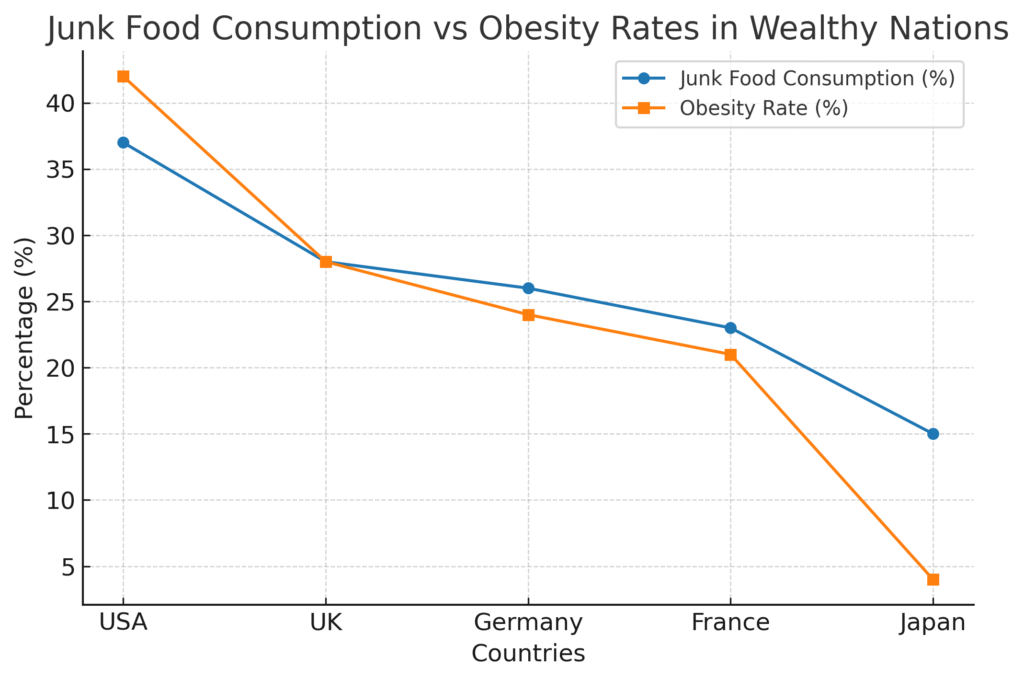
- USA → 53% of daily calories from ultra-processed foods, with 44% obesity rate
- UK → 56% UPF intake, with 28% obesity rate
- Europe (average) → 30% UPF intake, with 23% obesity rate
- OECD wealthy nations (average) → 40% UPF intake, with 18% obesity rate
This highlights the “Junk Food Generation” paradox: richer countries consume more fast food and packaged meals due to convenience, but the trade-off is soaring obesity, diabetes, and heart disease risk.
Your take
Was this worth your time?
0 reactions