
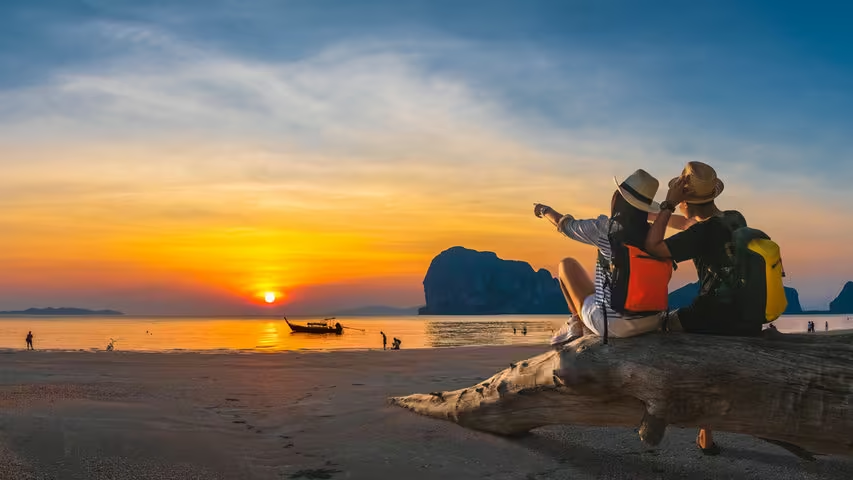
On this page
- Table of Contents
- Why Underrated Destinations Matter More Than You Think
- 1. Kotor, Montenegro — Medieval Magic Without the Crowds
- 2. Luang Prabang, Laos — Where Time Moves Like the Mekong River
- 3. The Azores, Portugal — Volcanic Islands That Feel Like Your Own Personal Secret
- 4. Udaipur, India — The Venice of the East, But Better
- 5. Faroe Islands, Denmark — For Travelers Who Crave Drama and Solitude
- 6. Kyoto, Japan — Spring Cherry Blossoms and the Art of Slowing Down
- 7. Hallstatt, Austria — The Village That Shouldn’t Still Feel Authentic
- 8. Chiang Mai, Thailand — The Thoughtful Way to Experience Thailand
- 9. Banff and Lake Louise, Canada — Mountain Beauty That Still Feels Wild
- 10. Split and the Dalmatian Coast, Croatia — Ancient Roman History Mixed with Modern Coastal Charm
- The Ultimate Underrated Destinations Itinerary — 21 Days of Authentic Travel
- Packing for Underrated Destinations — The Essentials You Actually Need
- Frequently Asked Questions About Traveling to Underrated Destinations
- One Final Thought Before You Book
In this story
- Table of Contents
- Why Underrated Destinations Matter More Than You Think
- 1. Kotor, Montenegro — Medieval Magic Without the Crowds
- 2. Luang Prabang, Laos — Where Time Moves Like the Mekong River
- 3. The Azores, Portugal — Volcanic Islands That Feel Like Your Own Personal Secret
Table of Contents
Best Underrated Travel Destinations
I still remember standing in front of my laptop at midnight, scrolling through the same overused travel blogs, seeing the same five destinations repeated a thousand times. Paris. Bali. Thailand. Iceland. And while these places are undoubtedly beautiful, I couldn’t shake the feeling that millions of people were having the exact same experience as me at the exact same time. So I made a decision — I was going to find the places that made my heart race before they ended up on every Instagram feed. The places where I could still stumble onto authentic moments without navigating through crowds of selfie sticks. What I discovered changed not just how I travel, but how I see the entire world.
Why Underrated Destinations Matter More Than You Think
The truth about travel that nobody says out loud is this: the places everyone flocks to have often lost something precious in the process of becoming famous. They’ve been commodified, optimized, and turned into a checklist rather than an experience. Don’t misunderstand me — those places are stunning. But there’s a particular kind of magic that only exists in places that haven’t yet been consumed by mass tourism. It’s the magic of discovery. It’s the feeling of turning a corner and finding something that hasn’t been photographed a million times already. It’s the opportunity to have a genuine conversation with a local who isn’t used to treating tourists as walking ATMs. These underrated destinations deliver all of that and more. When I started traveling to lesser-known places, I noticed something fascinating — the accommodations were often better, the food was always more authentic, and the prices were considerably lower than what you’d pay for a mediocre experience in an overcrowded hotspot. But more importantly, I felt present in a way I never had before. I wasn’t rushing from one Instagram spot to the next. I wasn’t stressed about reservation times or fighting for space at viewpoints. I was simply living, moment by moment, in places that still had room for genuine human connection.
1. Kotor, Montenegro — Medieval Magic Without the Crowds
The first time I approached Kotor by boat, I genuinely gasped. I know that sounds dramatic, but there’s no other way to describe it — the moment your boat rounds that bend and the entire city emerges from the Adriatic fjord, you understand why this place was worth the detour. Kotor is a UNESCO World Heritage Site nestled inside a dramatically carved bay, surrounded by limestone cliffs that rise straight up from the water like the walls of a fortress. Red-tiled roofs cluster inside medieval stone walls, and the whole place looks like someone took a fairytale and planted it directly into the Adriatic Sea. What makes Kotor absolutely special compared to other Mediterranean destinations is that it still feels undiscovered. Yes, tourists come here, but nothing like the overwhelming crowds you’ll find in Venice or Dubrovnik. You can actually walk the narrow cobblestone streets without shoulder-to-shoulder navigation. You can sit at a waterfront restaurant and have a genuine conversation with the owner instead of being rushed through your meal to make room for the next table. The local wine flows freely, the seafood is impossibly fresh, and the sense of stepping back in time is completely authentic rather than manufactured for tourism. I woke up early one morning and climbed the fortress walls at sunrise — all 1,350 steps of them. The entire bay was spread out below me, mist rising off the water, no other tourists in sight. It was one of those moments that reminded me exactly why I travel. The views from the top are absolutely worth the leg burn, and the quiet of early morning makes the whole experience feel like you’ve discovered it yourself. After climbing down, I wandered the old town’s winding streets and found a tiny café run by an elderly woman who made the most incredible burek I’ve ever tasted. She didn’t speak English. I didn’t speak Serbian. We communicated entirely through smiles and gestures, and it was somehow one of the most meaningful interactions of my entire trip. For day trips, take a boat to nearby Perast, a perfectly preserved 18th-century village with only a handful of residents. The two small islands offshore — with their ancient churches and romantic legends — make for the kind of boat ride that feels like sailing through a storybook. Rent a car and drive the coastal road toward Budva for dramatic clifftop views and hidden pebble beaches. Stay in a boutique hotel inside the old city walls, book a private cooking class to learn how to make traditional Montenegrin dishes, and absolutely don’t miss the fresh seafood at any waterfront restaurant. The best time to visit is May through June or September through October, when the weather is perfect but the summer crowds haven’t yet descended.
2. Luang Prabang, Laos — Where Time Moves Like the Mekong River
There’s a rhythm to Luang Prabang that I didn’t expect when I arrived. This isn’t a place that assaults you with excitement or demands your attention. Instead, it quietly, gently draws you in until you suddenly realize you’ve abandoned your carefully planned itinerary and you’re simply living there. By day two, we had completely surrendered to the city’s pace. We woke early without an alarm. We wandered without maps. We ate when we were hungry and sat when we felt like sitting. It was the first time on a trip where I understood what people mean when they say travel should be transformative rather than just transactional. Luang Prabang is a UNESCO World Heritage town that sits at the confluence of the Mekong and Nam Khan rivers in northern Laos. Buddhist temples with golden spires rise between traditional wooden houses with intricately carved shutters. Monks in saffron robes walk silently through streets that smell simultaneously of frangipani blossoms, fresh baguettes (a charming remnant of French colonial history), and the river. The entire city has the feeling of a place that’s been holding its breath for centuries, completely untouched by modernity despite the gentle presence of tourists who are increasingly drawn to its charms. The single most profound experience I had in Luang Prabang happened at sunrise on the Mekong riverbank. I woke at 5 a.m. and made my way to the water’s edge where hundreds of locals were gathered — not to see tourists, but to participate in alms-giving, a daily Buddhist ritual where monks collect food for the day ahead. Seeing the monks in their robes, receiving offerings from the community with such reverence and gratitude, made something shift inside me about what matters. It was a completely authentic cultural experience, not staged or modified for tourism, and I felt genuinely honored to witness it. After the ceremony, the town comes alive with energy — markets open, breakfast vendors set up on street corners, and the whole city seems to collectively take a breath as it begins its day. Sunset boat cruises along the Mekong deliver exactly what they promise — your boat cuts through glass-like water as the sky transforms from orange to pink to deep purple. Vendors sell cold beers and local snacks. Your partner sits beside you. The moment feels completely suspended in time. The town’s night market explodes with energy after dark — grilled meats, fresh mango smoothies, handmade textiles, and crafts. Hotels offer affordable cooking classes where you learn to make traditional Lao dishes in an actual family home kitchen. Book a visit to the Pak Ou Caves, where hundreds of golden Buddha statues glow in semi-darkness, and the journey upriver to get there is honestly more memorable than the caves themselves. Stay in a luxury boutique hotel or a simple guesthouse — either way, your money stretches further here than almost anywhere else I’ve traveled. The best time to visit is November through February when the weather is cool and dry and utterly perfect.
3. The Azores, Portugal — Volcanic Islands That Feel Like Your Own Personal Secret
When I first mentioned the Azores to friends, nobody had any idea what I was talking about. “Where even is that?” they’d ask. “Somewhere in Portugal?” The fact that this destination is so completely under the radar despite being one of the most spectacularly beautiful places I’ve ever been absolutely blew my mind. These nine volcanic Portuguese islands sit in the middle of the Atlantic Ocean, closer to North America than to mainland Europe, and they’re somehow still relatively undiscovered by mainstream tourism. They should absolutely not be. They’re an absolute treasure. São Miguel, the largest island, is where most visitors start, and it’s the perfect introduction to what makes the Azores so special. Imagine landscapes of impossible, almost neon-bright green — lush from constant volcanic mist and Atlantic moisture. Crater lakes so perfectly formed they look computer-generated. Steaming hot springs where you can bathe in naturally heated mineral water while surrounded by jungle. Black sand beaches. Whale-watching expeditions on the open Atlantic where you might see sperm whales, dolphins, or if you’re lucky, the rarest whales in the world. This place offers everything — nature, adventure, luxury, and solitude — often in the same day. The twin crater lakes of Sete Cidades are absolutely the most iconic sight on the islands, and for good reason. Two perfectly formed volcanic craters filled with water — one impossibly blue, one ethereal green — separated by a narrow bridge. Local legend says they were formed when a princess and a shepherd, forbidden from seeing each other, cried so hard their tears filled these lakes. Whether you believe the legend or not, the landscape is undeniably romantic and utterly breathtaking. I hiked the rim trail between the two lakes early one morning, and the combination of the dramatic landscape, the mist rising off the water, and the complete silence made me feel like I’d stumbled into another world entirely. Pack a picnic, take your time, and absorb the fact that you’re actually standing in a place this beautiful. Bathing in the geothermal hot springs of Furnas is an experience I’d struggle to adequately describe. Imagine natural, steaming pools of mineral-rich water heated by the earth itself, surrounded by lush jungle and the smell of sulfur and vegetation. You float in this impossible warmth while the Atlantic breeze cools your face. It’s simultaneously primal and luxurious, healing and otherworldly. Locals have used these springs for centuries for their therapeutic properties, and you can feel the difference after soaking. For dinner, try the local specialty called cozido das Furnas — a stew that’s been slow-cooked underground using geothermal heat for hours until it’s unbelievably tender and flavorful. It’s the kind of food that makes you understand what it means to eat locally. Whale watching on the open Atlantic is nothing short of transformative. I was genuinely nervous before my first expedition — I’ve never been the strongest swimmer, and the open ocean can feel overwhelming. But the moment our boat cut through the water and someone spotted a sperm whale, all my nervousness disappeared. Watching a creature that size breach beside your small boat is humbling, electric, and completely surreal. The captains know exactly where to find these magnificent animals because they’re tracked by resident marine biologists who work on the islands. You’re not randomly searching — you’re participating in genuine marine conservation. For accommodation, seek out the quintas — traditional Portuguese estate houses that have been converted into luxury stays. These properties often include farm-to-table dinners, wine tastings, and access to private gardens. The best time to visit is April through October, with June and July being the absolute sweet spot for weather and whale sightings.
4. Udaipur, India — The Venice of the East, But Better
I have a confession to make — as someone from Delhi, I was skeptical about Udaipur. I thought it might be oversold, overhyped, or worst of all, overcrowded. I was so wrong. The moment I saw the City Palace lit up in golden light against the backdrop of Lake Pichola at sunset, I actually teared up. This city, often called the Venice of the East, deserves every bit of the love it receives, but it somehow manages to still feel intimate, magical, and deeply romantic despite its growing popularity. Udaipur is a city of white marble, shimmering lakes, floating palaces, and rooftop dinners where candlelight competes with moonlight reflecting off the water. It’s the kind of place that makes you want to write poetry or send embarrassingly sentimental voice messages to everyone back home. The city grew up around the lake as a refuge for a Rajput kingdom, and that origin story still permeates every corner. There’s history here, genuine royalty history, and it’s woven into the architecture and the atmosphere in a way that feels completely authentic rather than manufactured for tourism. A sunset boat ride on Lake Pichola to the Lake Palace Hotel is an essential Udaipur experience, and it’s even more magical if you book a private dinner on a decorated boat rather than joining a group tour. As your boat glides across the water, the City Palace gets larger and more golden, the reflections on the water intensify, distant temple bells ring, and marigold garlands scent the evening air. Every single sense is completely, lovingly overwhelmed. If you can’t get a boat reservation for dinner, at minimum take the boat ride at sunset and then have dinner at one of the rooftop restaurants along the Gangaur Ghat. The view is the same, the romance is identical, and your meal will be exceptional. One of my favorite discoveries in Udaipur was booking a couples’ spa day at one of the heritage hotels. We had an Ayurvedic massage using warm herbal oils, followed by a bath in a marble tub filled with warm milk and rose petals. I know that sounds absurdly indulgent, but in the context of traveling in a city this romantic, it felt like the natural extension of the experience. Your skin feels transformed, your mind feels cleared, and you emerge feeling like royalty. The heritage haveli properties — traditional mansions converted into hotels — put you in the heart of the old city and surround you with centuries of history. Every room tells a story. Every window frames a view. Every morning brings the sound of temple bells and the smell of the lake. For dining, seek out both the high-end rooftop experiences and the street food. Udaipur’s lakeside streets have incredible small vendors selling everything from fresh fruit to traditional Rajasthani snacks. The best time to visit is October through March when the weather is pleasant and various festivals fill the streets with color and energy.
5. Faroe Islands, Denmark — For Travelers Who Crave Drama and Solitude
This destination was entirely my travel partner’s idea, and I resisted it right up until the moment our small propeller plane broke through the clouds and I saw the cliffs. The Faroe Islands are 18 volcanic islands nestled between Norway and Iceland — and they are, without question, the most dramatically beautiful place I’ve ever set foot on. These islands inspire a kind of awe that’s difficult to put into words because they operate on a different scale than anywhere else I’ve been. The cliffs are vertical. The waterfalls are everywhere. The weather is constantly shifting. The light has an almost supernatural quality to it. There are more sheep than people here. The roads cling to cliffsides above the sea. The waterfalls don’t flow downward in the traditional sense — the wind is so powerful that it blows them back up into the sky. This is not a destination for people who want a beach and a cocktail. This is absolutely a destination for couples who want to feel something together, who want to push their boundaries a little bit, and who want to experience the raw power of nature in an unfiltered way. Hiking to Trælanípa cliff is genuinely one of the most jaw-dropping experiences of my life. This hike takes you to a vantage point where a lake appears to float above the ocean, suspended on a cliff edge thousands of feet above the North Atlantic. The views are so dramatic, so surreal, that you almost don’t believe what you’re seeing. The hiking trail is well-marked but genuinely challenging — there are rope sections, steep ascents, and absolutely no guard rails. It’s the kind of hike where you hold each other’s hand and feel completely alive. Cosy farmhouse stays in small villages put you in the heart of authentic Faroese culture. Your hosts cook you traditional meals like lamb stew and fresh fish. The nearest neighbor is probably a mile away. There’s no cell service. There’s no light pollution. There’s just you, your partner, and the dramatic landscape surrounding you. Chasing the Northern Lights together in complete silence and darkness is an almost spiritual experience. The Faroes lie at the perfect latitude for frequent Northern Lights displays, especially from January through March. You stand outside in the cold, watching the sky slowly begin to shimmer and dance with green light. It’s impossible not to feel humbled by the sheer vastness of the universe. Sea kayaking through sea caves and fjords with no other boats in sight connects you to this landscape in an intimate way. The water is freezing cold, but the views from your kayak are incomparable. You paddle under sea arches, past colonies of seabirds, and around islands that have probably seen fewer human visitors than most places on earth. The best time to visit is June through August for long golden days when you can hike for 20 hours of daylight, or January through March if you want to chase the Northern Lights against dramatic winter landscapes.
6. Kyoto, Japan — Spring Cherry Blossoms and the Art of Slowing Down
Yes, Kyoto is famous, and yes, it does get tourists. But here’s the secret that nobody tells you — the way you experience Kyoto makes all the difference between a rushed, crowded vacation and a completely transformative journey. We spent five days in Kyoto during cherry blossom season, staying in a traditional ryokan with a private garden, and it absolutely changed how I think about travel. The difference between a typical Kyoto trip and the experience we had felt like the difference between watching a movie about a place and actually living there. Kyoto is Japan’s spiritual heart, a city of thousands of temples, traditional wooden machiya houses, bamboo forests, and an entire culture devoted to the idea that beauty exists in subtlety and simplicity. During cherry blossom season — usually late March through early April — the entire city transforms into something almost supernatural. Delicate pink blossoms cover every tree, and they rain down like snow when the wind blows. The whole city is caught in this liminal space between seasons, and the Japanese have celebrated this transitional moment for centuries. There’s poetry in it. There’s philosophy. There’s something about impermanence and change that suddenly makes sense when you’re standing under a rain of cherry blossoms. The trick to experiencing Kyoto properly is to do things early. Wake up at 5 a.m. and walk Fushimi Inari before the crowds arrive. This Shinto shrine is famous for its thousands of vermillion torii gates that create tunnels of red as you climb the hillside. If you go at dawn, you can walk through these gates almost completely alone, and the experience transforms from “Instagram spot” to something genuinely spiritual. By 8 a.m., the place is overrun with tour groups. By 5:30 a.m., it’s just you, the gates, the mist rising off the valley, and your own thoughts. That’s the Kyoto you want to experience. Arashiyama Bamboo Grove is one of the world’s most photographed forests — and for good reason, the atmosphere inside it is genuinely otherworldly. Green light filters through soaring bamboo stalks. The sound is muffled and peaceful. It feels like you’ve stepped inside a living cathedral. Here’s the secret — go at 6 a.m., not during the day. The light is different, the energy is completely different, and you’ll have the entire forest to yourself for a least an hour before the first tour buses arrive. Book a private tea ceremony in a 400-year-old tatami room. These intimate experiences aren’t usually listed on travel websites, but your ryokan can arrange them. You’ll sit on tatami mats, drink meticulously prepared matcha green tea, and eat a small sweet. The ceremony might only last 30 minutes, but it’s 30 minutes of complete peace and presence. The smell of tatami mats, the silence, the focus required to prepare and drink tea correctly — it centers you in a way that modern life rarely allows. A couples’ kaiseki dinner is a 10-course Japanese culinary art form that takes two hours and makes you feel like absolute royalty. Each course is a small masterpiece of flavor and presentation. The chef has thought carefully about temperature, texture, color, and how each course flows into the next. It’s not just food — it’s philosophy, history, and art on a plate. Your ryokan can arrange this, and it’s worth every yen. Bathe together in the onsen — a natural volcanic hot spring bath — under an open sky. Many ryokans have private or semi-private onsen where couples can soak together while looking out at gardens or mountains or forests. The water is naturally heated, mineral-rich, and deeply relaxing. There’s something primal and romantic about soaking in hot water with your partner while the outside world feels very far away. The best time to visit Kyoto for cherry blossoms is late March through early April — book accommodation at least three months in advance. The second-best time is November when the autumn foliage is equally spectacular and the crowds are somewhat smaller. Summer is hot and humid, while winter is crisp but can be rainy.
7. Hallstatt, Austria — The Village That Shouldn’t Still Feel Authentic
I knew Hallstatt had become famous on Instagram — so famous that the Austrian government actually had to implement restrictions to manage tourist crowds. I expected it to be completely inauthentic, overrun, and devoid of charm. I was wrong in the most wonderful way. Yes, this tiny village nestled between a crystalline lake and soaring mountains gets tourists. But something about Hallstatt has managed to retain its genuine charm despite becoming one of the most photographed places in Europe. This isn’t a village that was built for tourism — tourism happened to it. The narrow cobblestone streets, the pastel-colored houses with window boxes overflowing with flowers, the way the entire village is reflected perfectly in the Hallstatt lake — this is just how the village has always been. People still live here. They shop at the same markets. They know each other. The restaurants serve traditional Austrian food to both locals and visitors. There’s a genuine community underneath the tourism, and you can feel it if you take the time to look for it. The secret to experiencing Hallstatt authentically is to arrive very early in the morning or in the late afternoon, after the day-trippers have returned to their tour buses. Wake up early, walk the village lanes while they’re still quiet, and have breakfast at a small café. Hike up the mountain behind the village for views that are even more spectacular than the famous lakeside photo. Stay overnight in a traditional gasthof — a family-run inn — rather than a large hotel. Eat dinner at a local restaurant at 5 p.m., before the tour groups descend. These small adjustments completely transform the experience from “rushed tourist destination” to “charming Austrian village where you happen to be visiting.”
8. Chiang Mai, Thailand — The Thoughtful Way to Experience Thailand
Thailand has become increasingly touristy over the past decade, especially in Bangkok and the island destinations. But Chiang Mai, the largest city in northern Thailand, has somehow managed to remain relatively genuine and deeply affordable while still offering all the elements that make Thailand so compelling — incredible food, ancient temples, kind people, and a pace of life that encourages you to slow down. The city is surrounded by mountains, filled with over 300 temples, and has a thriving night bazaar where you can find everything from handmade textiles to fresh mango smoothies. What makes Chiang Mai special is that it still feels like a place where local life is happening, not just tourism. Yes, there are tourists, but they coexist with Thai families shopping at night markets, monks walking to temples, and traditional silk weavers still practicing their craft in neighborhood workshops. The city has a laid-back energy that Phuket and Bangkok lack — you don’t feel rushed, you don’t feel hustled, and you don’t feel like you’re competing with thousands of other visitors for authentic experiences. Take a Thai cooking class where you actually go to a local market to choose your ingredients before cooking a traditional meal. Stay at a small guesthouse run by a local family rather than a large resort. Spend an evening at a night market trying street food with your travel companion. Visit Wat Chedi Luang, an ancient temple with a chedi so massive it has its own weather system — locals say when it rains inside the temple grounds but not outside, it’s because the chedi creates its own microclimate. Interact with elephants responsibly at a sanctuary where the animals are genuinely well-cared-for and retired from tourist riding. The best time to visit is November through February when the weather is cool and dry.
9. Banff and Lake Louise, Canada — Mountain Beauty That Still Feels Wild
Banff National Park and Lake Louise get visited by plenty of people, but the Canadian Rockies are so vast and so spectacularly dramatic that it’s completely possible to find solitude and genuine wilderness. These mountains are legitimately stunning — turquoise glacier-fed lakes, dramatic peaks, pristine forests, and a sense of untamed nature that’s increasingly rare in our world. The difference between a good experience here and a great one is often just showing up at trailheads before dawn and hiking on weekdays rather than weekends. Hike to Johnston Canyon to see the turquoise water and dramatic canyon walls, but go very early to beat the crowds. Stay in a cosy lodge surrounded by mountains and wake up to wildlife — we saw elk, bighorn sheep, and a grizzly bear in the distance from our hotel window. Take a canoe out on Lake Louise at sunrise when the water is glass-smooth and the reflection of the mountains is so perfect it almost hurts to look at. The best time to visit is September when the summer crowds have thinned out but the weather is still warm and beautiful.
10. Split and the Dalmatian Coast, Croatia — Ancient Roman History Mixed with Modern Coastal Charm
I avoided Croatia for years because I thought it would be overrun — and while Dubrovnik certainly is, Split and the surrounding Dalmatian coast still retain an authentic charm and genuine local culture that persists despite increasing tourism. Split is a coastal city built literally around the remains of a 1,700-year-old Roman palace belonging to the emperor Diocletian. The entire old town is contained within these ancient walls, and you can walk through the same streets that Romans walked through while eating seafood at waterfront restaurants. What makes this destination special is the combination of history, beauty, and authenticity. You’re not just seeing beautiful coastline — you’re walking through literal ancient history. The locals are genuinely friendly, the food is incredible, and the prices are considerably lower than what you’d pay in more famous Mediterranean destinations. Take a boat trip to nearby islands, climb to the fortress overlooking the city for sunset views, wander the narrow streets of the old town after dark when most tourists have returned to their hotels. The best time to visit is May through June or September through October when the weather is warm but the summer crowds have either not yet arrived or have begun to disperse.
The Ultimate Underrated Destinations Itinerary — 21 Days of Authentic Travel
Here’s the perfect itinerary for travelers who want to experience multiple underrated destinations without feeling rushed or exhausted. This route combines Mediterranean romance, Southeast Asian spirituality, and authentic cultural experiences.
Days 1-3: Kotor, Montenegro Arrive in Tivat Airport and settle into the old town. Day 1: Explore the narrow streets, dine at waterfront restaurants, drink local wine. Day 2: Climb the fortress walls at sunrise, boat trip to Perast and Our Lady of the Rocks island church. Day 3: Coastal road drive to Budva, afternoon at black sand beach, sunset in Kotor.
Days 4-5: Travel to Luang Prabang Overnight flight from Montenegro to Southeast Asia via connecting airport. Arrive mid-morning in Luang Prabang. Day 4: Rest and acclimate, evening walk through night market. Day 5: Sunrise alms-giving ceremony, temple exploration, riverside lunch.
Days 6-8: Luang Prabang Deep Dive Day 6: Couples cooking class in a local home, market shopping, sunset Mekong boat cruise. Day 7: Visit to Pak Ou Caves by private boat, waterfall swimming, herbal sauna experience. Day 8: Spa day with traditional massage, leisurely exploration of side streets, casual evening dinner.
Days 9-10: Travel to Chiang Mai Morning flight from Luang Prabang to Chiang Mai. Afternoon arrival and settling into guesthouse. Day 9: Visit to temple complex, evening at night bazaar. Day 10: Sunrise visit to Doi Suthep temple overlooking the city, cooking class, elephant sanctuary visit.
Days 11-13: Fly to the Azores, Portugal Long-haul flight from Thailand to the Azores via Lisbon. Day 11: Arrival and rest. Day 12: Sete Cidades crater lakes hike, farmhouse dinner. Day 13: Geothermal hot springs bathing, waterfall exploration.
Days 14-15: Azores Island Hopping Day 14: Whale watching expedition on the Atlantic. Day 15: Flight to Flores Island, exploration of waterfalls and hiking trails, isolation and tranquility.
Days 16-17: Return to São Miguel, Azores Day 16: Return flight to main island, couples spa treatment with volcanic mud, traditional dinner. Day 17: Sunrise at Boca do Inferno viewpoint, leisurely last day exploration.
Days 18-19: Travel to Kyoto, Japan Long-haul flight from Azores to Tokyo, connecting flight to Kyoto. Arrive evening, rest at ryokan. Day 18: Recovery day, light temple exploration, dinner at traditional kaiseki restaurant. Day 19: Early morning visit to Fushimi Inari (private tour with guide), arashiyama Bamboo Grove at dawn, private tea ceremony.
Days 20-21: Kyoto Finale Day 20: Couples onsen bath at ryokan, shopping in traditional districts, Gion district walk. Day 21: Final morning walk through gardens, departure.
Packing for Underrated Destinations — The Essentials You Actually Need
When you’re traveling to less-mainstream destinations, smart packing becomes even more important. Here’s what actually matters across all these diverse environments.
Documents and Money — Passport with blank pages, travel insurance with comprehensive coverage, copies of important documents stored separately, credit cards from at least two different banks, some cash in local currency. Many underrated destinations have fewer ATMs than tourist hotspots, so having backup cash is wise.
Clothing for Layering — Lightweight long-sleeve shirts for sun protection and temple visits, a fleece or light jacket for variable weather, rain jacket, comfortable hiking boots if you’ll be exploring nature, nice-but-comfortable clothes for dinners, underwear and socks. The quality of what you pack matters more than the quantity. Choose pieces that work together and can be worn multiple ways.
Health and Wellness — Any personal medications, high-SPF sunscreen, motion sickness tablets for boats and winding mountain roads, basic first aid supplies, electrolyte packets for hydration, any specialty items your dermatologist has recommended. Travel insurance is non-negotiable for trips to less-developed countries.
Tech and Connectivity — Offline maps downloaded before you leave, universal power adapter, portable phone charger, headphones. A good camera makes a huge difference if photography is important to you, but your phone camera is honestly sufficient for most situations.
Comfort Items — Reusable water bottle, eye mask and earplugs for flights, a book or e-reader, journal and pen for recording observations and memories, basic toiletries and your preferred deodorant and hair products. These small comforts make a bigger difference than you’d expect.
Frequently Asked Questions About Traveling to Underrated Destinations
What if I’m worried about safety in lesser-known destinations? Every destination on this list is genuinely safe for tourists who exercise normal travel awareness. Research neighborhood safety before booking hotels, know your surroundings, avoid displaying expensive items, and use reputable transportation. The tourism infrastructure in places like Montenegro, Laos, and the Azores is well-developed and welcoming to international visitors.
Are underrated destinations actually cheaper than famous ones? Generally yes, with some nuance. Laos and Thailand are significantly cheaper than equivalent experiences in Europe or Japan. Montenegro and Croatia offer better value than Western European destinations at comparable quality levels. Japan and the Azores are reasonably priced for the level of service and food quality. You often get more for your money at less famous destinations — better accommodations, better food, more personalized service — at lower prices than at overly touristy spots.
How do I find flights to these smaller destinations? Use Google Flights or Skyscanner to compare prices, set up price alerts, and look for indirect routes which are often cheaper. Many smaller destinations are served by budget airlines that don’t appear in all search engines. Search for connecting hubs — for example, fly to Bangkok and then to Chiang Mai rather than searching for direct flights. Subscribe to travel deal websites like Secret Flying or Point Me to the Plane for alerts about cheap flights to underrated destinations.
Can I visit multiple underrated destinations on one trip? Absolutely, and it often makes sense logistically. The 21-day itinerary I provided connects five destinations across three continents. Plan your route based on geography — don’t randomly jump around the world — and allow at least 2-3 days in each destination so you’re not spending all your time traveling.
What’s the best time of year to visit underrated destinations? This varies by location. Generally, visit during each destination’s shoulder season — slightly before or after peak tourism season — for better weather than off-season but fewer crowds than peak season. April-May and September-October work for most destinations. Research each specific destination for weather patterns and local festivals.
How do I ensure I’m being a responsible tourist in underrated destinations? Use local guides rather than large tour companies when possible, eat at family-run restaurants rather than chains, buy crafts and goods from locals directly, learn basic phrases in the local language, respect religious sites and local customs, and leave places better than you found them. Underrated destinations often depend on tourism revenue but want to preserve their culture — being a thoughtful visitor helps both.
What should I do if something goes wrong while traveling to a less famous destination? Register with your embassy before traveling, keep emergency contact numbers saved, purchase comprehensive travel insurance that covers medical evacuation, and maintain communication with someone back home. Having travel insurance is especially important at lesser-known destinations where medical facilities might be less advanced.
Are these destinations good for solo travelers? Yes, all of them are relatively safe and welcoming for solo travelers. However, the beauty of traveling to a less famous destination is that you’ll likely meet other travelers easily — in guesthouses, cooking classes, and organized tours. Many people find that traveling solo to underrated destinations actually leads to more genuine human connection than traveling to mainstream destinations.
How far in advance should I book? For most underrated destinations, 2-3 months in advance is sufficient for flights and accommodation, unlike famous destinations which often require booking 6+ months ahead. This actually gives you flexibility to adjust your plans based on weather, personal preferences, or recommendations you receive from other travelers.
Can I visit with kids or elderly family members? Most underrated destinations are perfectly fine for families and seniors, though physical demands vary. Kotor and Kyoto are accessible with minimal hiking. The Azores and Faroe Islands require more physical fitness. Thailand and Laos require less walking than mountainous regions. Research specific physical requirements for each destination and choose accordingly.
One Final Thought Before You Book
The world is genuinely still full of places where tourism hasn’t completely consumed authenticity. Places where you can have a conversation with a local that doesn’t immediately turn into a sales pitch for a tour or a souvenir. Places where the food tastes like it was made by someone cooking their family dinner, not executing a recipe designed for tourist palates. Places where you turn a corner and feel that particular kind of surprise that only comes from genuine discovery.
These destinations exist not because they’re hidden — they’re just not yet famous. But they won’t stay undiscovered forever. The beautiful, complicated truth about travel is that the moment you tell everyone about a place, it changes. More tourists come. Prices increase. That authentic quality gets increasingly diluted. But that doesn’t mean you should wait. It means you should go now. Not eventually, not someday, not when travel is easier or cheaper or the timing works out — now.
Pack light. Leave space for spontaneity. Talk to locals. Try the food that seems unfamiliar. Wake up early. Sit in cafés without your phone. Let yourself feel a little bit lost. Let yourself be surprised. These underrated destinations are waiting for you, and they’re genuinely better because fewer people have been there to tell you exactly what to expect.
The best travel stories never start with a trip to a famous destination. They start with stepping off the beaten path into somewhere that surprised you completely. Make this your year to have that story. ✨
In frames · the Travel desk
 Best Underrated Travel Destinations: Unique Places to Visit Beyond the Tourist Trail
 Off the Beaten Path: Unique Destinations Most Tourists Never See
 15 Hidden Gem Destinations You Need to Visit Before Everyone Else Does
The Ultimate Honeymoon Guide: Romantic Escapes for Two — Beyond Paris, Undiscovered Romantic Destinations for Couples
15 Hidden Gem Destinations You Need to Visit Before Everyone Else Does
The Ultimate Honeymoon Guide: Romantic Escapes for Two — Beyond Paris, Undiscovered Romantic Destinations for Couples
Hover to fan the frames
Your take
Was this worth your time?
0 reactions