

On this page
In this story
- Table of Contents
- MS in Space Systems Engineering
Table of Contents
MS in Space Systems Engineering
A satellite the size of a shoebox circles the planet every ninety minutes. Inside it, a power system keeps batteries charged, a computer decides how to point a camera, and a thermal blanket protects electronics from temperature swings that would crack ordinary components. Somebody designed each of those pieces, and somebody else made sure they fit together and survive a rocket launch. That second job, the one that connects every part into a working whole, is what space systems engineering is about. Engineering graduates from mechanical, electrical, and aerospace backgrounds often ask whether a master’s degree in this field fits them. The short answer is yes, in many cases, but the details matter. This guide walks through what the program teaches, how each undergraduate branch fits, what admission looks like in India and abroad, and what the costs add up to. Confirm every program name, eligibility rule, and fee on the official university or institute website before you apply, because these details change from year to year.
Reading the Space Systems Label Carefully
Program names in this area vary widely. Some universities offer a dedicated MS in Space Systems Engineering. Others offer an MS in Aerospace Engineering with a space track, a Master of Technology in Avionics, or a Master of Science in Space Science and Technology. A few offer specialized programs such as Space Engineering or Satellite Systems. The title on the brochure tells you less than the course list does.
Before comparing programs, open the curriculum and look for five things. The first is systems engineering itself, including requirements management, interface control, and verification planning. The second is spacecraft subsystems, such as structures, thermal control, power, propulsion, attitude control, and communications. The third is orbital mechanics and space environment. The fourth is hands-on work, such as a cubesat project, a test campaign, or a lab with environmental chambers. The fifth is a thesis or capstone that requires you to build or test something, not just simulate it.
A program that covers all five deserves close attention. A program that mentions space in the title but teaches only general aerodynamics may leave you underprepared for satellite work. Students who read the syllabus closely usually avoid that trap.
What a Space Systems Engineer Actually Does
Many people imagine space engineers as designers who draw rockets. In practice, a large share of the work involves coordination. A satellite program may involve hundreds of engineers across several companies or research groups. Each subsystem team has its own requirements, and those requirements sometimes conflict. The thermal team may ask for a radiator that the structures team cannot fit. The power team may need more solar area than the mass budget allows.
Systems engineers resolve these conflicts. They write requirements that every subsystem can trace back to the mission goal. They manage interfaces so that a battery connector, a mounting bracket, and a data bus all agree on dimensions, voltages, and timing. They also plan verification, which means deciding how each requirement will be tested, analyzed, or demonstrated before launch. A requirement without a verification method is a risk that nobody has yet noticed.
This coordinating role explains why the degree attracts engineers from several branches. Systems work rewards people who understand how different disciplines speak to each other, and it rewards people who can write clearly. Students who enjoy big-picture problem solving often find the work more satisfying than deep specialization in a single component.
Mechanical Graduates and the Structure of a Spacecraft
Mechanical graduates bring a strong advantage to space work. Structural analysis, finite element modelling, vibration testing, and thermal design all sit within their training. A spacecraft must survive intense vibration during launch, then operate in vacuum where heat cannot escape through air. Mechanical engineers design the frames, panels, joints, and mounting systems that make this possible.
Propulsion and mechanisms also suit mechanical backgrounds. Thrusters, reaction wheels, deployable antennas, and solar array hinges all demand careful design. A deployable array that jams in orbit can end a mission, so engineers spend considerable effort on release mechanisms, lubrication in vacuum, and redundancy. Students who enjoyed machine design, heat transfer, or fluid mechanics will find many familiar ideas in these subjects.
The gap for mechanical graduates usually lies in electronics and software. A structure may be perfect while the sensor data it protects arrives late or corrupted. Mechanical students should therefore plan to learn basic circuit behaviour, data communication, and control concepts during their master’s program. Taking electives in embedded systems or attitude control helps close this gap quickly.
Electrical Graduates and the Nervous System of a Satellite
Electrical and electronics graduates often feel at home with the communication, power, and avionics parts of a satellite. A spacecraft needs a power system that charges batteries from solar cells, regulates voltage across temperature extremes, and protects against faults. It needs radio links that send telemetry to the ground and receive commands from it, sometimes across great distances with weak signals. It needs processors and sensors that know where the spacecraft is pointing.
Radiation poses a challenge that electrical graduates must understand well. Cosmic rays and trapped particles can flip memory bits or damage transistors over time. Engineers use radiation-hardened components, error-correcting memory, and redundant processors to manage this risk. Students who have studied digital design and semiconductors will recognize the principles, but they need to learn how radiation effects change design choices.
Electrical students should also pay attention to the environment in which their electronics operate. Vacuum, thermal cycling, and vibration affect solder joints, connectors, and printed boards differently than on Earth. Learning qualification testing, such as thermal vacuum tests and electromagnetic compatibility checks, prepares electrical graduates for the real working life of a space project.
Aerospace Graduates and the Orbit Question
Aerospace graduates usually arrive with the broadest background. They have studied aerodynamics, propulsion, flight dynamics, and structures, often with a project that involves a small aircraft or a rocket model. That foundation helps them understand why a launch vehicle behaves as it does and how a spacecraft responds to forces during ascent.
The main difference between atmospheric flight and space flight lies in orbital mechanics. Satellites do not fly the way aircraft do. They follow paths determined by gravity, and their speed and altitude determine how long they stay in view of a ground station. Students who have not studied orbital mechanics in depth should expect to learn Keplerian orbits, perturbations, and orbit maneuvers early in the program. Many aerospace programs cover this material well, but students should confirm it in the syllabus.
Aerospace graduates sometimes need to strengthen their hardware and electronics knowledge. Many aerospace curricula focus on aerodynamics and propulsion more heavily than on power systems or communications. Adding electives in those areas, or completing a hardware project, can make an aerospace graduate much more competitive for satellite roles.
Subjects the Program Usually Adds
Most master’s programs in space systems build on the undergraduate base. Typical courses include spacecraft dynamics and control, orbital mechanics, space environment, satellite communications, space power systems, thermal control, and space mission design. Some programs include launch vehicle systems or ground segment design. Systems engineering courses often cover requirements, risk management, reliability, and configuration control.
Practical courses add real value. Many programs offer labs in attitude determination, antenna measurement, or thermal testing. Some run cubesat projects, where students design, build, and test a small satellite as a team. These projects teach students how their designs behave under real conditions, and they produce tangible evidence of ability for later interviews.
Students should also check whether the program covers standards. Space organizations use documented standards for design, testing, and quality. Learning how these standards shape daily work helps graduates adapt quickly to professional environments. Some programs introduce standards through case studies, while others expect students to read them independently.
Skills That Close the Gap
Regardless of branch, graduates who succeed in space systems share a set of skills. Strong mathematics comes first. Linear algebra supports attitude control and state estimation. Differential equations describe how spacecraft respond to disturbances. Probability helps engineers judge risk and reliability. Students who feel shaky in these areas should revisit them before the program begins.
Programming matters increasingly. Python supports simulation, data analysis, and test automation. MATLAB and Simulink remain common in control and systems work. Students who can write clear scripts that process telemetry or compare simulation results stand out. Version control and basic documentation habits help too, since space projects keep detailed records for decades.
Documentation itself deserves attention. A requirements document, an interface control document, or a test report may matter as much as a design drawing. Engineers who write clearly and organize information well earn trust from review boards. Practising technical writing during the master’s program pays off during interviews and project reviews.
Finally, students should develop comfort with uncertainty. Space projects involve long timelines, expensive hardware, and failures that cannot be repaired easily. Engineers who think carefully about failure modes, and who document their assumptions, tend to thrive in this environment.
Indian Institutions Worth Checking
Several Indian institutions offer strong pathways into space work. The Indian Institute of Space Science and Technology in Thiruvananthapuram was established to train engineers and scientists for the space sector, and it offers postgraduate programs in areas such as avionics and space-related engineering. Its close connection to the space ecosystem makes it a useful reference point for students who want space-specific training. Students should confirm current program names and eligibility on the institute’s official site.
The Indian Institutes of Technology run aerospace departments with strong research in propulsion, structures, flight dynamics, and satellite-related topics. IIT Bombay, IIT Kanpur, IIT Madras, and IIT Kharagpur each have groups that work on aerospace systems. Faculty research pages show which groups focus on spacecraft or related areas. The Indian Institute of Science in Bengaluru has a long aerospace tradition and research programs that suit students who want to pursue doctoral study.
Several National Institutes of Technology and private universities also offer aerospace or avionics programs. Some have labs for wind tunnels, composites, or avionics testing. Students should visit departmental pages, review lab lists, and talk to current students before choosing. A program with good equipment and active faculty often matters more than the institute’s general reputation.
Admission in India Without the Confusion
Admission to postgraduate space programs in India usually depends on GATE. The most relevant papers include Aerospace Engineering, Mechanical Engineering, Electrical Engineering, Electronics and Communication Engineering, and Instrumentation Engineering. Students should choose the paper that matches both their undergraduate branch and the program’s stated eligibility. Some institutes accept more than one paper, while others require a specific one.
Many programs also require a minimum percentage or CGPA in the bachelor’s degree. These thresholds differ between institutes and categories, and some reserved-category candidates receive relaxation. Institutes often publish cutoffs from previous years, which help candidates estimate their chances, but these figures change each cycle.
Some institutes run their own selection rounds after GATE. These may include written tests, interviews, group discussions, or research proposal reviews. Read each department’s notice carefully, because the selection steps and document requirements vary. Missing a document deadline can remove an otherwise strong candidate from consideration.
Research-oriented programs may ask about project work, internships, or research interests during interviews. Candidates who can describe a specific project, explain the design choices they made, and identify what they would change should prepare to do so clearly.
Universities Abroad and What They Ask
Several international universities offer well-known space programs. Technische Universiteit Delft in the Netherlands runs a space engineering master’s with strong systems and satellite design content. Politecnico di Milano in Italy offers a space engineering program with practical projects. Cranfield University in the United Kingdom has a long-established space systems program with industry links. The University of Surrey in the United Kingdom connects its space programs to a major satellite company, which provides practical exposure. In the United States, the Massachusetts Institute of Technology, Stanford University, the California Institute of Technology, Purdue University, and Georgia Institute of Technology all run aerospace programs with space tracks or research groups.
International admission usually asks for transcripts, English proficiency scores, a statement of purpose, letters of recommendation, and a record of projects. Many space programs look for hands-on experience, such as a satellite project, rocket team, or research internship. Some programs require a minimum GPA, often stated on a four-point scale, so applicants should convert their Indian percentages carefully using the university’s own guidance.
English tests such as TOEFL and IELTS are widely accepted, and minimum scores differ by institution. The GRE once appeared on many application lists, but many universities have made it optional or removed it. Applicants should confirm the current policy for each program, since rules have changed recently.
A strong statement of purpose matters a great deal. It should describe specific projects, the systems or subsystems that interest the applicant, and the faculty groups whose work matches those interests. Naming a professor’s recent publication or a lab project shows real preparation. Generic admiration for the university carries little weight.
Some countries ask Indian applicants for credential evaluations or additional documents. Germany and some other countries may require an APS certificate or evaluation through a centralized portal. Gathering these documents early prevents last-minute delays.
Cost Snapshot in India and Abroad
The table below gives rough total cost ranges for common routes. Figures for India cover tuition and typical living costs over the program length, excluding scholarships. Figures for abroad show approximate annual tuition only, since living costs and visa expenses add significantly. These numbers are planning estimates, so confirm them on each institution’s official fee page before making decisions.
| Route | Example Institutions | Typical Program Length | Approximate Cost | Funding Notes |
|---|---|---|---|---|
| Indian government institute | IITs, IISc, IIST | Two years | Low tuition, often with GATE-linked stipend | Stipend terms differ by institute |
| Indian national institute | NIT campuses | Two years | Roughly 1 to 3 lakh rupees in total fees | State or category concessions may apply |
| Indian private university | Private universities with aerospace programs | Two years | Roughly 6 to 15 lakh rupees in total | Merit scholarships can reduce net cost |
| Europe | TU Delft, Politecnico di Milano, Cranfield | One to two years | Roughly 5,000 to 30,000 euros or pounds per year, depending on the institution | Scholarships are competitive; living costs vary by city |
| United States | MIT, Stanford, Purdue, Georgia Tech | Two years | Roughly 50,000 US dollars or more per year in tuition | Research assistantships are more common for PhD students |
The spread is wide, and the cheapest option is not always the best value. An Indian stipend-supported program may cost far less than a European program, while a funded research assistantship abroad may reduce a much higher tuition bill. Build a full budget for each route before comparing them.
Choosing Between a Program and a Job First
Many aerospace and electrical graduates ask whether they should work for a few years before pursuing a master’s degree. The answer depends on your goals. A period in industry can clarify which subsystem interests you and can strengthen your application with real project experience. Engineers who have worked on test campaigns or integration often write more convincing statements of purpose.
Working first also has costs. Engineers who spend several years in one role may find it harder to change direction, and they may need to rebuild their mathematics for entrance exams. Students who know their target clearly and can secure funding may prefer to move directly into a master’s program.
Some engineers choose a middle path. They take a short course in orbital mechanics or systems engineering while working, or they volunteer for a student satellite team. These steps build evidence of interest without a long pause in study.
Questions Engineers Ask Before Applying
Many applicants wonder whether a master’s degree is necessary for space work. In India, some roles may accept strong bachelor’s graduates, particularly in testing or support positions, while research and design roles often prefer postgraduate training. Abroad, the picture varies by country and employer. Students should look at current job postings in their target market to see which qualifications appear most often.
Another common question concerns branch-specific gaps. Mechanical and electrical graduates often worry that they lack orbital mechanics. This worry is reasonable, but most space programs teach the basics. Students who review linear algebra, differential equations, and classical mechanics before starting will find the transition manageable.
Some applicants ask whether a space program leads only to government work. Space agencies and their suppliers employ many engineers, but the sector also includes commercial satellite companies, communications firms, earth observation providers, and defence research organizations. Skills in systems engineering, power, thermal control, and avionics transfer to many industries.
Finally, many students want to know whether space careers are stable. Demand follows government budgets, commercial launch activity, and the appetite for satellite services. These factors shift over time. Engineers who build strong fundamentals and can apply them across subsystems tend to adapt better when priorities change.
A Closing Thought on Orbit-Bound Work
Space systems engineering rewards people who enjoy seeing how parts become a whole. Mechanical graduates bring structural and thermal judgment, electrical graduates bring the logic of power and signals, and aerospace graduates bring an understanding of flight and orbit. A well-chosen master’s program can join these strengths into a single, useful skill set. The most important step is to read the curriculum closely, check whether the program includes hands-on work, and match it to the kind of problem you want to solve for the next decade.
In frames · the Education & Careers desk
 MS in Space Systems Engineering: Is It Suitable for Mechanical, Electrical and Aerospace Graduates?
 After BSc Physics, What Master’s Degree Can Lead to Careers in Quantum Technology and Semiconductor Research?
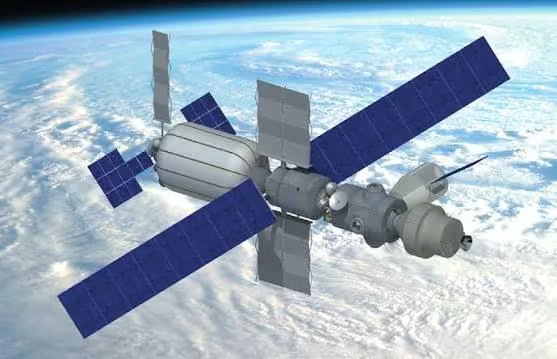 MS in Space Systems Engineering: Is It Suitable for Mechanical, Electrical and Aerospace Graduates?
 Why Are Mechanical Engineers Choosing Master’s Degrees in Computational Engineering and Simulation?
Hover to fan the frames
Your take
Was this worth your time?
0 reactions