
On this page
In this story
- Table of Contents
- Nvidia Board Firmly Rejects Jensen Huang’s Return
- 1. The Anatomy of a Rejection: Why the Board Said No
- 2. Silicon Valley Divide: The Clash Between Loyalists and the Board
- 3. Political Crosscurrents and International Scrutiny
Table of Contents
Nvidia Board Firmly Rejects Jensen Huang’s Return
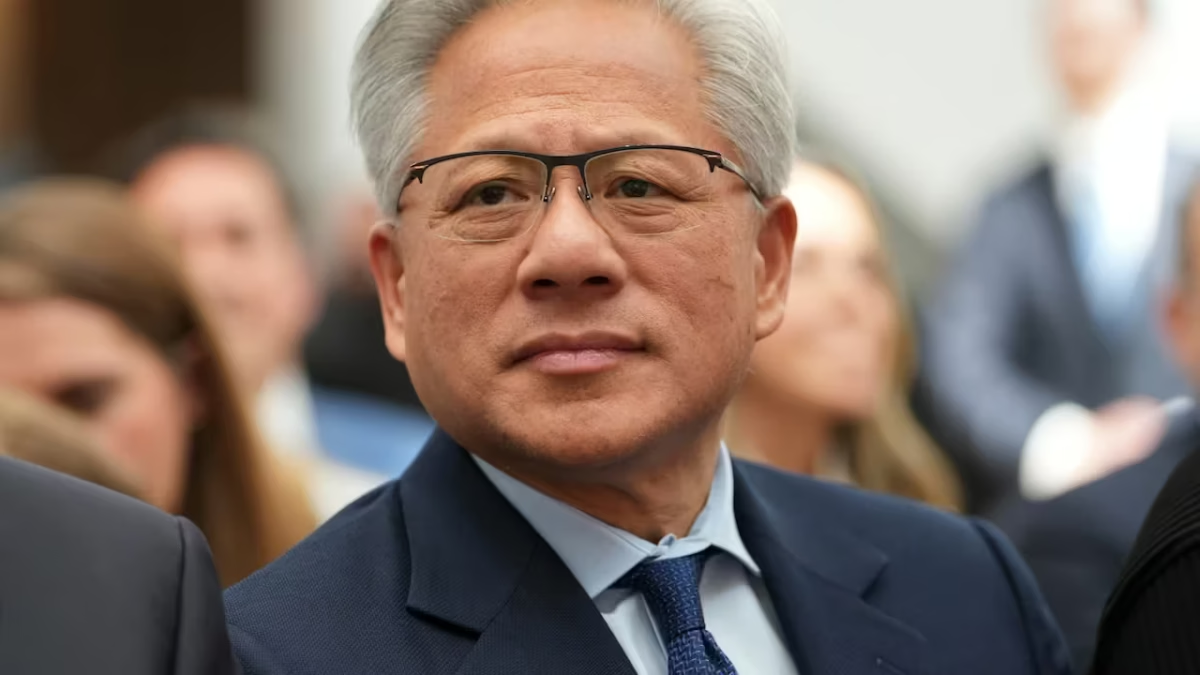
The corporate drama gripping Silicon Valley has reached a definitive turning point. Following weeks of intense market speculation, an outpouring of employee petitions, and even high-profile political commentary, Nvidia’s Board of Directors—led by Chairman Harvey Jones—has officially and unequivocally shut the door on reinstating co-founder Jensen Huang as Chief Executive Officer.
The board’s hardline stance comes hot on the heels of Huang’s public statements expressing willingness to return if invited, compounded by a massive public campaign that saw nearly 200,000 signatures on a reinstatement petition and vocal support from tech titans like Elon Musk and U.S. political figures. However, the board remains steadfast: Nvidia is moving forward into a post-founder era.
1. The Anatomy of a Rejection: Why the Board Said No
While public and shareholder sentiment heavily favored a dramatic comeback for the visionary architect of the artificial intelligence boom, the board’s refusal is rooted in deep structural, legal, and governance realities:
- The Gravity of the Investigation: Jensen Huang’s abrupt resignation was triggered by revelations of undisclosed personal relationships with employees reporting to him, running parallel to heavy federal and state scrutiny regarding compliance failures and export channels. Reinstating him while these probes are actively ongoing would expose Nvidia to immense legal, regulatory, and reputational liability.
- Prioritizing Institutional Governance: Chairman Harvey Jones and the board are sending a clear signal to Wall Street: compliance, institutional maturity, and rigorous corporate governance now supersede founder-centric rule. Reversing course would deeply undermine the credibility of the board’s oversight committees.
- The New Compliance Architecture: Underscoring this shift away from informal, founder-led management, Nvidia has officially established a dedicated National Security and Export Control Oversight Committee. This move has even earned praise from Washington, marking a stark pivot toward institutionalized transparency.
2. Silicon Valley Divide: The Clash Between Loyalists and the Board
The board’s rejection has deeply polarized the tech community, exposing a raw nerve across the global semiconductor ecosystem:
- The Pro-Huang Movement: Allies, employees, and prominent tech figures argued that pushing out the man who built a multi-trillion-dollar empire over 33 years risked destabilizing the company. High-profile figures, including Elon Musk and Epic Games CEO Tim Sweeney, rallied behind open letters and petitions, while Taiwan’s tech sector displayed supportive messages across the iconic Taipei 101 skyscraper. Rumors of an executive “war room” pushing for a high-level corporate coup circulated fiercely before the board’s statement slammed the brakes on those efforts.
- The Pragmatist Reality: Conversely, institutional investors and corporate governance watchdogs pointed out that ignoring compliance breaches and federal inquiries to appease market momentum would set a dangerous precedent. With ongoing investigations by the California Attorney General and congressional inquiries into advanced chip routing, the board concluded that sentiment could not override the law.
3. Political Crosscurrents and International Scrutiny
The saga has rapidly transcended a simple corporate boardroom dispute, drawing intense focus from global political leaders:
- Washington’s Attention: U.S. lawmakers have demanded answers regarding how advanced artificial intelligence chips reached unauthorized actors.
- The Trump Administration’s Stance: Weighing in on the chaos, President Donald Trump remarked that having Huang return “certainly isn’t a bad idea” while simultaneously praising Nvidia’s proactive step in establishing its new national security oversight committee as “a great idea”.
4. What Lies Ahead for Nvidia in the Post-Huang Era?
With a return officially ruled out, Nvidia’s leadership under interim CEO Colette Kress and Chairman Harvey Jones faces a defining transition:
- The Formal CEO Search: The board has formally engaged an executive search firm to conduct a rigorous, worldwide hunt for a permanent chief executive. While external names like Arm CEO Rene Haas continue to circulate in industry reports, the board is prioritizing a leader who can balance hyper-growth engineering with unyielding regulatory compliance.
- Reassuring the Ecosystem: Beyond financial earnings, executive leadership has spent the past week directly reassuring critical partners—including backed robotics startups and major cloud hyperscalers—that technical roadmaps and product deliveries will remain unaffected.
- Protecting the Software-Hardware Moat: The ultimate test for Nvidia’s next permanent chief will be maintaining its dominant CUDA software ecosystem and hardware lead (such as the upcoming Vera Rubin architecture) without the singular, magnetic deal-making presence of Jensen Huang.
The era of unconstrained, founder-led exceptionalism at Nvidia is officially over. As the board locks its sights on institutional compliance and structured governance, the world’s most valuable chipmaker is stepping into an entirely new reality.
Who are the top external CEO candidates, such as Rene Haas or Lisa Su, being considered to permanently replace Jensen Huang at Nvidia?
Reports and market analysis from financial media outlets like Bloomberg and the Financial Times highlight several prominent external figures—including Arm CEO Rene Haas and AMD CEO Lisa Su—as key external names frequently discussed for NVIDIA’s potential CEO shortlist.
However, NVIDIA’s board has formally pushed back on premature speculation, stating that it is still in the process of selecting an executive search firm and has not yet formally engaged or approached any specific candidates.
The profiles and realities surrounding these top external names include:
1. Rene Haas (CEO, Arm Holdings)
- The Appeal: Haas is viewed as one of the most logical external semiconductor chief executives. Crucially, he has deep institutional familiarity with NVIDIA, having spent seven years at the company as a vice president and general manager of its computing products business before joining Arm in 2013 (and later taking over as CEO in 2022).
- The Reality: Financial reports have noted him as a figure the board has informally weighed, but transitioning a sitting CEO of a foundational ecosystem partner like Arm presents significant contractual, structural, and strategic hurdles.
2. Dr. Lisa Su (CEO, Advanced Micro Devices – AMD)
- The Appeal: Widely respected for executing one of the most remarkable turnarounds in modern tech history by scaling AMD into a formidable competitor in high-performance computing and AI chips, Dr. Su represents the gold standard of semiconductor leadership.
- The Reality: While her name frequently surfaces in analyst and media speculation, industry insiders treat her candidacy as a long shot. Beyond the intense corporate rivalry between AMD and NVIDIA, industry notes frequently point out light familial ties (noting they are distant cousins) and the massive non-compete and legal roadblocks that would accompany such a move.
3. Other External and Peripheral Names
- Big Tech and Hardware Veterans: Analysts and market commentators have also floated other external names, such as Micron CEO Sanjay Mehrotra, Marvell CEO Matt Murphy, or former/exec leaders from major tech ecosystems, though none have been validated by the company.
- The Political Wildcards: Public commentary—such as high-profile suggestions from political figures naming former/current tech executives like Apple’s leadership—has added to the noise, but these remain strictly outside formal board considerations.
The Board’s Official Stance
While the market continues to obsess over high-profile external candidates like Haas and Su, NVIDIA’s board—led by newly appointed Chairman Harvey Jones—maintains that any individual speculation is premature. The formal global search has only just begun, with the board evaluating both internal contenders (such as interim CEO Colette Kress and data center head Ian Buck) and external semiconductor veterans.
What is the expected timeline and search process for NVIDIA to name a permanent CEO to replace Jensen Huang?
Following Jensen Huang’s immediate resignation, NVIDIA’s Board of Directors—led by newly appointed Chairman Harvey Jones—initiated a formal succession process. While the board has moved quickly to establish operational control, no fixed timeline or completion deadline has been announced.
The search structure, process, and current status unfold across several key operational phases:
1. The Executive Search Architecture
- Recruiter Engagement: The board has retained the executive search firm Heidrick & Struggles to lead the global hunt for a permanent chief executive.
- Dual-Lane Evaluation: Directors have confirmed that the search scope is entirely open, actively evaluating both internal contenders (such as data center head Ian Buck or other technical leaders) and external semiconductor veterans.
- The Interim Bridge: Long-serving CFO Colette Kress remains in place as interim CEO to oversee daily operations, customer commitments, and financial reporting lines, ensuring the board is under no artificial time pressure to rush the final appointment.
2. The Board’s Core Selection Criteria
Given the circumstances surrounding Huang’s departure and NVIDIA’s current market scale, the board’s search parameters are heavily weighted toward:
- Rigorous Corporate Governance & Compliance: Unlike the founder-centric era, the next CEO must operate seamlessly with NVIDIA’s newly formed National Security and Export Control Oversight Committee and adhere strictly to regulatory frameworks.
- Technical & Ecosystem Mastery: Candidates must understand parallel computing, complex hardware supply chains (such as TSMC wafer allocations), and the proprietary CUDA software moat that secures NVIDIA’s multi-trillion-dollar dominance.
3. What to Expect Next
Board Chairman Harvey Jones emphasized that while the transition is being handled with urgency, the board’s priority is finding the exact right fit rather than meeting an arbitrary deadline. Market watchers expect that any future updates regarding a shortlist or finalist will emerge primarily through regulatory disclosures or trusted financial reporting rather than premature corporate announcements.
Who are the internal NVIDIA executives, like Ian Buck or Colette Kress, being considered to succeed Jensen Huang?
Within NVIDIA, the search for a permanent successor to Jensen Huang highlights a distinct internal bench strength divide: choosing between steady financial and operational stewardship or deep technical and ecosystem mastery.
While Colette Kress holds the interim reins, veteran engineering leader Ian Buck has emerged as the primary internal counterweight. Here is a breakdown of the key internal executives viewed as potential candidates:
1. Ian Buck (Vice President of Hyperscale and High-Performance Computing)
- The Technical Heavyweight: Widely recognized as the “father of CUDA,” Ian Buck joined NVIDIA in 2004 after pioneering early general-purpose GPU computing during his PhD work at Stanford. He built and oversees the software platform that gave NVIDIA an unassailable moat in AI.
- Ecosystem Reach: In his current role managing hyperscale and high-performance computing, Buck interacts daily with top-tier cloud customers like Microsoft, Google, Amazon, Meta, and OpenAI. His recent high-profile appearances on investor earnings calls have underscored his growing executive visibility.
- The Debate: While equity analysts and market observers rate him as the strongest internal engineering candidate, critics question whether a deeply technical product leader has the broad corporate, geopolitical, and public-facing management experience required to replace Huang on a global stage.
2. Colette Kress (Interim CEO & Chief Financial Officer)
- The Operational Stabilizer: Having served as CFO since 2013 after high-profile finance leadership roles at Cisco and Microsoft, Kress is the executive Wall Street and institutional investors know best. She commands absolute mastery over NVIDIA’s revenue growth, margins, and supply chain logistics.
- The Interim Bridge: While appointed to run the company on an interim basis, analysts generally view her as a master crisis-stabilizer rather than a long-term, permanent choice for CEO, given her financial background rather than a core silicon engineering pedigree.
3. Other Operational Executives Within the Orbit
Nvidia’s historical corporate structure under Jensen Huang was exceptionally flat, featuring dozens of direct reports rather than a traditional multi-layered reporting hierarchy or a designated crown prince. Other senior leaders who manage core pillars include:
- Debora Shoquist (Executive Vice President of Operations), who manages global manufacturing, supply chain scaling, and wafer foundry partnerships.
- Jonah Alben (Senior Vice President of GPU Engineering), who oversees core hardware silicon architecture.
While the board has engaged an external search firm to conduct a comprehensive global search, the internal debate essentially boils down to whether NVIDIA needs a technologist cut from the same cloth as its founders (like Ian Buck) or an institutional executive who can guarantee financial and regulatory compliance.
What specific responsibilities does Ian Buck hold regarding NVIDIA’s hyperscale AI customers and data center business?
As NVIDIA’s Vice President of Hyperscale and High-Performance Computing (HPC), Ian Buck holds one of the most commercially critical operational roles in the entire technology sector. His responsibilities directly bridge NVIDIA’s core silicon architecture with its largest, most influential enterprise customers.
His core responsibilities and operational scope include:
1. Managing Strategic Hyperscale Partnerships
Buck manages relationships and deployment pipelines with the world’s largest cloud providers and AI hyperscalers—including Microsoft, Google, Amazon Web Services (AWS), Meta, and OpenAI. These entities purchase the vast majority of NVIDIA’s high-end data center hardware, meaning Buck oversees the commercial and technical execution behind massive multi-billion-dollar infrastructure rollouts (such as the deployment of Blackwell and Vera Rubin architecture clusters).
2. Overseeing Full-Stack AI Data Center Platforms
Delivering high-performance AI infrastructure requires hardware and software to operate seamlessly at scale. Buck manages both sides of this equation for the data center unit, ensuring that NVIDIA’s specialized graphics processors (GPUs), networking fabrics (such as Quantum InfiniBand and Spectrum-X Ethernet), and central processing units (like the Vera CPU) function harmoniously inside massive AI factories.
3. Directing the CUDA Software and Developer Ecosystem
As the original creator and principal architect of CUDA (Compute Unified Device Architecture)—the programming model that unlocked GPUs for general-purpose parallel computing and AI—Buck oversees the software moat that underpins NVIDIA’s market dominance. His division ensures that developers, researchers, and enterprise platforms can continuously scale deep learning models and agentic AI systems on NVIDIA hardware.
4. Directing High-Performance Computing (HPC) & National Supercomputing Initiatives
Beyond commercial cloud giants, Buck spearheads NVIDIA’s high-performance computing initiatives, collaborating with global research institutions, national laboratories (such as Argonne and Jülich), and government agencies on national AI supercomputing projects and scientific agentic frameworks.
How does Ian Buck’s foundational role in creating CUDA shape NVIDIA’s defensive moat against rival hardware chips?
Ian Buck’s creation of CUDA (Compute Unified Device Architecture) in 2006 remains the single greatest strategic asset protecting NVIDIA from hardware rivals like AMD, Intel, and custom hyperscale chips (such as Google TPUs or AWS Trainium).
While competitors often engineer silicon with superior raw processing specs or floating-point compute numbers, CUDA forms an unbreakable software-and-community fortress that prevents enterprise customers from switching.
1. The Decadal Accumulation of Hand-Tuned Libraries
Competitors frequently argue that hardware languages can be translated—for instance, AMD’s ROCm software stack uses tools like HIP to convert CUDA-based source code. However, the true defensive moat is not just the programming language itself; it is the nearly two decades of accumulated, hand-tuned software libraries built on top of it.
- Critical frameworks like TensorRT-LLM, FlashAttention optimizations, and hundreds of specialized math and deep learning libraries have been continuously refined for NVIDIA architectures under Buck’s ecosystem vision.
- A rival chip may offer competitive raw performance on paper, but if an AI model or enterprise workload requires specialized CUDA-native acceleration libraries to run efficiently at scale, rewriting and re-optimizing that software stack creates massive friction and high financial switching costs.
2. The Compounding Developer Mindshare
When Ian Buck transitioned from his GPU computing research at Stanford to NVIDIA, his goal was to transform graphics cards into general-purpose parallel processors. Over the next eighteen years, that vision scaled into an army of nearly six million developers.
- Universities, researchers, AI labs, and enterprise developers learned, tested, and deployed their neural networks natively on CUDA.
- This massive developer mindshare creates a self-reinforcing loop: because everyone builds for CUDA first, new software tools are optimized for CUDA first, making it the default, lowest-risk path for any new AI application.
3. Full-Stack Hardware-Software Co-Design
Because Buck and his teams designed CUDA to map directly onto NVIDIA’s underlying hardware architecture, the software and silicon evolve in lockstep. Features like NVLink interconnects, Tensor Cores, and cluster-level scaling are exposed directly through the CUDA programming model. This tight integration ensures that upcoming hardware generations—such as the Blackwell and Vera Rubin architectures—deliver immediate, out-of-the-box software compatibility that fragmented rival ecosystems struggle to match seamlessly.
In frames · the AI desk
 The Door is Shut: Nvidia Board Firmly Rejects Jensen Huang’s Return Amid High-Stakes National Security and Compliance Probes
 Inside the Silicon Citadel: The Madison Huang vs. Colette Kress Power Struggle and the Seismic Shift at NVIDIA
 Study Abroad in the Era of AI Technology: Shaping the Future for the New Generation
 Best Engineering Specializations to Study Abroad for Indian Students with High Job Demand
Hover to fan the frames
Your take
Was this worth your time?
0 reactions