
On this page
- Table of Contents
- NVIDIA’s Inner Power Battle: Is the Huang-Kress Rift Reshaping the Future of the AI Chip Giant?
- 1. The Anatomy of an Empire: How NVIDIA’s Culture Shifted
- 2. Madison Huang: The Unconventional Ascent and Executive Friction
- 3. Colette Kress: The Pragmatist Who Stood Ground
- 4. The Breaking Point: Scandal, Scrutiny, and the Interim Succession
- 5. What Lies Ahead for NVIDIA?
In this story
- Table of Contents
- NVIDIA’s Inner Power Battle: Is the Huang-Kress Rift Reshaping the Future of the AI Chip Giant?
- 1. The Anatomy of an Empire: How NVIDIA’s Culture Shifted
- 2. Madison Huang: The Unconventional Ascent and Executive Friction
- 3. Colette Kress: The Pragmatist Who Stood Ground
Table of Contents
NVIDIA’s Inner Power Battle: Is the Huang-Kress Rift Reshaping the Future of the AI Chip Giant?
For over three decades, NVIDIA operated as a monolithic, high-velocity machine under the undisputed, leather-jacket-clad reign of Jensen Huang. The company that shaped the artificial intelligence revolution seemed immune to the standard corporate soap operas plaguing other Silicon Valley giants. But in late 2026, an unprecedented leadership crisis shattered that facade. Following a stunning cascade of executive departures, geopolitical scrutiny, and a profound personal scandal that led to Jensen Huang’s immediate resignation, NVIDIA’s inner sanctum has been exposed.
At the center of this transformation lies a fierce, high-stakes internal power struggle that had been quietly brewing for months: the quiet collision between Madison Huang—Jensen’s daughter and a rising corporate product lead—and Colette Kress, the battle-tested Chief Financial Officer now thrust into the role of interim CEO.
1. The Anatomy of an Empire: How NVIDIA’s Culture Shifted
To understand the friction that gripped NVIDIA’s executive suites, one must first look at the unique ecosystem built around Jensen Huang. For 33 years, Huang’s word was absolute law. However, as NVIDIA’s valuation skyrocketed past trillions of dollars on the back of the generative AI boom, internal factions began to form over strategic risk tolerance, financial exposure, and corporate governance.
On one side stood the traditional operational guard—pragmatists who had steered the ship through rigorous financial compliance and supply chain complexities. On the other side was an inner circle influenced by family dynamics and aggressive, high-risk capital deployment into speculative sectors like circular AI infrastructure, massive startup financing, and physical robotics.
2. Madison Huang: The Unconventional Ascent and Executive Friction
Madison Huang’s journey into the heart of the world’s most valuable chipmaker is one of the most unconventional stories in modern tech. Trained initially at culinary institutions, she worked in professional kitchens in Miami, New York, and the San Francisco Bay Area before studying fine wines and luxury branding in Europe (including stints within the Louis Vuitton-Moët Hennessy group).
Despite her background being far removed from traditional silicon engineering, Madison carved out a powerful operational niche inside NVIDIA, eventually rising to become the Senior Director of Product and Technical Marketing for Physical AI Platforms. In this role, she took charge of major next-generation initiatives, including the NVIDIA Omniverse, Cosmos, and Isaac robotics platforms (such as the Isaac GR00T humanoid robot architecture).
However, her growing operational footprint and proximity to power generated intense friction within the ranks:
- Clashes Over Investments: Reports surfaced detailing high-stakes disagreements between Madison and veteran executives regarding venture capital deployment into robotics companies and high-risk data center partnerships.
- Cultural and Communication Strain: Insiders noted that her aggressive management style alienated several senior leaders. Reports of heated boardroom exchanges—including public disputes with prominent internal figures like Ian Buck, the creator of CUDA—created deep cultural anxiety inside the company.
Employees privately whispered that NVIDIA’s traditional meritocratic culture was buckling under the weight of informal family influence, setting the stage for an inevitable collision with the company’s institutional gatekeepers.
3. Colette Kress: The Pragmatist Who Stood Ground
If Madison Huang represented the aggressive, high-stakes expansionism of the Jensen Huang era, Colette Kress stood as the ultimate institutional firewall.
Having served as NVIDIA’s CFO and Executive Vice President since 2013—after stellar stints at tech giants like Microsoft, Cisco, and Texas Instruments—Kress earned a reputation on Wall Street as a calming, analytical counterweight to Jensen Huang’s fiery, confrontational leadership style.
As Jensen pushed NVIDIA toward multibillion-dollar financing bets and complex circular investments to prop up the AI ecosystem, Kress and her finance team consistently pushed back. She warned of the severe financial exposure and compliance risks tied to aggressive capital commitments. Her insistence on strict fiscal guardrails and accountability made her a beloved figure among institutional investors, but put her directly at odds with those driving unfettered, high-risk expansion.
4. The Breaking Point: Scandal, Scrutiny, and the Interim Succession
The simmering internal tensions boiled over when external investigations and journalistic exposes revealed profound compliance and governance failures at the highest level, culminating in Jensen Huang’s abrupt resignation. Amid federal probes, geopolitical pressures regarding chip exports to China, and questions surrounding workplace conduct, the board of directors needed an immediate, steady hand to prevent operational collapse.
The board turned unanimously to Colette Kress, appointing her interim CEO.
Kress now faces the monumental task of cleaning up what financial analysts have dubbed the mess of a multi-trillion-dollar transition. Her immediate mandate involves:
- Restoring Governance and Compliance: Rebuilding employee trust and auditing internal reporting lines to ensure absolute compliance with corporate conflict-of-interest policies.
- Navigating Washington and Beijing: Shifting NVIDIA’s geopolitical strategy away from abrasive lobbying toward sophisticated, compliance-first diplomacy regarding international chip distribution.
- Reassuring Wall Street: Proving that NVIDIA’s growth engine can sustain itself on rigorous engineering and transparent financial fundamentals rather than speculative circular funding.
5. What Lies Ahead for NVIDIA?
The Madison Huang vs. Colette Kress power struggle ultimately symbolized a crossroads for NVIDIA: a choice between dynasty-driven insularity and corporate institutional maturity.
With Jensen Huang gone and Kress holding the interim helm, NVIDIA is shedding its high-risk, founder-centric aura and entering a more corporate, highly scrutinized chapter. While external candidates like AMD’s Lisa Su or Arm’s Rene Haas continue to swirl in permanent CEO speculation, Kress’s steady stewardship proves that the adults have officially taken back the room.
The era of unchecked corporate family politics at NVIDIA is over. In its place stands a renewed era of institutional pragmatism, proving that even the most dominant tech titan on earth cannot outrun the laws of corporate governance.
Who are the top external CEO candidates, such as Rene Haas or Lisa Su, being considered to permanently replace Jensen Huang at NVIDIA?
Following Jensen Huang’s abrupt resignation and Colette Kress stepping in as interim CEO, the search for a permanent leader has sparked widespread speculation across Wall Street and Silicon Valley. While the NVIDIA board has not officially confirmed any approach to external candidates, industry analysts and media circles have floated several high-profile names as potential contenders:
1. The Industry Cross-Over Speculation: Lisa Su (AMD)
- The Profile: As the CEO of Advanced Micro Devices (AMD), Dr. Lisa Su has earned legendary status for engineering one of the most remarkable corporate turnarounds in tech history, steadily challenging NVIDIA’s dominance in high-performance computing.
- The Reality: While market chatter frequently names her as the ultimate “dream candidate” given her deep semiconductor engineering background and proven executive track record, industry insiders view an actual move as a long shot. Transitioning from leading a fierce direct competitor to taking over NVIDIA would involve massive legal, non-compete, and strategic hurdles.
2. The Infrastructure & Cloud Heavyweights: Thomas Kurian (Google Cloud) & Matt Garman (AWS)
- The Profile: Leaders from major hyperscale cloud providers—such as Google Cloud CEO Thomas Kurian or AWS CEO Matt Garman—represent the customer-facing side of the AI revolution.
- The Reality: Because NVIDIA’s largest revenue drivers are hyperscalers (Microsoft, Google, Amazon, Meta), bringing in a chief from a major cloud partner would fundamentally alter NVIDIA’s relationships with the rest of the ecosystem. While floated in analyst notes as strategic thinkers who understand large-scale data center deployment, they remain purely speculative names.
3. Semiconductor and Hardware Leadership: Sanjay Mehrotra (Micron)
- The Profile: As the CEO of Micron Technology, Mehrotra brings decades of deep manufacturing, memory technology, and supply chain governance experience essential for silicon production at scale.
- The Reality: His name has surfaced in board-room chatter regarding candidates with heavy hardware manufacturing depth, though his expertise leans more toward memory solutions rather than Jensen Huang’s specialized focus on GPU-accelerated parallel computing and software ecosystems like CUDA.
4. Internal and Operational Successors
Given the immense complexity of NVIDIA’s proprietary software-hardware moat, many analysts argue that the board may ultimately look inward rather than appointing an external candidate. Key internal figures frequently mentioned include:
- Colette Kress: Already holding the interim helm, her deep financial alignment and familiarity with Wall Street make her a stabilizing force, though questions remain over whether a finance-first executive fits a historically product-obsessed culture.
- Ian Buck: The mastermind behind the CUDA software ecosystem, representing the technical purist choice who understands the developer foundation underpinning NVIDIA’s market lock.
How are Wall Street and institutional investors reacting to Jensen Huang’s resignation and NVIDIA’s leadership transition?
Wall Street and institutional investors have experienced a turbulent wave of anxiety, cautious relief, and ongoing scrutiny following Jensen Huang’s abrupt resignation and the ensuing leadership transition at NVIDIA.
The market reaction has been shaped by several key dynamics:
1. Initial Shock and Stock Volatility
When the news broke of Huang’s departure amid compliance and personal conduct investigations, NVIDIA shares initially dropped, compounding broader investor jitters regarding AI infrastructure spending and tightening export controls. Institutional shareholders faced an immediate existential question: Can a multi-trillion-dollar tech titan maintain its dominance and unique corporate culture without its visionary founder of 33 years?
2. Earnings Reassurance Under Interim CEO Colette Kress
Wall Street’s panic eased somewhat following NVIDIA’s Q3 earnings call and operational update. Interim CEO Colette Kress successfully steadied market nerves by delivering:
- Beaten Estimates & Raised Guidance: NVIDIA posted stronger-than-expected revenue ($115.84 billion) and raised its projected fiscal growth, proving that underlying demand for accelerated computing and the upcoming Vera Rubin architecture remains exceptionally strong.
- Operational Continuity: Kress reassured institutional holders that customer deliveries, partner commitments, and engineering cadences are proceeding uninterrupted. This performance drove a more than 4% bump in after-hours trading.
3. Absolute Rejection of Reinstatement Bids
Some market factions and loyalist supporters initially lobbied for Huang’s return. However, newly appointed Board Chairman Harvey Jones firmly slammed the door on those expectations during the earnings call, stating unequivocally that the board unanimously accepted the resignation and does not intend to reinstate Jensen Huang as CEO. Wall Street took this as a sign that the board is prioritizing strict corporate governance and institutional maturity.
4. Lingering Caution Over Succession and Governance
Despite strong financial fundamentals, institutional portfolio managers remain watchful:
- The Search for a Permanent Leader: Investors emphasize that strong quarterly earnings have only “bought time.” The market is demanding a clear, credible permanent CEO candidate who can maintain NVIDIA’s massive software-hardware moat.
- Scrutiny on Capital Allocation: Institutional investors are closely monitoring whether a new permanent chief executive will alter NVIDIA’s aggressive customer financing strategies (often flagged as circular AI funding) and how the newly formed National Security and Export Control Oversight Committee will navigate tightening geopolitical restrictions.
Are analysts and institutional investors seriously considering Colette Kress for the permanent CEO role at NVIDIA?
Analysts and institutional investors generally view Colette Kress as an exceptional operational steward and a steady interim leader, but she is not being seriously considered as the long-term, permanent CEO.
Wall Street’s evaluation of her current position highlights a distinct separation between crisis management and permanent strategic vision:
1. Widely Praised as the Ideal “Interim” Stabilizer
Market watchers, high-profile investors (such as Kevin O’Leary and Jim Cramer), and institutional analysts have heavily praised Kress’s appointment. Having served as NVIDIA’s CFO since 2013, she possesses absolute mastery over the company’s financial health, supply chain logistics, customer contracts, and data center order books. Her calm execution during her first earnings call as interim CEO—where NVIDIA crushed expectations with $115.8 billion in quarterly revenue—provided crucial reassurance, proving that the business engine remains fully intact.
2. Why Institutional Investors Doubt a Permanent Move to CEO
Despite her stellar operational track record, institutional portfolio managers and equity analysts generally agree that Kress will return to her core strengths (or a broader executive role) once a permanent chief executive is found, for a few key reasons:
- Engineering vs. Financial DNA: NVIDIA is fundamentally a hardware-and-software architecture pioneer driven by deep silicon engineering, parallel computing roadmaps, and software ecosystems like CUDA. Wall Street traditionally expects tech giants of NVIDIA’s scale and innovation velocity to be led by visionary technologists or product-focused executives rather than finance chiefs.
- The Board’s Formal Search: NVIDIA’s board confirmed that it has retained an executive search firm to conduct a rigorous, worldwide search for a permanent CEO. While the board has full confidence in Kress to steer the ship in the interim, the active search signals that they intend to look outward or toward technical product leaders for the permanent role.
- Investor Expectations for the Future: Institutional investors want a permanent leader who can aggressively spearhead the next decade of physical AI, robotics, and next-generation chip architectures (such as Vera Rubin) with the same visionary fervor that Jensen Huang historically provided.
The Bottom Line
Wall Street views Colette Kress as the perfect executive to protect the fortress, manage compliance, and keep shipments moving during a volatile transition. However, the consensus remains that her role is to provide a stable bridge, allowing the board ample time to find a permanent, product-oriented successor.
Analyze the operational and strategic challenges Colette Kress faces as interim CEO of NVIDIA.
Stepping into the role of interim CEO of NVIDIA following Jensen Huang’s abrupt departure thrust Colette Kress into one of the most high-pressure management challenges in modern corporate history. Having served as NVIDIA’s Chief Financial Officer since 2013, Kress is intimately familiar with the company’s ledger, but she now faces an intense mixture of operational hurdles, regulatory heat, and strategic structural shifts.
1. Operational Challenges: Managing Scrutiny and Internal Transitions
- Navigating Ongoing Regulatory and Legal Investigations:The most immediate operational threat involves external probes. With the U.S. Securities and Exchange Commission (SEC) investigating NVIDIA’s regional reporting changes, and potential congressional scrutiny regarding export compliance and chip diversion through third-party intermediaries, Kress must manage a complex legal minefield. As the long-standing CFO, she faces direct questioning from investigators regarding past financial disclosures and reporting lines.
- Maintaining Workforce and Engineering Morale: For over three decades, NVIDIA’s corporate identity was inextricably tied to Jensen Huang’s visionary, founder-led culture. Transitioning to an interim finance-led executive team creates cultural friction. Kress must reassure top-tier silicon architects, software developers, and research teams that the company’s core innovation velocity will not stall amid boardroom upheaval.
- Overseeing Supply Chain and Wafer Commitments: NVIDIA operates under massive, multi-billion-dollar wafer and memory supply commitments with partners like TSMC. Balancing these immense supply obligations against shifting demand cycles without Huang’s singular deal-making gravity requires precise, methodical operational execution.
2. Strategic Challenges: Re-evaluating Capital Allocation and Risk
- Reforming “Neocloud” and AI Financing Strategy:Prior to Huang’s exit, internal friction famously arose over NVIDIA’s aggressive strategy of backing and financing debt-laden “neocloud” infrastructure startups to artificially sustain massive demand for its chips. Kress must now transparently manage these capital commitments—which have already begun scaling down—ensuring NVIDIA does not take on undue financial exposure or credit risk from fragile AI ecosystem partners.
- Addressing Geopolitical Pressures and Export Restrictions:With intense political focus on high-end AI chip distribution, Kress has had to spearhead the newly formed National Security and Export Control Oversight Committee. Striking a balance between maximizing global market reach and complying strictly with tightening U.S. trade restrictions—particularly concerning secondary markets and complex export channels—is an ongoing strategic balancing act.
- Defending the Moat Against Hyperscaler Insiders: Major cloud providers (Microsoft, Google, Amazon, Meta) are aggressively developing custom in-house accelerators to reduce their reliance on NVIDIA. Kress must convince these trillion-dollar customers that NVIDIA remains an indispensable partner through superior software ecosystems (like CUDA) and relentless hardware roadmaps (such as the upcoming Vera Rubin architecture), rather than relying purely on founder-level relationships.
In frames · the Finance desk
 Inside the Silicon Citadel: The Madison Huang vs. Colette Kress Power Struggle and the Seismic Shift at NVIDIA
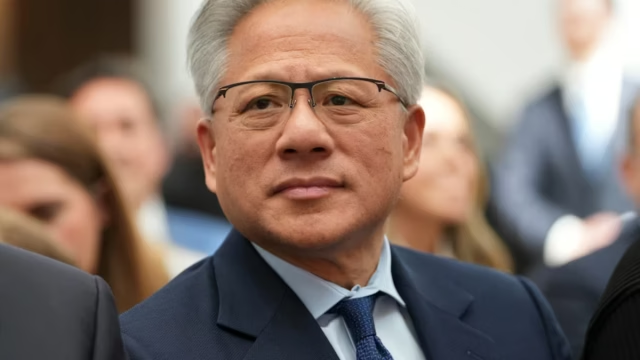 The Door is Shut: Nvidia Board Firmly Rejects Jensen Huang’s Return Amid High-Stakes National Security and Compliance Probes
 The Ultimate Guide to Two-Wheeler Insurance for Delivery Partners in India: Coverage, Claims, and Future Trends
 Two-Wheeler Insurance for Delivery Riders in India: Coverage, IDV & Costs Explained
Hover to fan the frames
Your take
Was this worth your time?
0 reactions