Table of Contents
Osgood-Schlatter Disease
Osgood-Schlatter disease affects teenage athletes during rapid growth periods. The condition involves inflammation at the tibial tuberosity below the kneecap. Growing bones cannot always handle the forces young athletes generate. Teenagers across the USA, UK, Europe, Australia, and worldwide experience this painful condition. Boys between ten and fifteen and girls between eight and thirteen face the highest risk. Early recognition prevents unnecessary training disruption and long-term complications.
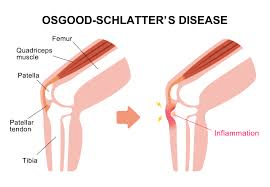
The tibial tuberosity is a bony bump just below the kneecap. The patellar tendon attaches the quadriceps muscles to this bump. During adolescent growth, this area consists of soft growth plate cartilage. Repetitive quadriceps contractions pull the tendon against this soft structure. Jumping, sprinting, and kicking sports create the most significant stress. Over time, irritation and inflammation develop at the attachment site. Visible swelling forms directly on the tibial tuberosity in many cases.
The condition is technically an overuse injury rather than a true disease. Rapid bone growth temporarily outpaces tendon and muscle adaptation. Tight quadriceps from growth spurts increase tendon tension. High training volumes overwhelm the immature growth plate. Athletes in jumping and running sports face elevated risk. Basketball players, soccer athletes, gymnasts, and sprinters commonly develop symptoms. The condition typically affects one knee but sometimes affects both.
The good news is that Osgood-Schlatter disease is self-limiting. Symptoms resolve once growth plates close and bones mature. Most teenagers experience symptom resolution within twelve to twenty-four months. This timeline frustrates young athletes who want to compete immediately. Managing activity levels during this period prevents worsening while maintaining participation. Complete rest is rarely necessary and often counterproductive.
This guide helps teenage athletes, parents, and coaches navigate Osgood-Schlatter disease confidently. You will learn which activities aggravate the condition and which remain safe. We explain how growth affects injury development and recovery. Practical pain management strategies allow continued sport participation. Prevention focuses on flexibility and load management during growth spurts. The content applies to teenage athletes competing at all levels worldwide.
The guide particularly benefits families managing young athletes across multiple sports simultaneously. Coaches balancing team needs with individual athlete health find practical strategies. School athletic trainers gain evidence-based management approaches for common presentations. The content addresses the reality that most teenagers will not stop playing sport entirely, making practical management essential.
Prevention centers on flexibility, load management, and early symptom recognition. Regular quadriceps and hamstring stretching reduces tendon tension. Monitoring training volume during growth spurts prevents symptom escalation. Responding to early knee pain prevents severe inflammation. Proper warm-up before sport reduces acute loading on the growth plate. These strategies keep young athletes competing safely through challenging growth periods.
FAQ Section:
What causes Osgood-Schlatter disease in teenagers?
Rapid bone growth creates temporary vulnerability in growth plates. Soft growth plate cartilage cannot handle adult training loads. Quadriceps muscles pull powerfully on the patellar tendon. The tendon pulls against the soft tibial tuberosity repeatedly. High training volumes exceed immature bone tolerance. Boys are affected more often than girls historically. Participation in jumping sports significantly increases risk.
At what age does Osgood-Schlatter disease typically develop?
Boys most commonly develop symptoms between ten and fifteen years. Girls typically develop symptoms between eight and thirteen years. The condition correlates with peak growth velocity periods. Athletes who grow rapidly face higher risk than slow growers. Early maturation sometimes brings earlier symptom onset. Late-maturing athletes might develop symptoms later. Growth plate closure ends symptom development permanently.
Can teenagers continue playing sport during treatment?
Most teenagers can continue sport with activity modification. Reducing jumping and sprinting frequency helps significantly. Switching to swimming or cycling maintains fitness without knee stress. Playing through mild discomfort is generally acceptable. Sharp pain during activity indicates excessive loading. Coaches should modify training rather than benching athletes completely. Continued participation with management produces better outcomes than complete rest.
What stretches help Osgood-Schlatter disease?
Quadriceps stretching directly reduces tendon tension. Hold the stretch gently for thirty seconds each leg. Hamstring stretching balances posterior chain tension. Hip flexor stretching reduces anterior knee loading. Calf stretching improves ankle mechanics reducing knee compensation. Daily stretching produces better results than occasional sessions. Stretching after activity works better than before for tight muscles.
Does ice help Osgood-Schlatter knee pain?
Ice after activity reduces acute inflammation effectively. Apply ice for fifteen to twenty minutes post-activity. Ice should not be applied directly to skin. Wrapping ice in cloth prevents skin damage. Ice provides temporary pain relief supporting continued activity. Consistent icing after every practice session accumulates benefits. Ice does not cure the condition but manages symptoms well.
Will Osgood-Schlatter disease cause permanent knee problems?
The vast majority of cases resolve completely after growth. Some adults retain a small bony bump without symptoms. Rare cases develop persistent symptoms into adulthood. Proper management during adolescence reduces adult complications. The condition does not cause arthritis or long-term cartilage damage. Athletes who manage the condition carefully have excellent long-term outcomes. Most adult athletes never think about their adolescent knee pain.
Should teenagers use knee pads or braces?
Infrapatellar straps reduce tendon tension during activity. Straps provide pain relief allowing continued participation. Foam donut pads protect the tender bump from direct contact. Bracing alone does not treat the underlying condition. Combining straps with stretching and activity modification works best. Some teenagers find pads essential for contact sports. Individual preference guides specific equipment choices.
How do parents support young athletes with this condition?
Understanding the condition prevents unnecessary alarm. Encouraging continued participation with modification helps athletes thrive. Monitoring symptom severity helps guide activity decisions. Seeking medical evaluation confirms diagnosis and guides treatment. Supporting stretching routines at home accelerates recovery. Communicating with coaches about the condition improves management. Parents play a central role in successful management.
Can Osgood-Schlatter disease affect both knees?
Bilateral involvement occurs in approximately twenty to thirty percent of cases. Both knees sometimes develop symptoms simultaneously. One knee often becomes symptomatic before the other. Bilateral cases require the same management approach as unilateral cases. Athletes with bilateral involvement face more significant activity modification challenges. Recovery timelines are similar regardless of bilateral or unilateral involvement. Both knees resolve symptoms at growth plate closure.
What activities worsen Osgood-Schlatter symptoms most?
Jumping activities create the highest tibial tuberosity stress. Kneeling directly on the tender bump causes pain. Deep squatting increases quadriceps tension significantly. Running fast and sprinting worsen symptoms more than jogging. Stair climbing and hill running increase knee stress. Kicking sports like soccer sometimes trigger flare-ups. Identifying personal trigger activities guides individual management.