On this page
- Table of Contents
- Energy Storage Science: Battery Technology
- Energy Storage Fundamentals: What the Field Actually Covers
- The Core Subjects Every Student Should Study
- How University Programs Are Structured
- What a Typical Specialisation Looks Like
- Skills That Employers and Research Groups Look For
- Career Paths in Energy Storage
- How to Prepare From School Level Onward
- Challenges and Honest Limitations
- FAQ
In this story
- Table of Contents
- Energy Storage Science: Battery Technology
- Energy Storage Fundamentals: What the Field Actually Covers
- The Core Subjects Every Student Should Study
- How University Programs Are Structured
Table of Contents
Energy Storage Science: Battery Technology
Solar panels and wind turbines get most of the attention in the clean energy story, but they have a weakness. They produce power when the sun shines and the wind blows, not necessarily when people need it. Batteries and other storage systems close that gap. They also decide how far an electric vehicle travels on one charge, how long a phone lasts, and whether a village grid can run through the night. Because of this, energy storage has become one of the most valuable specialisations in engineering and science. Yet most students entering university have no clear idea what to study to work in it. Some assume it is a chemistry subject, others assume it is electrical engineering, and the truth is that it is both and more. This guide explains what energy storage science covers, which subjects matter most, how university programs are structured, what skills employers look for, and how an Indian student can prepare for this field from school level onward.
Energy Storage Fundamentals: What the Field Actually Covers
More Than Lithium-Ion Batteries
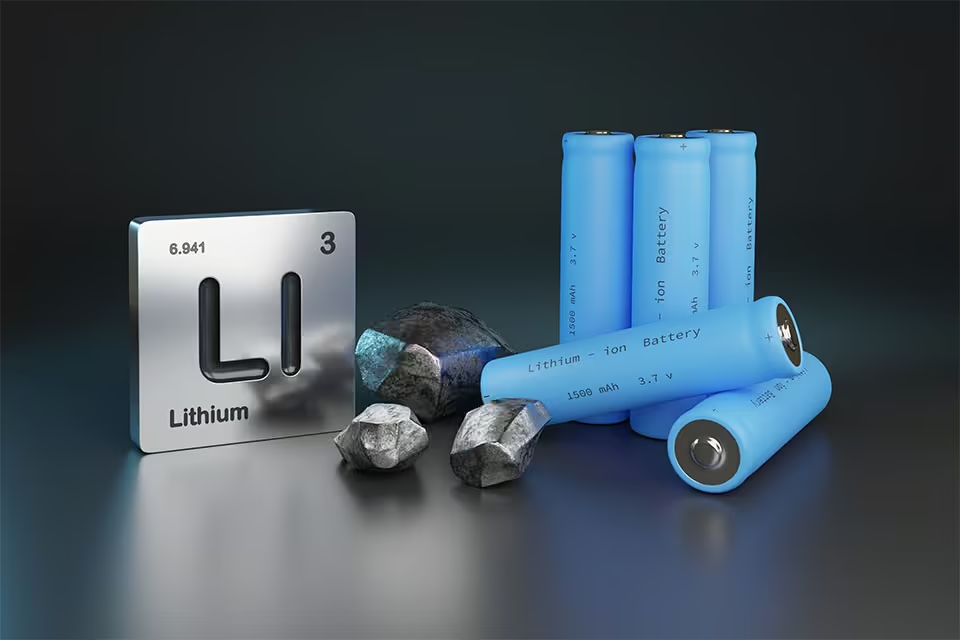
Energy storage means capturing energy when it is available and releasing it when it is needed. Lithium-ion batteries are the best-known technology, but the field is much wider. It includes sodium-ion batteries, solid-state batteries, flow batteries for grid use, supercapacitors, hydrogen storage, thermal storage, and mechanical systems such as pumped hydro and flywheels. A student who knows only lithium-ion chemistry will find the field narrow. A student who understands the principles behind several technologies can move between them as the industry changes.
Why This Is Several Disciplines in One
A battery is a chemical system, a material system, an electrical device, a thermal system and a manufactured product at the same time. Improving it means working across all of these. A chemist designs a better electrode material, a materials scientist makes it stable at scale, an electrical engineer builds the system that manages charging, and a mechanical engineer designs the pack that keeps it cool and safe. The strongest professionals understand their own discipline deeply and can speak the language of the others.
The Problems Researchers Are Trying to Solve
The next generation of battery technology is shaped by a handful of hard problems:
- Higher energy density, so devices and vehicles can go farther on the same weight
- Faster charging without damaging the battery or creating safety risks
- Longer life, so batteries survive thousands of cycles
- Lower cost and less dependence on scarce or ethically difficult materials such as cobalt
- Better safety, especially preventing thermal runaway and fires
- Recycling and sustainability, so used batteries become a resource instead of waste
Each of these problems maps to specific subjects a student can study, which is why the choice of subjects matters.
The Core Subjects Every Student Should Study
Chemistry and Electrochemistry
Electrochemistry is the heart of battery science. It explains how ions move between electrodes, why voltage appears, what happens at interfaces between materials, and why batteries degrade. Students should be comfortable with thermodynamics, reaction kinetics, redox reactions, electrolytes and transport of ions. Physical chemistry and inorganic chemistry give the foundation, and organic chemistry matters for electrolytes and polymer-based materials.
Materials Science and Engineering
Most breakthroughs in batteries are breakthroughs in materials. Students study crystal structures, solid-state physics, nanomaterials, ceramics, polymers and how the structure of a material determines its properties. Characterisation techniques such as X-ray diffraction and electron microscopy are central, because researchers need to see what is happening inside a material as it charges and discharges.
Physics and Mathematics
Physics supplies the understanding of electricity, heat transfer and solid-state behaviour. Mathematics, especially calculus, differential equations, linear algebra and statistics, supports the modelling of batteries and the analysis of experimental data. Students who are comfortable here have an advantage in simulation and research roles.
Electrical and Power Engineering
A battery on its own is not a product. It needs a battery management system, power electronics, chargers and grid connections. Students who choose the engineering route study circuits, power electronics, control systems and embedded systems. This is the path into electric vehicle, consumer electronics and grid storage careers.
Mechanical and Thermal Engineering
Heat is one of the biggest enemies of batteries. Thermal management, pack design, structural integrity and manufacturing processes all fall under mechanical and chemical engineering. This area matters greatly for safety and for large-scale production.
Data Science and Computational Modelling
Modern battery research increasingly uses machine learning to predict how long a battery will last, to screen thousands of candidate materials, and to optimise charging. Students who combine battery knowledge with Python, simulation tools and data analysis are in high demand and still relatively rare.
How University Programs Are Structured
A New Field Still Finding Its Shape
Dedicated energy storage degrees are a recent development. Uppsala University in Sweden offers a two-year Master’s Programme in Battery Technology and Energy Storage, a 120-credit degree with Battery Technology as the main field of study. Purdue University in the United States listed a Master of Science in Battery and Energy Storage Engineering among its 2024–25 new program initiatives, and the University of Nevada, Reno offers a minor in Batteries and Energy Storage Technologies that draws on courses from almost every engineering discipline and the sciences. Many other universities teach the subject through existing departments such as chemistry, materials science, chemical engineering and electrical engineering, usually with specialised electives and research labs.
Because program names and structures vary, always read the official course list and admission requirements before applying.
Choosing Your Route
| Starting Degree | What You Learn Best | Typical Entry Roles |
|---|---|---|
| Chemistry or Chemical Engineering | Electrochemistry, electrolytes, processes | Materials developer, process engineer, research scientist |
| Materials Science | Electrode structures, characterisation | Cell researcher, quality and failure analyst |
| Electrical Engineering | Power electronics, management systems | Battery systems engineer, EV electronics engineer |
| Mechanical Engineering | Thermal design, packs, manufacturing | Pack design engineer, thermal engineer |
| Physics or Computer Science | Modelling, data, simulation | Battery modelling or machine learning specialist |
A useful way to think about it is that your undergraduate degree gives you a home discipline, and a master’s program or a minor can then add the battery specialisation. Students who begin in a traditional engineering or science degree and add battery-focused coursework, research projects and internships often end up just as employable as those from a dedicated program.
What a Typical Specialisation Looks Like
A well-built battery and energy storage curriculum usually moves through four layers. The first layer is foundation courses in chemistry, physics, mathematics and materials. The second covers electrochemistry and the working principles of different storage technologies. The third adds applied topics such as battery management, thermal design, safety, grid integration and life-cycle analysis. The fourth is project work, where students build, test or model a battery system, often in partnership with a research lab or company.
Laboratory time deserves special attention. Students who have assembled coin cells, run charge and discharge tests, and analysed degradation data understand the field in a way no lecture can provide. When comparing programs, check how much lab access and research involvement undergraduates or master’s students actually get.
Skills That Employers and Research Groups Look For
Technical knowledge opens the door, but several practical skills decide who succeeds.
Hands-on laboratory skills. Cell assembly, electrochemical testing and materials characterisation are valued in research and manufacturing alike.
Programming and data analysis. Python is used for experiment analysis, simulation and machine learning, and familiarity with simulation software for batteries is a strong addition.
Systems thinking. Employers want people who understand how a decision about a material affects cost, safety and manufacturing, not only the chemistry.
Safety awareness. Batteries store a large amount of energy, and understanding failure modes is a professional responsibility.
Communication. Research teams mix chemists, engineers and data scientists, and the ability to explain your work across disciplines is a real advantage.
Career Paths in Energy Storage
The range of roles is broad. Research scientists and materials developers work on new chemistries and electrode designs in universities, national labs and company research centres. Battery engineers work on cell design, testing and manufacturing at cell makers. Battery systems engineers design packs and management systems for electric vehicles, buses and consumer devices. Grid storage engineers plan and operate large installations that support solar and wind projects. Recycling and sustainability specialists work on recovering valuable materials from used batteries. Data and modelling specialists build tools that predict battery life and speed up development.
For Indian students, the opportunity is tied to the country’s push toward electric mobility, renewable energy and domestic manufacturing. Demand for people who understand storage is likely to grow as these sectors expand. Salaries vary a great deal by country, employer and experience, and I can’t give a reliable single figure, so check current listings for the specific market you are targeting.
How to Prepare From School Level Onward
During School
Build strength in chemistry, physics and mathematics, since these carry the whole field. Learn basic Python programming. Take interest in how everyday devices such as phones, scooters and solar lights store energy, and try simple projects like building a small solar-powered charger.
During Undergraduate Study
Choose a core discipline that fits your strengths, then add battery-related electives. Look for research internships with professors working on batteries, supercapacitors or energy materials, because early lab exposure strongly shapes both learning and applications. Join energy or electric vehicle student teams, which offer practical experience in building real systems.
For Postgraduate Applications
A relevant bachelor’s degree in chemistry, materials science, chemical, electrical or mechanical engineering, or physics is usually expected. Research experience, a final-year project in an energy-related topic and strong recommendation letters carry weight. Depending on the country, you may need English proficiency scores such as IELTS or TOEFL, and some universities ask for GRE scores while others have dropped the requirement. Verify each university’s current rules directly.
Challenges and Honest Limitations
The field offers real opportunity, but a clear view of the difficulties helps students decide wisely. Laboratory research moves slowly, and a promising material in a small lab test often fails to scale to mass production. Many dedicated degree programs are new, so their graduate outcomes have little track record. Competition for research positions at leading labs is strong. The technology also changes quickly, so a narrow focus on one chemistry carries risk. Students who build broad fundamentals and keep learning stay employable through those changes.
FAQ
What is energy storage science?
It is the study of how energy is captured, stored and released, covering batteries, supercapacitors, hydrogen, thermal storage and mechanical systems, along with the materials and engineering behind them.
Which degree is best for battery technology?
No single degree is best. Chemistry, materials science, chemical engineering, electrical engineering and mechanical engineering all lead into the field, depending on whether you want to work on materials, systems or manufacturing.
Do I need a dedicated battery degree to work in this field?
No. Many professionals enter through traditional science and engineering degrees and add specialised coursework, projects and internships.
Is chemistry or engineering better for batteries?
Chemistry and materials science suit students drawn to designing new materials and chemistries. Engineering suits students drawn to building systems, electronics and products. The best teams include both.
What programming skills are useful?
Python is the most useful starting point for data analysis, modelling and machine learning. MATLAB is also common in engineering settings.
How much mathematics is needed?
A solid base in calculus, differential equations, linear algebra and statistics is helpful, particularly for modelling and research roles.
Can Indian students apply to battery programs abroad?
Yes, in general, since most universities accept international applicants. Entrance requirements, English tests, funding and visa rules differ by country and institution, so check each one.
Is a master’s degree necessary?
For research and advanced development roles, a master’s or PhD is common. For manufacturing, testing and some engineering roles, a bachelor’s degree with relevant projects can be enough.
Will this field remain in demand?
Demand is tied to electric vehicles, renewable energy and grid modernisation, which are expanding in many countries. Specific technologies will change, so strong fundamentals matter more than loyalty to any one battery type.
How can I start learning before university?
Strengthen chemistry, physics and mathematics, learn Python, follow open online courses on electrochemistry and energy systems, and try small hands-on projects with solar cells and simple batteries.
Students who want to build the next generation of batteries should treat the field as a meeting point of chemistry, materials, electrical engineering and data. Choose the home discipline that suits you, add battery specialisation through coursework and lab work, and keep your fundamentals broad enough to adapt as the technology changes.
In frames · the Education & Careers desk
 Energy Storage Science: What Should Students Study to Build the Next Generation of Battery Technology?
 MS in Space Systems Engineering: Is It Suitable for Mechanical, Electrical and Aerospace Graduates?
 After BSc Physics, What Master’s Degree Can Lead to Careers in Quantum Technology and Semiconductor Research?
 MS in Space Systems Engineering: Is It Suitable for Mechanical, Electrical and Aerospace Graduates?
Hover to fan the frames
Your take
Was this worth your time?
0 reactions