
On this page
- Table of Contents
- When Prem Moves In Yeh Prem Mol Liya
- 1. The Core Premise: Turning Marriage Customs Upside Down
- 2. Maika, Sasural, and “Ghar”: Questioning Tradition Without Erasing Family
- 3. Sooraj Barjatya’s Evolution: Avoiding the “Preachy” Trap
- 4. Ayushmann Khurrana’s “Everyman” Arc & Echoes of Amol Palekar
- 5. Sharvari & The Ensemble Cast: Fresh Chemistry Meets Veteran Gravitas
- 6. Music, Runtime, Censor Rating & Release News (November 2026)
- Why Yeh Prem Mol Liya Matters Right Now
- Career Timeline: From Assistant Director to Mainstream Lead
- Her Standout Roles Before Yeh Prem Mol Liya
- Why She Fits Yeh Prem Mol Liya
- Side-by-Side Comparison Across Three Eras
- 1. Prem & Nisha (Hum Aapke Hain Koun..!): Love Subordinated to Duty
- 2. Prem & Poonam (Vivah): The Ideal of Unconditional Devotion
- 3. Prem & Purva (Yeh Prem Mol Liya): Partnership Through Structural Change
- The Bigger Evolution
In this story
- Table of Contents
- When Prem Moves In Yeh Prem Mol Liya
- 1. The Core Premise: Turning Marriage Customs Upside Down
- 2. Maika, Sasural, and “Ghar”: Questioning Tradition Without Erasing Family
- 3. Sooraj Barjatya’s Evolution: Avoiding the “Preachy” Trap
Table of Contents
When Prem Moves In Yeh Prem Mol Liya
For more than three decades, whenever filmmaker Sooraj R. Barjatya has put a hero named Prem on screen, Hindi cinema audiences have known the emotional shorthand before the first song even starts. From the wide-eyed, earnest idealism of Maine Pyar Kiya (1989) to the sweeping joint-family warmth of Hum Aapke Hain Koun..! (1994), the quiet ache of Hum Saath-Saath Hain (1999), the tender devotion of Vivah (2006), and the regal spectacle of Prem Ratan Dhan Payo (2015), the name “Prem” has long stood for romance braided tightly with family duty, elders’ blessings, and gentle self-sacrifice.
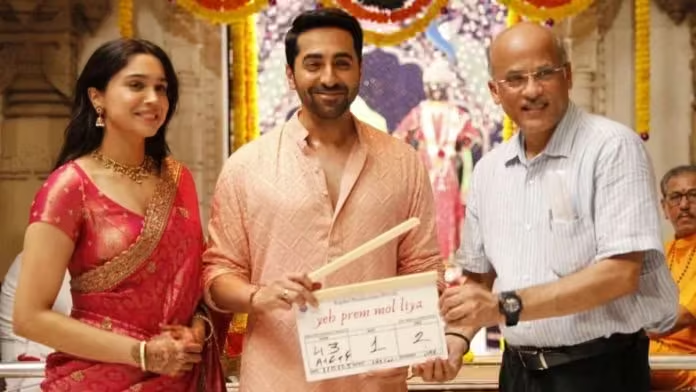
Now, with Yeh Prem Mol Liya—arriving in cinemas on November 27, 2026, produced by Rajshri Productions in association with Mahaveer Jain Films and distributed worldwide by Yash Raj Films—that familiar name steps into a noticeably different world. Playing Prem Mishra opposite Sharvari as Purva Solanki, Ayushmann Khurrana takes on Barjatya’s signature archetype at a moment when both the director and the lead actor are pushing traditional family storytelling toward modern questions of equality, agency, and everyday realism.
1. The Core Premise: Turning Marriage Customs Upside Down
At the heart of Yeh Prem Mol Liya is a simple role reversal that cuts straight through centuries of Indian wedding habit. As the trailer and synopsis make clear, Prem and Purva fall in love and want to marry, yet Purva faces a deeply personal reality: she comes from a family of women, carries responsibility toward them, and cannot picture leaving her parental home behind after getting married.
Instead of asking Purva to pack her bags and adjust to a new household, Prem proposes the reverse—moving into her home along with his own family. That decision sends ripples through his own household, forcing two distinct families to confront what love, respect, and compromise actually look like when long-assumed rules are flipped.
“Itna bhi nahi kiya, toh kya pyaar kiya?” — Prem Mishra in Yeh Prem Mol Liya
Rather than turning the move into a loud farce or a bitter battle of egos, the film frames Prem’s choice around emotional attentiveness and respect for his partner’s priorities. As Barjatya has emphasized around the release, Yeh Prem Mol Liya is his most progressive film yet—one that asks audiences to look closely at habits people repeat without thinking and examine whether women’s priorities are given real weight.
2. Maika, Sasural, and “Ghar”: Questioning Tradition Without Erasing Family
One of the sharpest thematic threads highlighted in the film’s discourse is how Prem challenges the rigid mental divide between maika (the maternal home) and sasural (the marital home). In traditional narratives, a daughter’s marriage is often framed around departure and adjustment—a transition where one home becomes a memory and another becomes a test.
Prem’s perspective asks why both spaces cannot simply be regarded as ghar (home), and even questions whether the expectation that a woman must leave her parents’ house is rooted in sacred texts like the Vedas and Puranas or simply an inherited social custom that hardened over time.
That question creates a fascinating conversation with Hum Aapke Hain Koun..! (1994). In that beloved milestone, Prem and Nisha were prepared to step back from their own romantic happiness out of devotion to their families. More than thirty years later, Yeh Prem Mol Liya tests a different balance: Do love and family harmony require one person to quietly surrender their happiness or identity, or can two families reshape their customs so everyone feels at home?
3. Sooraj Barjatya’s Evolution: Avoiding the “Preachy” Trap
A recurring challenge for any longtime storyteller is speaking about timeless values without sounding dated or preachy to younger viewers. Speaking with Filme Shilmy around Uunchai (2022), Barjatya candidly addressed how he has had to keep his storytelling contemporary so themes like closeness, trust, and family bonding land organically rather than feeling like a lecture.
That philosophy has been front and center during the Yeh Prem Mol Liya promotional cycle in November 2026:
- Speaking to today’s cinema landscape: Asked about family entertainers holding their ground alongside high-octane, adult-skewing theatrical hits like Dhurandhar, Barjatya pointed out that audiences don’t live on a single diet—if big, gritty spectacles exist, there is equally room for warmth, togetherness, and emotional connection (“Dhurandhar ke saath saath yeh bhi toh chahiye na?”).
- Advice beyond Day 1 numbers: At the trailer launch, Barjatya urged younger filmmakers not to obsess solely over opening-day box-office spikes, noting that word-of-mouth and real entertainment—like audiences spending festive or year-end bonuses on a movie they genuinely enjoy—are what sustain a film’s life.
- Finding the “sur” of Prem: Barjatya noted that while Salman Khan and Ayushmann Khurrana are very different performers, Ayushmann caught the emotional “sur” (frequency) of Prem right from the first day of shoot, leading Barjatya to step back and let that natural cadence flow.
4. Ayushmann Khurrana’s “Everyman” Arc & Echoes of Amol Palekar
Casting Ayushmann Khurrana as Prem connects two rich traditions of unflashy, relatable Hindi screen heroes. Decades earlier, Amol Palekar became synonymous with gentle, middle-class warmth in Rajshri-backed classics like Chitchor (1976), alongside films such as Rajnigandha and Chhoti Si Baat. Both Palekar and Khurrana share an approachable charm and emotional openness—a kind of understated heroism rooted in empathy, humor, and sincerity rather than macho bravado.
Over his career, Khurrana has repeatedly built his brand around playing “a common man dealing with uncommon situations,” whether navigating sperm donation in Vicky Donor, late-life pregnancy in Badhaai Ho, or same-sex love and family pushback in Shubh Mangal Zyada Saavdhan. In Yeh Prem Mol Liya, that knack for turning awkward or taboo domestic situations into human comedy and heartfelt reflection meets Rajshri’s earnest worldview. At the same time, Khurrana has spoken openly about wanting to pursue disruptive, distinct stories that add artistic value while still reaching wide theatrical audiences—and warmly acknowledged Salman Khan as the “OG Prem” at the trailer launch.
5. Sharvari & The Ensemble Cast: Fresh Chemistry Meets Veteran Gravitas
Alongside Ayushmann Khurrana and Sharvari (marking their first pairing on screen and each making their first collaboration with Sooraj Barjatya), Yeh Prem Mol Liya brings together an expansive supporting cast designed to give the clash and blending of two households real texture:
- Anupam Kher as Ved Mishra, Prem’s grandfather
- Supriya Pathak and Seema Pahwa
- Swanand Kirkire, Saumya Tandon, Shaad Randhawa, Shruti Seth, Rajesh Kumar, Girish Kulkarni, Geeta Aggarwal Sharma, Krish Rao, and Ashnoor Kuckreja
For Sharvari, stepping into a Rajshri romance as Purva Solanki adds another distinct chapter to a fast-moving career—following her work in Munjya, Vedaa, and Alpha—bringing a grounded, modern energy opposite Khurrana’s Prem.
6. Music, Runtime, Censor Rating & Release News (November 2026)
Ahead of its November 27, 2026 theatrical release, several key production and promotional updates have shaped buzz around Yeh Prem Mol Liya:
| Detail | Key Information |
| Release Date & Distributor | November 27, 2026; distributed worldwide by Yash Raj Films |
| Production Banner | Rajshri Productions in association with Mahaveer Jain Films (produced by Kamal Kumar Barjatya, Late Rajkumar Barjatya, Ajit Kumar Barjatya, and Mahaveer Jain) |
| Runtime & CBFC Rating | 173 minutes; granted a U/A certificate—making it a rare U/A-rated Sooraj Barjatya film and his third-longest directorial feature |
| Music & Lyrics | Songs composed by Himesh Reshammiya (reuniting with Barjatya after Prem Ratan Dhan Payo, 2015), background score by George Joseph, and lyrics by Kumaar, Mayur Puri, Sonia Kapoor Reshammiya, and Manoj Muntashir |
| Released Singles | “Yeh Prem Mol Liya” (Title Track), “Jai Ambe Bol”, “Jhumka Patola”, “Saawan Aaya Hai”, “Bulaye Chhathi Maa”, and “Tum Jeene Ki Wajah Ho” |
| Box-Office & Promo Buzz | Clashes with Aditya Datt’s action drama Gunmaaster G9; cast and crew have been rolling out promotions across shows like The Great Indian Kapil Show and Indian Idol Legends Return |
Why Yeh Prem Mol Liya Matters Right Now
At nearly three hours long with a U/A rating and a full-throated Himesh Reshammiya soundtrack, Yeh Prem Mol Liya isn’t trying to disguise what it is: a big-hearted, multi-generational family drama with songs, festivals, and emotional stakes. What makes it stand out on paper—and in the headlines—is the tension inside its title and premise. By asking a classic Rajshri hero to move into his wife’s home with his family and question old assumptions about maika, sasural, and ghar, Sooraj Barjatya and Ayushmann Khurrana are testing whether comfort food cinema can evolve without losing its soul.
Give an overview of Sharvari’s acting career and standout roles leading up to Yeh Prem Mol Liya.
Sharvari’s journey to starring as Purva Solanki opposite Ayushmann Khurrana in Sooraj Barjatya’s Yeh Prem Mol Liya (releasing November 27, 2026) is defined by an unusually grounded start behind the camera followed by a rapid, genre-hopping rise in front of it. Born in Mumbai in 1997—and the maternal granddaughter of former Maharashtra Chief Minister Manohar Joshi—she built her career outside politics, logging five years on film sets and enduring six years of auditions before breaking through.
Career Timeline: From Assistant Director to Mainstream Lead
Learning the Craft Behind the Camera
2015–2018
Before facing the camera, Sharvari worked as an assistant director for Luv Ranjan and Sanjay Leela Bhansali on Pyaar Ka Punchnama 2 (2015), Bajirao Mastani (2015), and Sonu Ke Titu Ki Sweety (2018)—gaining firsthand exposure to set discipline, choreography, and large-scale production.
Streaming Debut & Filmfare-Winning Big-Screen Launch
2020–2021
She made her acting debut in Kabir Khan’s war drama series The Forgotten Army – Azaadi Ke Liye (2020) as Maya Srinivasan, followed by her theatrical debut in Yash Raj Films’ Bunty Aur Babli 2 (2021) as Sonia Rawat (“Babli”). Despite the film’s muted box-office run, her comic energy won her the Filmfare Award for Best Female Debut and the IIFA Star Debut of the Year.
The Triple-Release Breakout Year
2024
After a nearly three-year screen gap, Sharvari delivered three starkly different roles in one year: the blockbuster horror-comedy Munjya (where her character Bela and the viral dance track “Taras” became nationwide pop-culture hits), a cameo in Netflix’s period drama Maharaj, and the gritty title role of a Dalit woman fighting caste oppression alongside John Abraham in Nikkhil Advani’s Vedaa.
Prestige Romance, Spy Action & Rajshri
2026
Ahead of Yeh Prem Mol Liya, she headlined Imtiaz Ali’s critically acclaimed Partition-era romantic drama Main Vaapas Aaunga (opposite Diljit Dosanjh and Vedang Raina) and joined Alia Bhatt as agent Durga Kaul in the YRF Spy Universe actioner Alpha—before stepping into Sooraj Barjatya’s family drama as Purva, with Ali Abbas Zafar’s Beparwah (opposite Ahaan Panday) lined up for 2027.
Her Standout Roles Before Yeh Prem Mol Liya
| Project | Year | Role | Why It Stood Out |
| The Forgotten Army | 2020 | Maya Srinivasan | Marked her screen debut in a period war drama, showcasing poise and sincerity in an ensemble historical setting. |
| Bunty Aur Babli 2 | 2021 | Sonia Rawat / Babli | Showed off sharp comic timing and screen confidence opposite Saif Ali Khan, Rani Mukerji, and Siddhant Chaturvedi, earning major debut trophies. |
| Munjya | 2024 | Bela | Her 100-crore commercial breakthrough; paired relatable small-town charm with the chart-topping dance number “Taras”. |
| Vedaa | 2024 | Vedaa Berwa | Proved she could anchor intense, physically demanding dramatic material and martial-arts action in a socially charged thriller. |
| Main Vaapas Aaunga | 2026 | Jiya (Afsana) | Earned strong critical acclaim under Imtiaz Ali’s direction, cementing her credibility in emotionally layered romantic drama. |
| Alpha | 2026 | Durga Kaul | Placed her at the center of a major studio action franchise alongside Alia Bhatt, highlighting her physical versatility. |
Why She Fits Yeh Prem Mol Liya
By the time she teamed up with Sooraj Barjatya and Ayushmann Khurrana, Sharvari had already demonstrated an unusual range for a relatively young actor—moving smoothly from broad comedy (Bunty Aur Babli 2) and mass horror-comedy (Munjya) to raw action (Vedaa, Alpha) and poetic romance (Main Vaapas Aaunga). That balance of warmth, modern self-assurance, and emotional depth makes her a natural fit for Purva Solanki, a character who refuses to simply abandon her maternal home after marriage and sparks the central rethinking of family tradition in Yeh Prem Mol Liya.
Analyze the relationship dynamic between Ayushmann Khurrana’s Prem and Sharvari’s Purva in Yeh Prem Mol Liya.
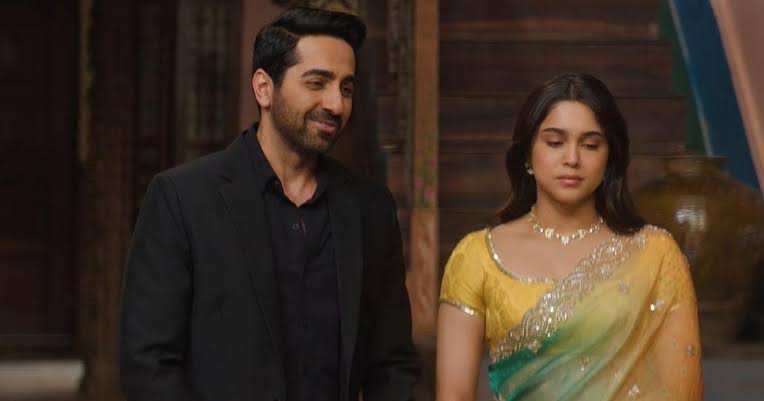
The relationship between Ayushmann Khurrana’s Prem Mishra and Sharvari’s Purva Solanki in Sooraj Barjatya’s Yeh Prem Mol Liya is built around mutual agency rather than asymmetric sacrifice—a deliberate break from traditional Hindi wedding narratives where the bride is automatically expected to uproot her life after marriage.
1. Purva as an Unapologetic Anchor of Her Own Household
Sooraj Barjatya himself has noted that Purva is unlike his earlier, more accommodating heroines—calling her his most opinionated female lead yet.
- Defined by real responsibility: Purva lives in Solanki Nivaas, a household of six women alongside her parents, where looking after them rests squarely on her shoulders.
- A non-negotiable boundary: Instead of treating marriage as an automatic exit from her parental home, Purva states upfront that she cannot leave her family behind after the wedding. Rather than framing her stance as stubbornness, the story treats her loyalty to her maternal home with the same moral weight historically reserved for a son’s duty to his parents.
2. Prem as the “Green-Flag” Problem Solver, Not a Savior
Ayushmann Khurrana’s Prem updates Barjatya’s classic archetype—evolving from a hero who quietly suffers for family harmony into one who actively re-engineers family custom so neither partner loses what matters to them.
- Flipping the marital default: Rather than asking Purva to choose between love and duty, Prem proposes moving into Solanki Nivaas with his own family after their marriage—effectively reversing the bidaai expectation while preserving the joint-family warmth central to Rajshri films.
- Emotional fluency over bravado: Delivered in Khurrana’s signature empathetic, conversational style, Prem’s line “Itna bhi nahi kiya, toh kya pyaar kiya?” frames the move not as a grand martyrdom or a temporary “family-swap” experiment (a comparison Khurrana explicitly rejected when asked about Rocky Aur Rani Kii Prem Kahaani), but as a permanent, logical act of partnership.
3. Shared Principles: Redefining Bahu, Damaad, and Ghar
What binds Prem and Purva together isn’t just romantic chemistry—it’s an aligned worldview on fairness inside Indian families:
| Aspect | Traditional Hindi Romance Trope | Prem & Purva’s Dynamic in Yeh Prem Mol Liya |
| Post-Wedding Residence | The bride leaves her parental home (maika) to adapt to her in-laws (sasural). | Prem and his family move into Purva’s home (Solanki Nivaas) so she can keep caring for her household. |
| View of Family Duty | Primarily expected of the son toward his parents and the bride toward her new in-laws. | Treated symmetrically: Purva’s duty to her six-woman household is respected as equal to Prem’s duty to his own family. |
| Nature of Compromise | One partner silently absorbs the disruption for the sake of elders. | Both partners collaborate to absorb the social pushback together, redefining bahu as a privilege and damaad as a shared responsibility. |
4. The Real Test: Navigating Two Families Under One Roof
While their individual bond rests on ease, humor, and mutual respect, the dramatic friction of their relationship comes from how their private agreement collides with public and familial habit. Prem’s proposal shocks his own household and challenges ingrained ideas about maika versus sasural—turning their romance into a joint effort to help two distinct families coexist without ego, resentment, or losing their sense of ghar.
Compare Prem and Purva in Yeh Prem Mol Liya with Sooraj Barjatya’s earlier iconic pairs like Prem and Nisha in Hum Aapke Hain Koun..! and Prem and Poonam in Vivah.
Across three decades of filmmaking, Sooraj Barjatya’s central romantic pairs have acted as a mirror to how Indian family cinema defines love, duty, and compromise. Comparing Prem and Purva in Yeh Prem Mol Liya (2026) with Prem and Nisha in Hum Aapke Hain Koun..! (1994) and Prem and Poonam in Vivah (2006) reveals a clear shift: Barjatya’s core belief in joint-family warmth remains intact, but who bends to preserve that harmony has fundamentally changed.
Side-by-Side Comparison Across Three Eras
| Dimension | Prem & Nisha (Hum Aapke Hain Koun..!, 1994) | Prem & Poonam (Vivah, 2006) | Prem & Purva (Yeh Prem Mol Liya, 2026) |
| Actors | Salman Khan & Madhuri Dixit | Shahid Kapoor & Amrita Rao | Ayushmann Khurrana & Sharvari |
| How They Meet & Bond | Organic playfulness across two already-connected families during a sibling’s wedding | Formal arranged-marriage courtship shaped by restraint, shyness, and growing devotion | Contemporary romance that hits a real-world logistical and cultural question before the wedding |
| Core Conflict | Duty vs. desire: after Nisha’s sister dies, both prepare to sacrifice their love to raise the baby | Crisis of devotion: Poonam suffers severe burns days before the wedding, testing Prem’s commitment | Custom vs. equity: Purva refuses to leave her six-woman household, prompting Prem to move in with his family |
| Nature of the Hero (“Prem”) | Affectionate, dutiful younger brother willing to swallow heartbreak silently | Principled, unwavering romantic idealist who stands by his fiancée in crisis | Empathetic, modern problem-solver who challenges inherited marriage defaults |
| Agency of the Heroine | Lively and expressive in courtship, yet ultimately compliant with elders’ plans | Gentle, resilient, and patient; endures mistreatment at home with quiet grace | Explicit, upfront, and non-negotiable about her responsibilities to her maternal family |
| What Happens to the Family Structure | Preserved intact through personal renunciation (until fate intervenes) | Reinforced through traditional marriage and entry into the groom’s family | Reimagined under one roof—creating friction, legal clashes, and a redefinition of ghar |
1. Prem & Nisha (Hum Aapke Hain Koun..!): Love Subordinated to Duty
In 1994, Salman Khan and Madhuri Dixit embodied a romance built on effortless camaraderie, teasing banter, and shared reverence for elders. Their bond blooms naturally inside a celebratory joint-family ecosystem—until tragedy strikes with Pooja’s death.
- The defining choice: Neither Prem nor Nisha rebels when elders arrange for Nisha to marry Prem’s widowed brother Rajesh. Both treat personal heartbreak as an acceptable price for keeping a child and two families whole.
- The contrast with 2026: In Hum Aapke Hain Koun..!, love proves its purity through silent self-denial. In Yeh Prem Mol Liya, Prem and Purva refuse to accept that loving your family requires erasing your own needs—asking instead how family customs can bend to accommodate both partners.
2. Prem & Poonam (Vivah): The Ideal of Unconditional Devotion
Twelve years later, Shahid Kapoor and Amrita Rao represented a quieter, more ceremonial vision of romance—two strangers paired by their elders who fall in love through polite conversations, shared values, and mutual respect.
- The defining choice: When a fire leaves Poonam badly burned just before their wedding, Prem’s heroism lies in refusing to walk away, marrying her in the hospital and affirming that true commitment sees past surface trauma. Meanwhile, Poonam follows the classic arc of moving from a tense maternal household (maika) into the warmth of Prem’s joint family (sasural).
- The contrast with 2026: Vivah celebrates graceful endurance—Poonam quietly absorbs unfairness at home until marriage rescues her into a kinder household. Purva in Yeh Prem Mol Liya flips that script entirely: her maternal home (Solanki Nivaas) is not something she needs rescuing from, but a household of women she actively supports and refuses to abandon.
3. Prem & Purva (Yeh Prem Mol Liya): Partnership Through Structural Change
Ayushmann Khurrana’s Prem and Sharvari’s Purva mark the biggest philosophical shift in Barjatya’s career. Rather than testing love through tragic coincidence (HAHK) or physical catastrophe (Vivah), their conflict arises from an everyday question Indian couples actually negotiate: whose life gets uprooted after marriage?
- From quiet sacrifice to active redesign: Earlier Barjatya heroes proved their love by enduring pain or standing firm inside traditional frameworks. Khurrana’s Prem proves his by rewriting the framework—proposing that he and his family move into Purva’s home so she can keep caring for her parents and sisters.
- From accommodating heroine to equal stakeholder: While Nisha and Poonam represent iconic expressions of warmth and dignity within patriarchal norms, Barjatya himself has noted that Purva is his most opinionated female lead—someone who states her priorities clearly before the wedding rather than adjusting afterward.
- Conflict inside the joint family itself: Unlike HAHK or Vivah, where uniting two families under one roof is the harmonious finale, bringing both households together in Yeh Prem Mol Liya triggers the core friction—sparking generational clashes, ego battles, and even a legal dispute that Prem and Purva must navigate together.
The Bigger Evolution
Across all three films, Barjatya’s definition of love stays rooted in responsibility toward family—none of his couples treat romance as an escape from parents or elders. What changes is the distribution of weight: Hum Aapke Hain Koun..! asked individuals to sacrifice for the family; Vivah asked a groom to stand heroically beside a traditional bride; and Yeh Prem Mol Liya asks both families to rethink old habits so a woman never has to choose between her parents and her partner.
In frames · the Bollywood desk
 When Prem Moves In Yeh Prem Mol Liya: How Ayushmann Khurrana, Sharvari, and Sooraj Barjatya Are Rewriting Hindi Family Cinema in Yeh Prem Mol Liya
 Avengers: Doomsday Shatters Records as India Advance Bookings Cross ₹50 Crore Ahead of Release
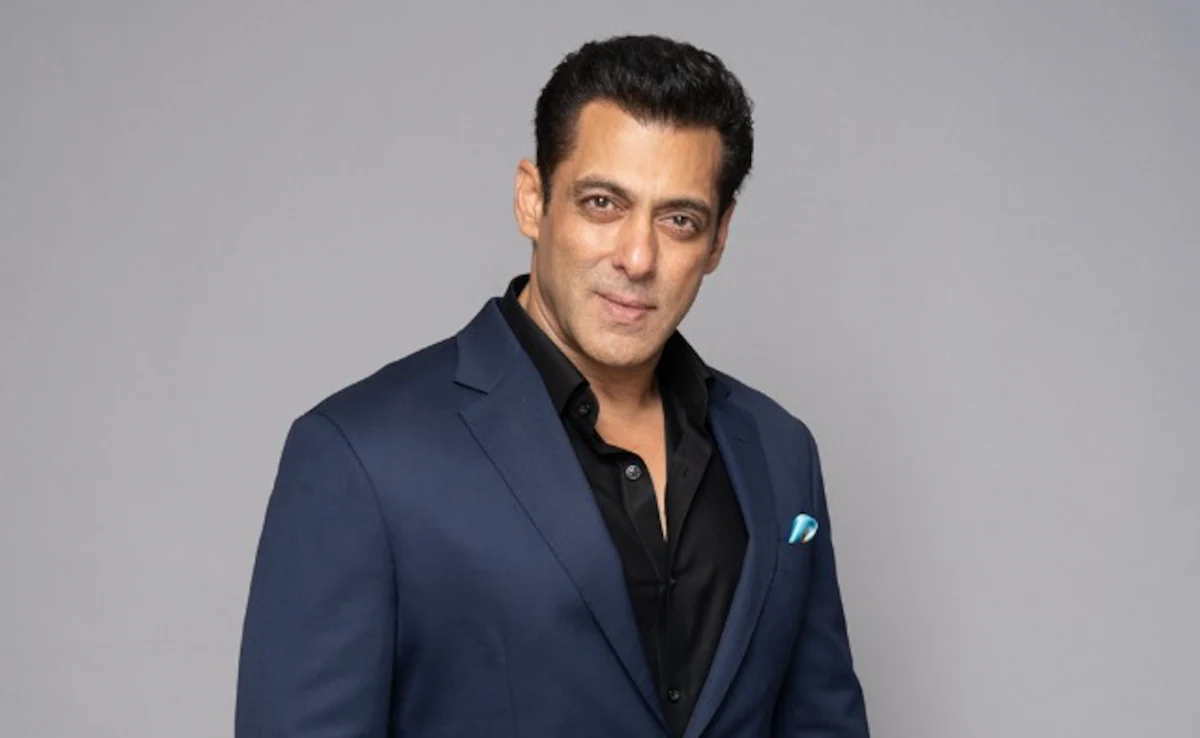 Salman Khan Confirms Dabangg 4, Rules Out Bajrangi Bhaijaan 2, and Apologizes to Shraddha Kapoor Over Maatrubhumi–Eetha Clash
 Dia Mirza Indian Actress, Film Producer, Former Beauty Queen & Global Environmental Advocate
Hover to fan the frames
Your take
Was this worth your time?
0 reactions
